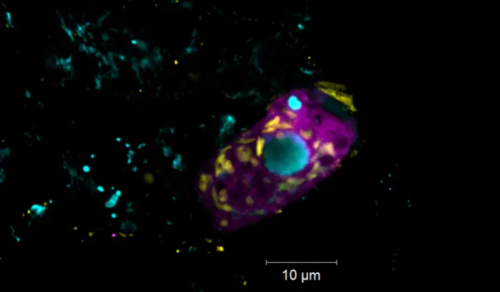
2026-01-06 ノースウェスタン大学
<関連情報>
- https://news.northwestern.edu/stories/2026/01/post-stroke-injection-protects-the-brain-in-preclinical-study
- https://www.sciencedirect.com/science/article/pii/S1878747925002983
急性虚血性脳卒中に対する動的超分子ペプチド療法の開発に向けて Toward development of a dynamic supramolecular peptide therapy for acute ischemic stroke
Zijun Gao, Luisa Helena Andrade da Silva, Zhiwei Li, Feng Chen, Cara Smith Zoie Lipfert, Ryan Martynowicz, Erika Arias, William A. Muller, David P. Sullivan, Samuel I. Stupp, Ayush Batra
Neurotherapeutics Available online: 8 January 2026
DOI:https://doi.org/10.1016/j.neurot.2025.e00820
Graphical abstract

Abstract
Acute ischemic stroke (AIS) treatment relies on early restoration of blood flow; however, ischemia/reperfusion (I/R) may lead to secondary brain injury. Supramolecular peptide assemblies in which many molecules move collectively by design can activate key cellular pathways by displaying bioactive molecules on their surfaces. In this study, we hypothesized that a highly dynamic assembly formed by a peptide amphiphile (PA) that displays the laminin-mimetic sequence IKVAV (IKVAV-PA), known to promote neuron survival, could be delivered systemically, reach the ischemic brain, and exert therapeutic effects following AIS. C57BL/6 heterozygous CX3CR1GFP mice underwent 60-min of transient middle cerebral artery occlusion and were administered IKVAV-PA or saline (control) immediately after reperfusion. IKVAV-PA presence and distribution was evaluated by intracranial intravital and wide-field imaging. Cresyl violet staining was performed to quantitate final brain infarct volume at 7 days post stroke. IKVAV-PA formed scaffolds that contain both nanoscale filaments in equilibrium with small micellar aggregates, which is a signature of enhanced epitope dynamicity. Systemically administered IKVAV-PA crossed the blood-brain barrier and was primarily detected within the ischemic hemisphere. Cresyl violet staining demonstrated IKVAV-PA treatment significantly reduced infarct size when compared to saline treated animals. Histological screening of systemic organs suggested good biocompatibility of IKVAV-PAs at 7 days post stroke. We demonstrated the therapeutic potential of systemically delivering IKVAV-PA in a pre-clinical model of ischemic stroke. This work lays the foundation for further studies utilizing supramolecular PA assemblies as an adjunct therapy to reperfusion therapies in order to enhance long-term tissue-level neural regeneration post stroke.