2026-01-27 東京科学大学
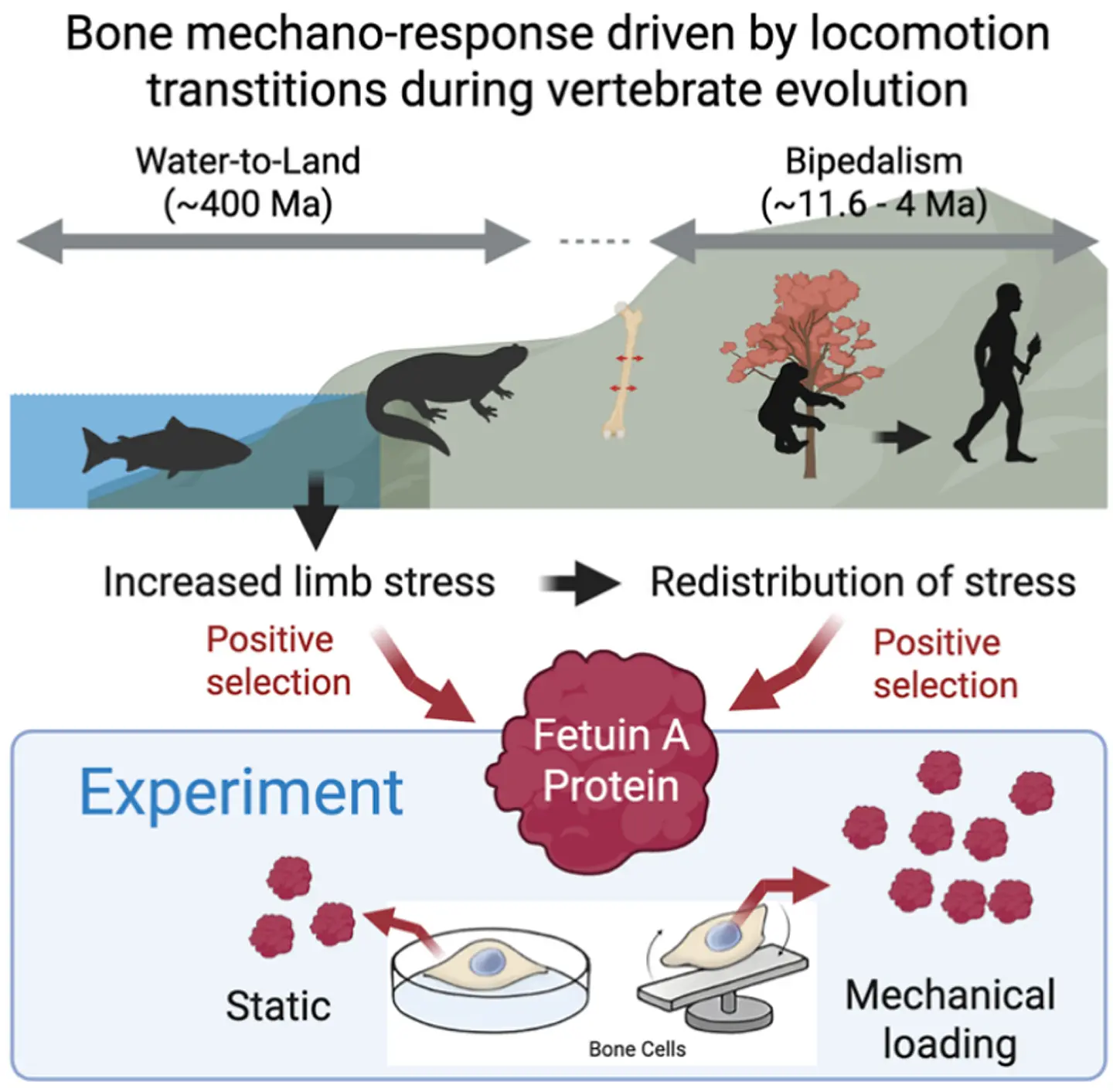
骨細胞外基質タンパク質のFetuin Aは力学的な刺激を与えると発現が優位に増加した。
<関連情報>
- https://www.isct.ac.jp/ja/news/2qrx7lomp0aq
- https://www.isct.ac.jp/plugins/cms/component_download_file.php?type=2&pageId=&contentsId=1&contentsDataId=3071&prevId=&key=a76758926f08c48b11c1a4fa0cadd246.pdf
- https://www.nature.com/articles/s42003-025-09292-1
骨の機械的反応は脊椎動物の進化における運動の移行によって駆動される Bone mechano-response is driven by locomotion transitions during vertebrate evolution
Saeka Shimochi,Clara Brunet,Margalida Fontcuberta-Rigo,Katja Hrovat,Pere Puigbò & Miho Nakamura
Communications Biology Published:29 November 2025
DOI:https://doi.org/10.1038/s42003-025-09292-1
Abstract
The skeleton supports the muscles in keeping the body upright against gravity while enduring thousands of daily loads. In this study, we investigated non-collagenous bone matrix proteins using osteoblast cell cultures and phylogenetic analyses to identify the molecular mechanisms involved in mechanical loading. The results indicate that several non-collagenous proteins may significantly regulate the bone’s response to mechanical stress. Furthermore, we hypothesize that the bone mechano-response is an evolutionary-driven process. The selection analysis indicates that two of the major evolutionary transitions in vertebrate locomotion shaped the roles of non-collagenous proteins in the bone matrix: the water-to-land transition, which increased mechanical stress on the limbs, and the evolution to bipedalism in humans, which altered the distribution of stress on the lower and upper limbs. Fetuin A, positively selected in both evolutionary transitions, showed the most significant expression change during the mechanical stimulation experiments.