
2026-01-27 カリフォルニア大学リバーサイド校(UCR)
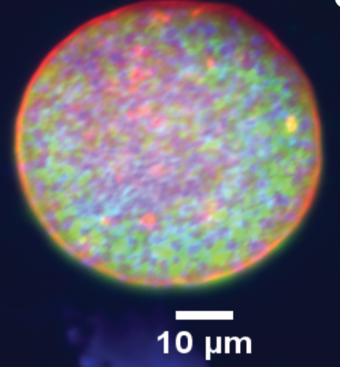
Image shows a cyst which can contain hundreds of T. gondii parasites. (UCR/Wilson lab)
<関連情報>
- https://news.ucr.edu/articles/2026/01/27/scientists-find-hidden-diversity-inside-common-brain-parasite
- https://www.nature.com/articles/s41467-026-68489-y
ブラディゾイトの亜型はトキソプラズマの発達の分岐点を支配している Bradyzoite subtypes rule the crossroads of Toxoplasma development
Arzu Ulu,Sandeep Srivastava,Nala Kachour,Brandon H. Le,Michael W. White & Emma H. Wilson
Nature Communications Published:24 January 2026
DOI:https://doi.org/10.1038/s41467-026-68489-y
We are providing an unedited version of this manuscript to give early access to its findings. Before final publication, the manuscript will undergo further editing. Please note there may be errors present which affect the content, and all legal disclaimers apply.
Abstract
Toxoplasmosis is a major risk to chronically infected individuals, especially those who become immunocompromised. Although one-third of the globe is infected with Toxoplasma, no treatments prevent or eliminate cysts in part due to limited understanding of bradyzoite biology. The cyst is central to Toxoplasmosis, as transition from bradyzoites to tachyzoites drive pathology. In this study, we aim to understand the biology of bradyzoites prior to recrudescence and the developmental pathways they initiate. Here, we discover ME49EW cysts from infected mice harbor multiple bradyzoite subtypes with distinct fates. Purified subtypes exhibit defined developmental pathways in animals and in primary astrocytes. Single-bradyzoite RNA-sequencing reveals five major subtypes within cysts. We further show that a crucial subtype in chronically infected mice is absent from a widely used in vitro model of bradyzoite development. Altogether, this work establishes new foundational principles of Toxoplasma cyst development and reactivation that operate during the intermediate life cycle of Toxoplasma.

