2026-02-09 東京科学大学
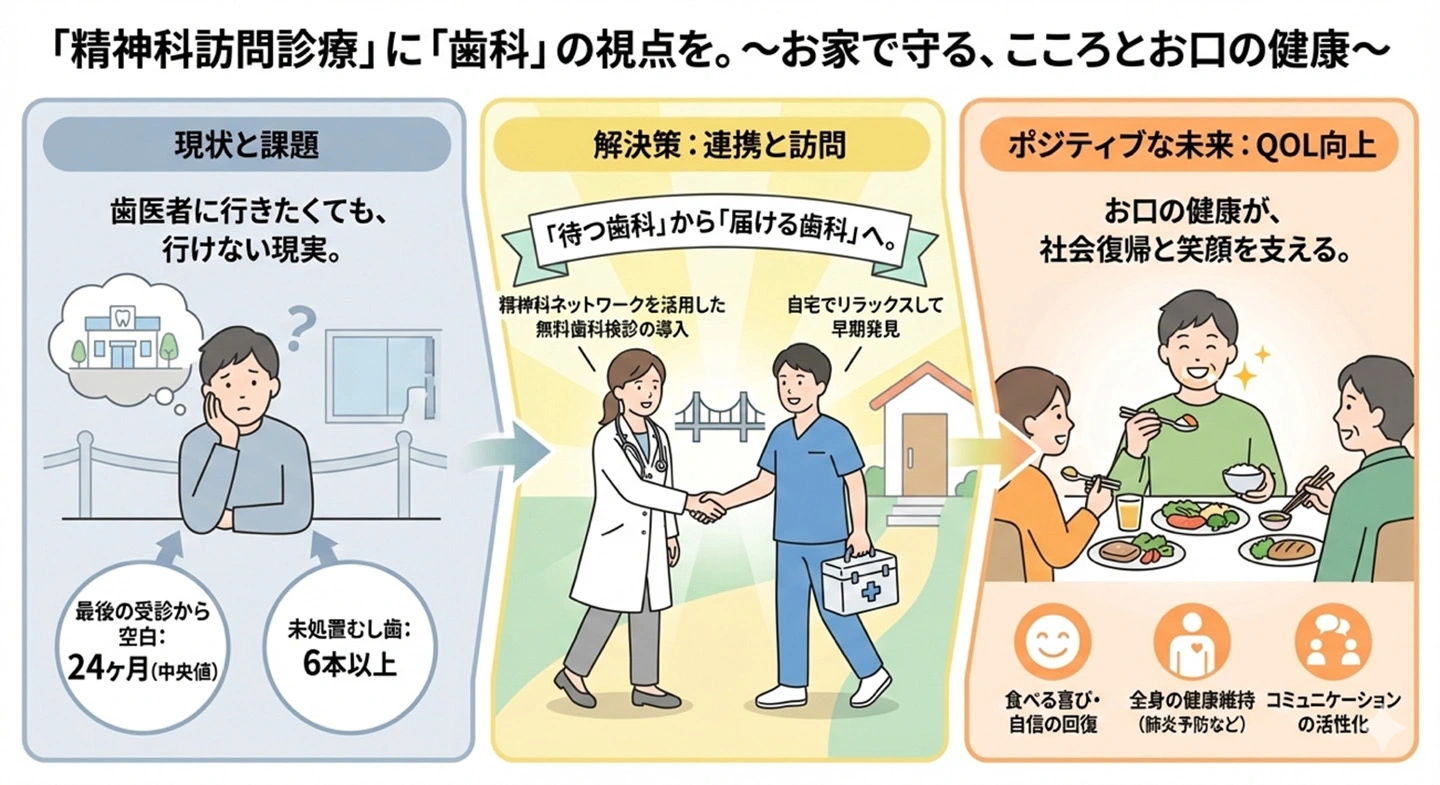
図. 本研究の概要
<関連情報>
- https://www.isct.ac.jp/ja/news/lg19rp2mo4hf
- https://www.isct.ac.jp/plugins/cms/component_download_file.php?type=2&pageId=&contentsId=1&contentsDataId=3203&prevId=&key=ae030823307bb29494be862fe8c68da6.pdf
- https://www.nature.com/articles/s41598-026-35661-9
在宅精神科サービスを受けている患者の口腔の健康状態と満たされていない歯科ニーズに関する予備研究 A preliminary study on oral health status and unmet dental needs in patients with home-based psychiatric services
Takayuki Suga,Trang Thi Huyen Tu,Yuji Gamo,Takafumi Asakura,Shigeru Iida,Yoko Iwase & Akira Toyofuku
Scientific Reports Published:09 January 2026
DOI:https://doi.org/10.1038/s41598-026-35661-9
Abstract
To investigate the oral health status and unmet dental needs of patients receiving home-based psychiatric care in Tokyo. This preliminary study aimed to assess the extent of dental problems and identify the proportion of patients requiring urgent or comprehensive dental treatment to inform more effective integrated care strategies. This study involved 22 patients receiving psychiatric care at home from a Tokyo-based clinic. A single dentist conducted free, in-home dental examinations during psychiatric home visits. Oral health was evaluated using the decayed, missing, and filled teeth (DMFT) index, Oral Health Assessment Tool (OHAT), Oral Hygiene Index (OHI), Plaque Index (PI), and Tongue Coating Index (TCI). Patient demographic and clinical data were also analyzed. The findings revealed a high prevalence of untreated caries (elevated DT scores), residual roots, and poor oral hygiene across multiple indices. Many patients had not visited a dentist for several years. A significant majority (68.18%) of participants were recipients of public assistance, and financial constraints were identified as a critical barrier to accessing care for those ineligible. For 40.91% of participants, the examination was prompted by caregiver concern rather than patient initiative. Patients receiving home-based psychiatric care demonstrate significant unmet dental needs and poor oral hygiene, exacerbated by financial, motivational, and logistical barriers. The study highlights an urgent need for enhanced home dental services, improved financial support systems, and stronger collaboration among medical, dental, and social welfare sectors to provide continuous and accessible oral healthcare for this vulnerable population.