2026-02-05 ワシントン大学セントルイス校
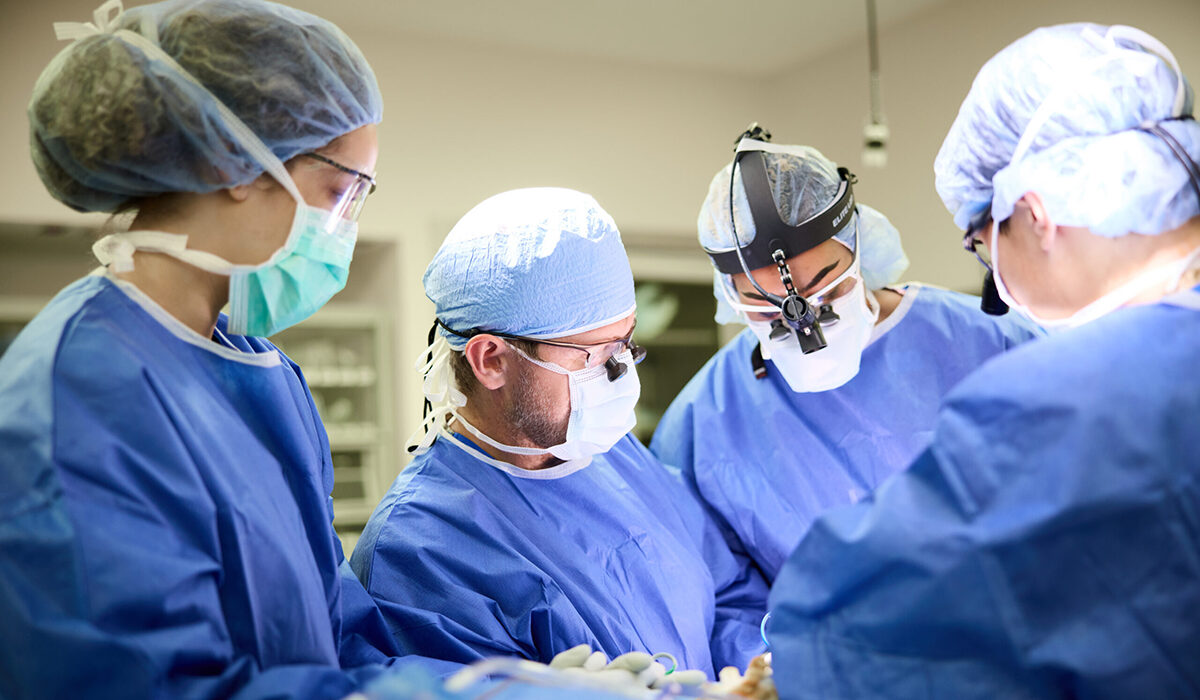 Collaborators at WashU Medicine developed a tool to detect infections early among patients who have had breast reconstruction after cancer, potentially allowing for preemptive treatment that preserves implants, improves outcomes and reduces the emotional and financial burden on patients. (Photo: Matt Miller/WashU Medicine)
<関連情報>
- https://source.washu.edu/2026/02/method-spots-early-signs-of-infection-after-breast-cancer-reconstruction/
- https://medicine.washu.edu/news/method-spots-early-signs-of-infection-after-breast-cancer-reconstruction/
- https://www.jci.org/articles/view/192104
乳房インプラント再建患者における感染診断に先立って、感染と相関する小分子が見つかる Small molecule correlates of infection precede infection diagnosis in breast implant reconstruction patients
John A. Wildenthal, Margaret A. Olsen, Hung D. Tran, John I. Robinson, Terence M. Myckatyn, David K. Warren, Keith E. Brandt, Marissa M. Tenenbaum, Joani M Christensen, Thomas H. Tung, Justin M. Sacks, Rachel A. Anolik, Katelin B. Nickel, Hideji Fujiwara, Peter J. Mucha, and Jeffrey P. Henderson
Journal of Clinical Investigation Published: December 23, 2025
DOI:https://doi.org/10.1172/JCI192104
Abstract
BACKGROUND. Infection is an important complication of implanted devices and prosthetics. Identifying infections sufficiently early to salvage implants and avoid reconstructive failure is a persistent medical challenge.
METHODS. Two female cohorts >21 years undergoing breast implant reconstruction were recruited. Seroma fluid (82 breasts, 70 patients) was collected upon implant removal for infectious or non-infectious causes. Post-implantation drain fluid (100 samples, 44 breasts, 32 patients) was collected at routine visits prior to implant removal. A liquid-chromatography/mass spectrometry-based metabolomic approach was used to identify infection correlates.
RESULTS. In seroma fluid specimens, infection was associated with a diverse set of small molecules including acetylated polyamines, defensins, glucosyl-sphingosine, and several peptide-like features (all P<0.001, diagnostic areas under the receiver operating curve 0.82-0.93). Notably, a subset of these markers were significantly elevated (p<0.05) in post-implantation drain fluid before recorded infection symptoms and diagnosis. Pseudomonas aeruginosa and its specialized exometabolites in drain specimens were also associated with subsequent P. aeruginosa infections.
CONCLUSION. Tissue fluid from infected patients has a distinctive metabolome reflecting human and bacterial physiologic processes that often precede clinical diagnoses. A diagnostic based on these findings has potential to improve patient outcomes through early recognition of infection.
TRIAL REGISTRATION. Not applicable.
FUNDING. Work was supported by U54CK000609 from the CDC and an unencumbered research gift to TMM from Sientra. Metabolomic approaches were supported by RO1DK125860 and RO1DK111930 to JPH. The contents are solely the responsibility of the authors and do not necessarily represent the official views of CDC.