2026-02-17 オックスフォード大学
<関連情報>
- https://www.ox.ac.uk/news/2026-02-17-existing-hospital-analysers-offer-low-cost-method-screen-fake-vaccines
- https://www.nature.com/articles/s41598-026-37281-9
生化学プロファイリングは、偽造ワクチンやインスリンを検出するための低コストで世界的に利用可能な方法を提供します Biochemical profiling provides a low-cost and globally accessible method to detect falsified vaccines and insulin
Jennifer Brook,Tehmina Bharucha,Benediktus Yohan Arman,Céline Caillet,Susan Morris,Michelle Taylor-Siddons,Laura Gomez Fernandez,John Walsby-Tickle,Isabelle Legge,Sneha Banerjee,Michael Deats,Rajender Jena,Dnyanesh S. Ranade,Shrikrishna R. Chunekar,Kundan D. Patil,Sunil Gairola,Susanna Dunachie,Hamid A. Merchant,Robert Stokes,Rutendo Kuwana,Alexandrine Maes,Sarah Gilbert,James McCullagh,Pavel Matousek,… Tim James
Scientific Reports Published:16 February 2026
DOI:https://doi.org/10.1038/s41598-026-37281-9
Abstract
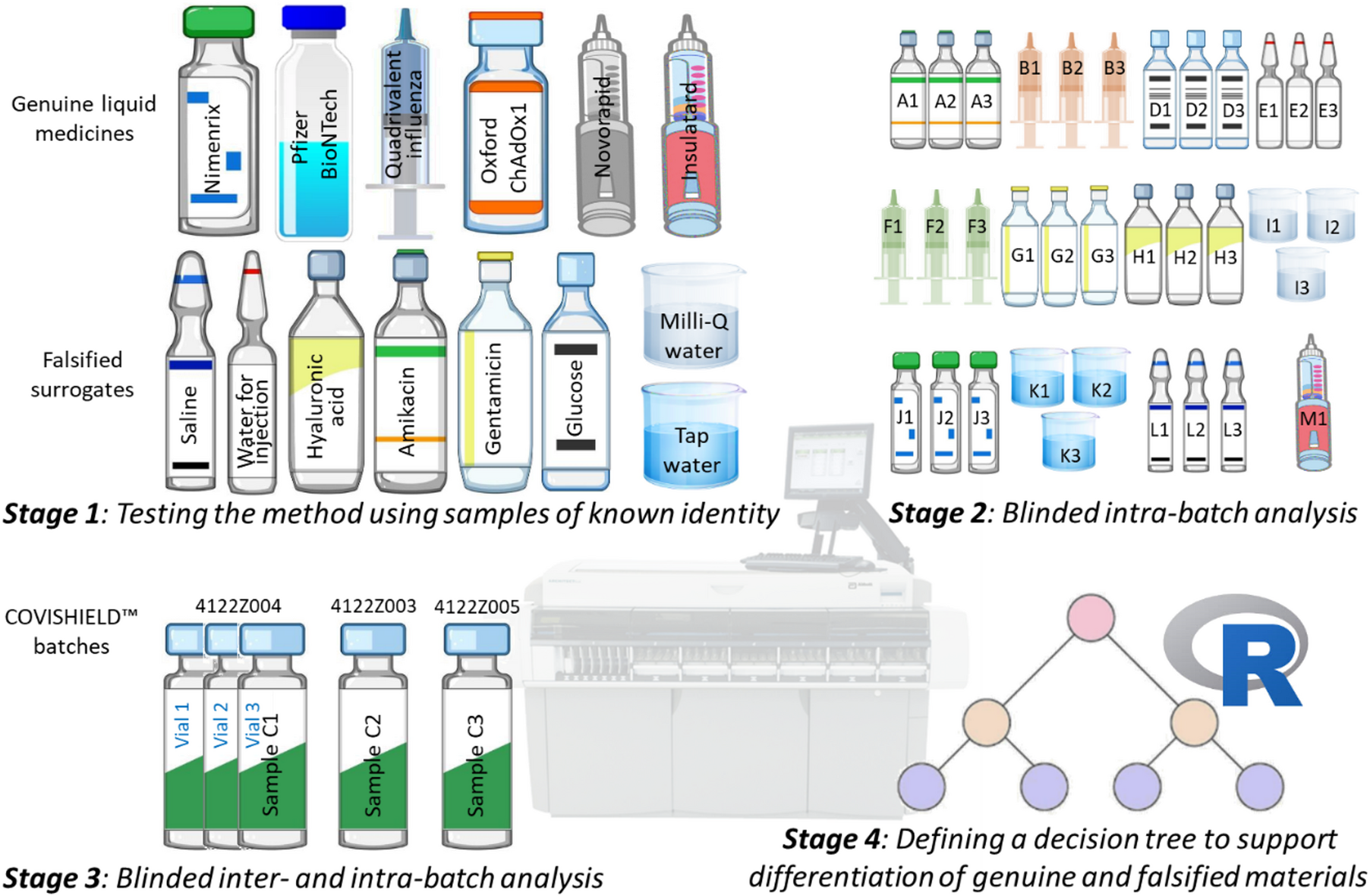
For many decades, there have been numerous reported cases of falsified liquid medical products, including vaccine and insulin preparations worldwide, but to date, there has been a lack of affordable and accessible analytical methods for biological medicines and vaccine authenticity testing. A conventional clinical chemistry analyser (Abbott Architect c16000) was used to determine the concentrations of analytes in genuine liquid biological products (vaccines and insulin) and falsified vaccine surrogates. Eight analytes were measured for each sample: sodium, potassium, chloride, calcium, magnesium, phosphate, glucose and protein. Each genuine liquid product had unique concentrations of analytes when tested using the eight methods applied, allowing clear differentiation from the falsified surrogates. In a blinded study, reproducibility was significantly high when the samples were run intra- and inter-batch up to 9 times over 9 different days, and it was possible to identify most of the samples by analyte presence alone. Imprecision was < 1.0 CV% for ion-selective electrode methods and typically < 5 CV% for spectrophotometric methods. A decision tree was created which was able to identify all samples. We demonstrate for the first time that a conventional clinical chemistry analyser provides a low-cost method to accurately differentiate genuine products from falsified surrogate liquid medicines and vaccines. This novel method has the potential to be used globally due to widespread use of clinical chemistry analysers in hospitals across the world, including in low- and middle-income countries where many cases of falsified medicines have been identified.