2026-03-17 国立がん研究センター
<関連情報>
- https://www.ncc.go.jp/jp/information/pr_release/2026/0317/index.html
- https://aacrjournals.org/cancerres/article-abstract/doi/10.1158/0008-5472.CAN-25-2848/775264/A-GCLC-Inhibitor-Enhances-the-Antitumor-Efficacy?redirectedFrom=fulltext
GCLC阻害剤は、SMARCB1欠損横紋筋腫瘍におけるグルタチオン代謝経路阻害の抗腫瘍効果を高める A GCLC Inhibitor Enhances the Antitumor Efficacy of Glutathione Metabolic Pathway Inhibition in SMARCB1-Deficient Rhabdoid Tumors
Mariko Takeuchi;Yoshinori Ishikawa;Takuya Okada;Ryohei Kozaki;Hideaki Ogiwara
Cancer Research Published:March 16 2026
DOI:https://doi.org/10.1158/0008-5472.CAN-25-2848
Abstract
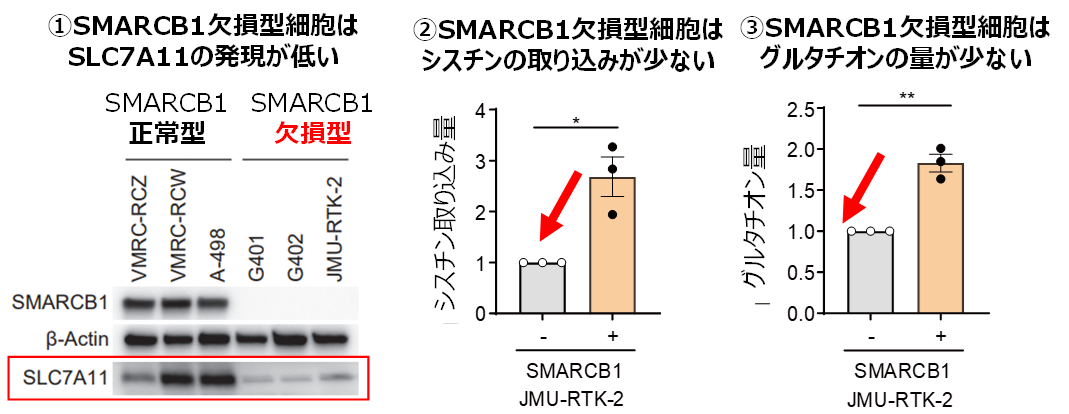
Malignant rhabdoid tumors and epithelioid sarcomas, characterized by SMARCB1 deficiency, are aggressive cancers with limited effective treatments, necessitating development of therapeutic strategies. This study investigated the therapeutic efficacy and mechanism of action of inhibitors targeting glutamylcysteine ligase catalytic subunit (GCLC) in these intractable malignancies. The GCLC inhibitors GCLCi0 (ONO-6428513) and GCLCi1 (ONO-7068506) demonstrated high selectivity and potent anti-tumor effects in SMARCB1-deficient cancer cells in mouse tumor xenograft models, surpassing the efficacy of existing drugs. GCLC inhibition led to the depletion of intracellular glutathione (GSH), an increase in reactive oxygen species (ROS), and elevated lipid peroxidation, ultimately inducing ferroptotic cell death. SMARCB1-deficient cells exhibited reduced expression of SLC7A11, which led to low basal GSH levels and sensitivity to GCLC inhibition. Significant synergistic effects were observed when GCLC inhibitors were combined with agents targeting the GSH synthesis pathway, specifically SLC7A11 inhibitors and the glutaminase inhibitor telaglenastat. In a mouse tumor xenograft model, the combination of a GCLC inhibitor and telaglenastat showed superior anti-tumor efficacy compared to monotherapy, with good tolerability. These findings highlight the vulnerability of glutathione metabolism in SMARCB1-deficient cancers, suggesting that a GCLC inhibitor may be a promising therapeutic option. This study provides a preclinical foundation for the development of effective treatment strategies for SMARCB1-deficient cancers, including combination therapies, and supports further investigation toward future translational applications.