
2025-08-25 イリノイ大学アーバナ・シャンペーン校
<関連情報>
- https://aces.illinois.edu/news/kidney-fibrosis-linked-molecule-made-gut-bacteria
- https://news.illinois.edu/kidney-fibrosis-linked-to-molecule-made-by-gut-bacteria/
- https://www.nature.com/articles/s41467-025-61847-2
微生物由来のコリシンが細胞老化を促進し、腎臓線維化を加速する Microbiota-derived corisin accelerates kidney fibrosis by promoting cellular aging
Taro Yasuma,Hajime Fujimoto,Corina N. D’Alessandro-Gabazza,Masaaki Toda,Mei Uemura,Kota Nishihama,Atsuro Takeshita,Valeria Fridman D’Alessandro,Tomohito Okano,Yuko Okano,Atsushi Tomaru,Tomoko Anoh,Chisa Inoue,Manal A. B. Alhawsawi,Ahmed M. Abdel-Hamid,Kyle Leistikow,Michael R. King,Ryoichi Ono,Tetsuya Nosaka,Hidetoshi Yamazaki,Christopher J. Fields,Roderick I. Mackie,Xuenan Mi,Diwakar Shukla,… Esteban C. Gabazza
Nature Communications Published:25 August 2025
DOI:https://doi.org/10.1038/s41467-025-61847-2
Abstract
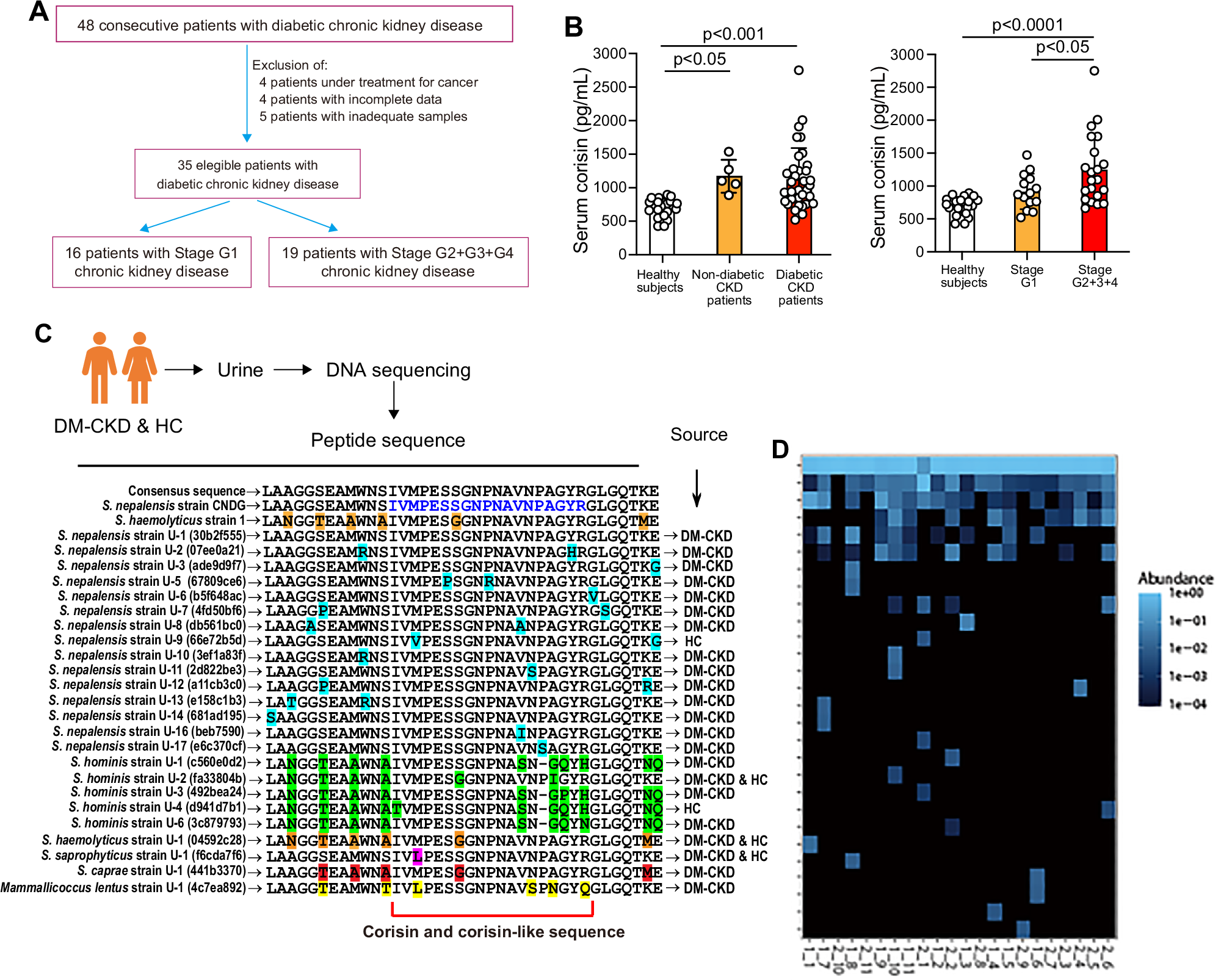
The increasing global prevalence of diabetic nephropathy poses substantial health and economic burdens. Currently, effective anti-fibrotic therapies for managing kidney fibrosis associated with chronic kidney disease are lacking. This study reveals corisin, a microbiota-derived peptide, as a central driver in the progression of diabetic kidney fibrosis. Corisin levels were found to be markedly elevated in the serum of diabetic chronic kidney disease patients relative to healthy controls, with strong correlations to advanced disease stages and declining renal function. In a murine model of kidney fibrosis, corisin levels were similarly heightened, directly contributing to increased inflammation and worsening fibrosis and renal impairment. Notably, the use of a monoclonal anti-corisin antibody significantly reduced nephropathy severity in diabetic mice. Through molecular dynamics simulations and experimental validation, we demonstrated that corisin interacts with human serum albumin, potentially enhancing its renal accumulation and pathological impact. The pathogenic mechanism of corisin involves the acceleration of cellular senescence and the induction of epithelial-mesenchymal transition and apoptosis in kidney cells. These findings underscore the critical role of corisin in progressive diabetic nephropathy and suggest a promising new target for therapeutic intervention.

