2025-09-12 カロリンスカ研究所(KI)
<関連情報>
- https://news.ki.se/smells-deceive-the-brain-are-interpreted-as-taste
- https://www.nature.com/articles/s41467-025-63803-6
味覚と後鼻腔臭覚がヒト島皮質に喚起する共有された風味特異的神経コード Tastes and retronasal odours evoke a shared flavour-specific neural code in the human insula
Putu Agus Khorisantono,Maria G. Veldhuizen & Janina Seubert
Nature Communications Published:12 September 2025
DOI:https://doi.org/10.1038/s41467-025-63803-6
Abstract
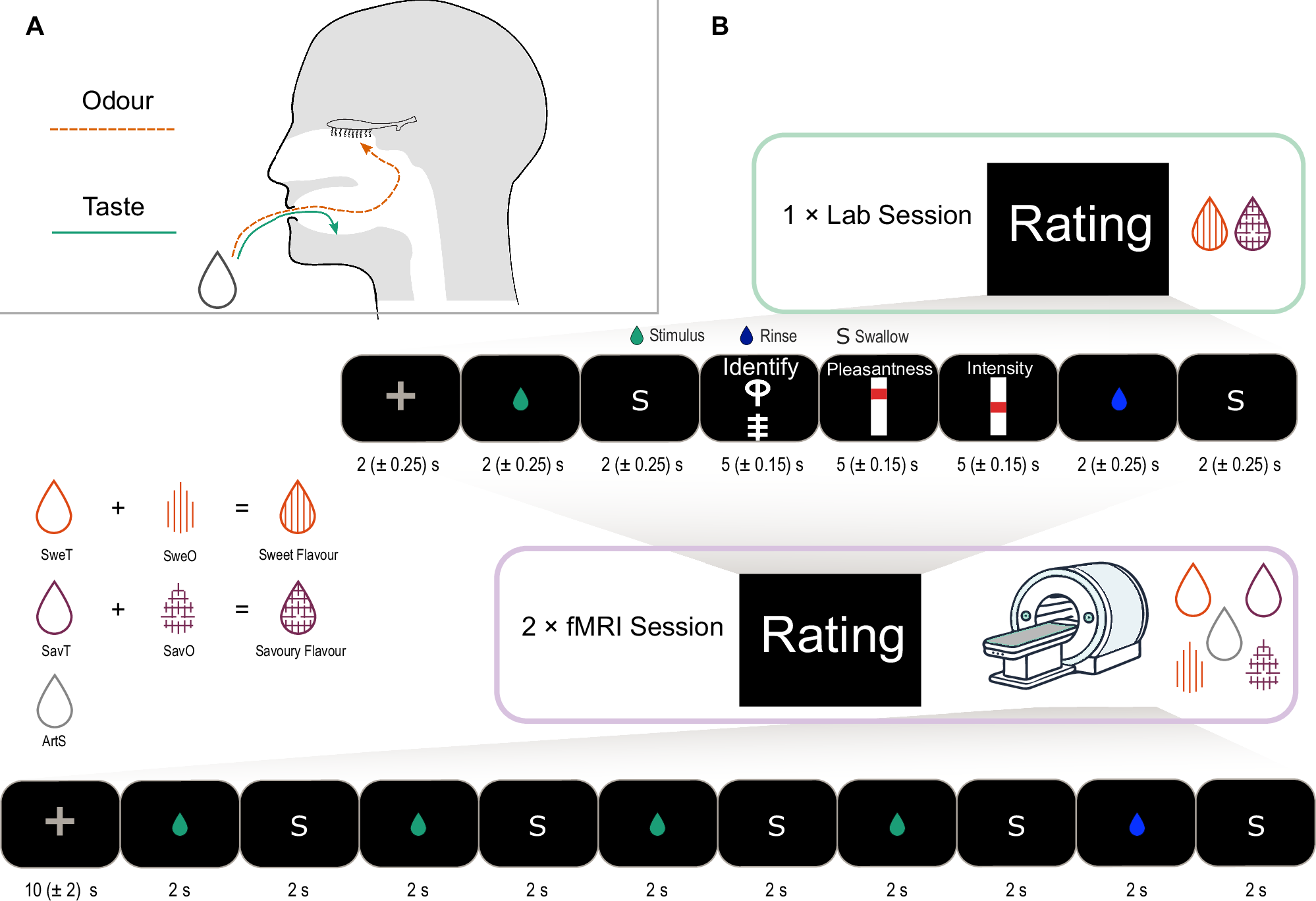
During food consumption, tastes combine with retronasal odours to form flavour, which leads to a link so robust that retronasal odours can elicit taste sensations without concurrent taste stimulation. However, the cortical integration of these parallel sensory signals remains unclear. Here, we combine a flavour-binding paradigm and functional neuroimaging to test whether retronasal odorants evoke encoding patterns in the insula similar to those of their paired tastants. Healthy participants attend a familiarisation session with congruent sweet and savoury flavours followed by two functional MRI (Magnetic Resonance Imaging) sessions where they separately receive the constituent tastants and odorants. Multivariate pattern analysis reveal classification of retronasal odours within the insula, exhibiting overlapping representations with their associated tastes, particularly in the ventral anterior insula. Additionally, we observe temporal drift in insular taste representations, paralleling findings in rodent gustatory cortex. These findings underscore the robust crossmodal influences of gustatory and retronasal olfactory processing that underpin the flavour percept.