
2025-10-07 国立遺伝学研究所
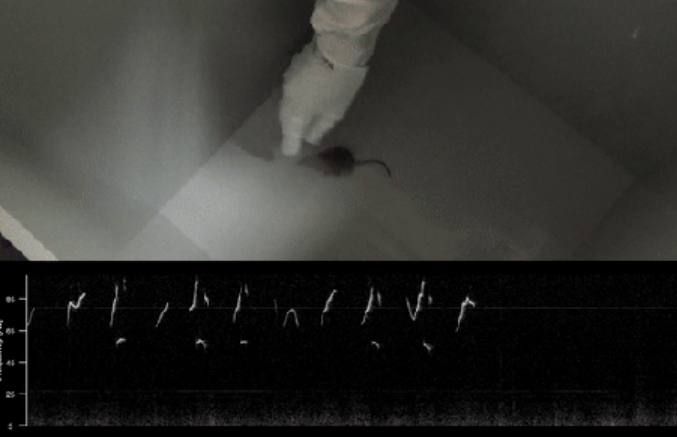
図:選択育種を受けたマウスがくすぐりに反応し超音波を発すると共に、その手を自発的に追いかける「遊び様行動」を示す様子
<関連情報>
- https://www.nig.ac.jp/highlights/4472/
- https://www.sciencedirect.com/science/article/abs/pii/S016643282500436X
飼いならされたマウスとゴールデンハムスターにおけるくすぐりと同種遊びの比較分析 Comparative analysis of tickling and conspecific play in tame mice and golden hamsters
Sarah Dagher, Darcie DeAngelo, Ren Y. Sato, Hiroaki Norimoto, Tsuyoshi Koide, Shimpei Ishiyama
Behavioural Brain Research Available online: 26 September 2025
DOI:https://doi.org/10.1016/j.bbr.2025.115849
Abstract
Social play behaviour is a fundamental aspect of animal interaction, shaping social bonds and enhancing cognitive capacity. While studies on human-animal playful interactions have primarily focused on a few selected species, research on rodents beyond rats remains scarce. We, therefore, addressed the dynamics of social play in tame mice, selectively bred to approach human hands, and golden hamsters, comparing their responses during interactions with humans and conspecifics. Tame mice exhibited heightened playfulness with humans, marked by increased vocalisations and hand chasing behaviour, in addition to more frequent interactions and playful conspecific interactions accompanied by elevated ultrasonic vocalisations, whereas unselected control mice showed more aggressive behaviours. Hamsters showed minimal interaction with human hands, and their vocalisations were not associated with heterospecific contact. In contrast, they engaged in playful conspecific behaviours such as boxing and pinning, which were accompanied by frequent vocalisations. Notably, vocalisation patterns varied between heterospecific and conspecific engagement in both species, suggesting context-dependent vocal expression. These findings offer insights into the evolutionary basis influencing social play across species with differing social structures. Understanding these mechanisms enriches our comprehension of the diverse pathways through which animals form social bonds.

