2025-10-08 ヒューストン大学(UH)
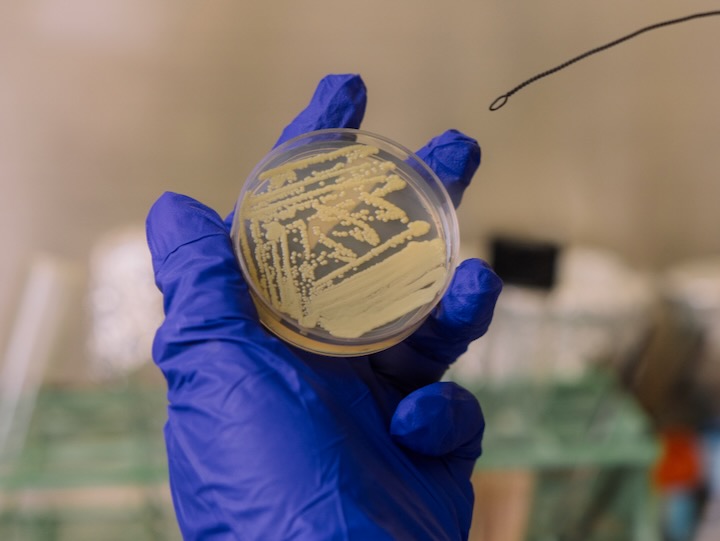
A bacterial species, Tersicoccus phoenicis, found in spacecraft clean rooms can survive intensive antimicrobial cleaning by going dormant.
<関連情報>
- https://uh.edu/news-events/stories/2025/october/10082025-dormant-spacecraft-clean-room-bacteria.php
- https://journals.asm.org/doi/10.1128/spectrum.01692-25
宇宙船クリーンルームから分離した放線菌であるテルシコッカス・フェニキスは休眠状態を示す Tersicoccus phoenicis (Actinobacteria), a spacecraft clean room isolate, exhibits dormancy
Madhan Tirumalai, Sahar Ali, George E. Fox, William Widger
Microbiology Spectrum Published:11 August 2025
DOI:https://doi.org/10.1128/spectrum.01692-25
ABSTRACT
Space missions or spacecraft equipment destined for sensitive environments, such as Mars, Europa, or Enceladus, are required to be designed to avoid forward contamination. Spacecraft are assembled in clean rooms (SACs) employing treatments to eliminate microbial contamination. However, some organisms can survive the cleaning procedures. Characterization of these populations, through both culture-based and sequencing methods, reveals that the majority consists of spore-forming bacteria. However, a smaller group of non-spore-forming organisms, primarily classified within the order Micrococcales of the phylum Actinobacteria (Actinomycetota), exists in some SACs. Despite their repeated occurrence and isolation, actinobacterial strains associated with SACs have not been studied for their dormancy potential. Here, we show for the first time that a non-spore-forming SAC isolate, Tersicoccus phoenicis (Micrococcales), enters dormancy under nutrient starvation. Dormancy in Micrococcus luteus involves a universal stress protein and a resuscitation-promoting factor (Rpf). Genes for these proteins are widely found in actinobacteria, including T. phoenicis. We show that dormant T. phoenicis (Micrococcales) can be revived through the addition of the Rpf to the media. Dormancy, as observed in the SAC actinobacterial isolate T. phoenicis, could well be a common trait adopted by other actinobacterial strains under the stressful conditions of spacecraft clean rooms or the ISS (International Space Station). This has implications for the persistence, identification, and recovery of such microbes from cleanroom facilities.