
2025-11-04 カリフォルニア大学リバーサイド校(UCR)
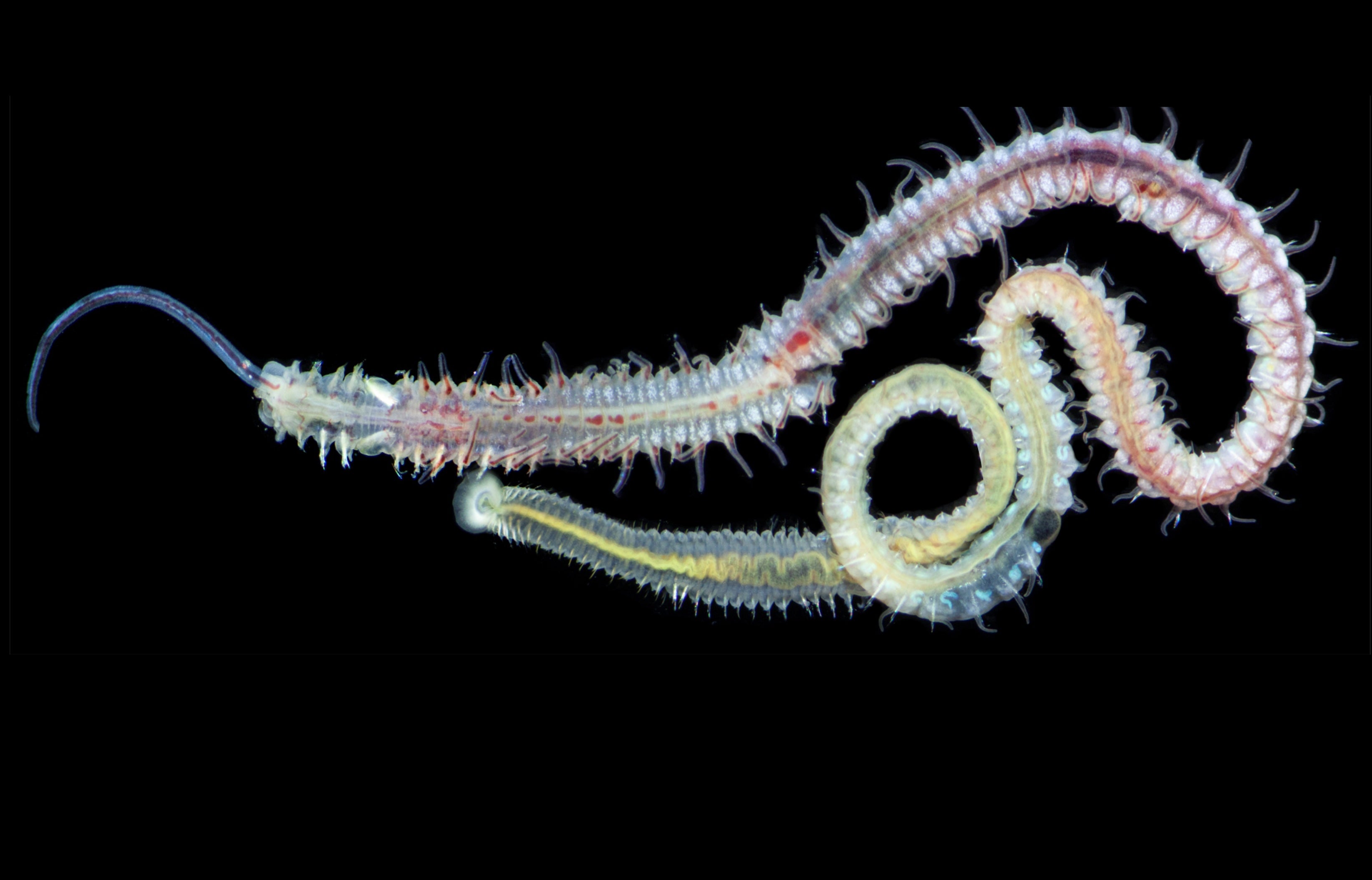
Adult marine shell-boring spionid polychaete. (Vasily Radishevsky/ Far Eastern Branch of the Russian Academy of Sciences)
<関連情報>
- https://news.ucr.edu/articles/2025/11/04/half-billion-year-old-parasite-still-threatens-shellfish
- https://www.sciencedirect.com/science/article/pii/S2589004225019820
4億8000万年前の寄生性のスピオニド環形動物 A 480-million-year-old parasitic spionid annelid
Karma Nanglu, Madeleine E. Waskom, Sarah R. Losso, Javier Ortega-Hernández
iScience Available online: 14 October 2025
DOI:https://doi.org/10.1016/j.isci.2025.113721
Highlights
- The first evidence of parasitism from best preserved Ordovician fossil site, Fezouata
- Parasitic spionids occurred ∼100 million years older than previously known
- Life history strategy of these worms has remained stable for 480 million years
Summary
The Paleozoic fossil record provides unique insights into the evolution of life history traits through the direct preservation of interspecific interactions in deep time. However, evidence of direct interactions between different species is relatively rare even among localities with exceptional soft-tissue preservation. Here we provide evidence of parasitic organisms from the Fezouata Shale biota of Morocco. Seven specimens of the bivalve mollusk Babinka show highly characteristic, question mark-shaped shell borings consistent with those produced by modern and fossil parasitic spionid polychetes. This suggests that the spionid polychetes, or polychetes with behavior consistent with spionids, were present in the Early Ordovician, a significant biostratigraphic shift in their temporal origins from their accepted Devonian occurrence. Many unique life history strategies which were significant components of the Fezouata Shale biota remain undiscovered, despite the high concentration of taxonomic attention on the site.

