2025-11-21 ワシントン州立大学(WSU)
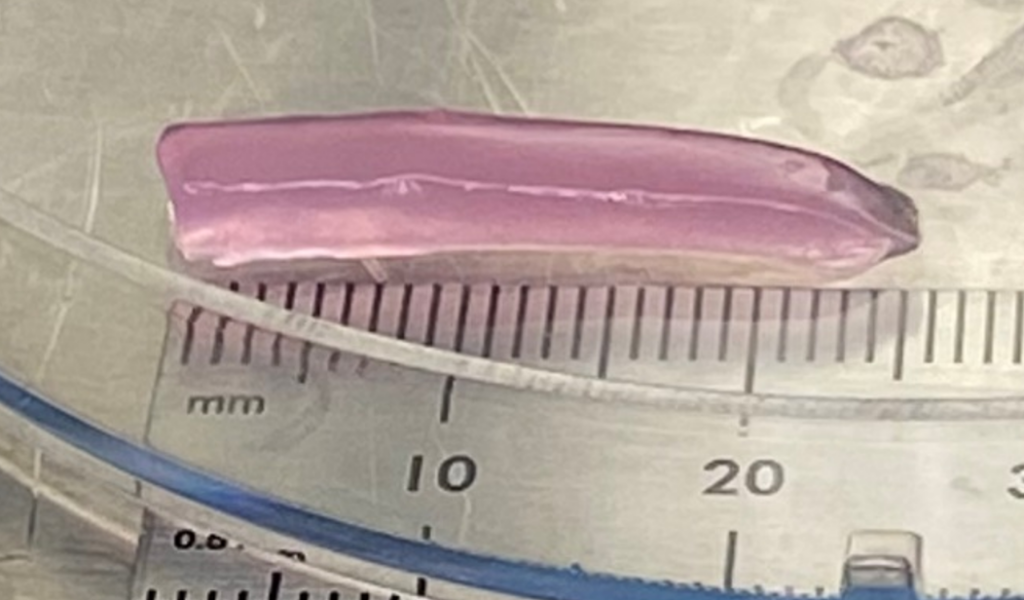
WSU scientists have engineered an artificial cartilage, using stem cells from bone marrow. (WSU photo)
<関連情報>
- https://news.wsu.edu/news/2025/11/21/researchers-aim-for-designing-more-nature-like-cartilage/
- https://pubs.acs.org/doi/full/10.1021/acsbiomaterials.5c01183
段階的流体せん断環境が間葉系間質細胞の軟骨形成運命に及ぼす影響 Effects of a Gradated Fluid Shear Environment on Mesenchymal Stromal Cell Chondrogenic Fate
Terreill J. Robertson II,Alec W. Schuler,Pakkanpat P. Pondipornnont,Ryan R. Driskell,Lawrence J. Bonassar,Arda Gozen,Wenji Dong,David B. Thiessen,and Bernard J. Van Wie
ACS Biomaterials Science & Engineering Published: October 7, 2025
DOI:https://doi.org/10.1021/acsbiomaterials.5c01183
Abstract
Recreating articular cartilage trilayered patterning for an engineered in vitro cell construct holds promise for advancing cartilage repair efforts. Our approach involves the development of a multichambered perfusion tissue bioreactor that regulates fluid shear stress levels similar to the gradated hydrodynamic environment in articular cartilage. COMSOL modeling reveals our tapered cell chamber design will produce three different shear levels, high in the 22–41 mPa range, medium in the 4.5–8.4 mPa range, and low in the 2.2–3.8 mPa range and distributed across the surface of our mesenchymal stromal cell (MSC) encapsulated construct. In a 14-day bioreactor culture, we assess how the fluid shear magnitude and cell vertical location within a 3D construct influence cell chondrogenesis. Notably, Sox9 expression for MSCs cultivated in our reactor shows spatially patterned gene upregulations that encode key chondrogenic marker proteins. Beginning with the high shear stress region, lubricin and type II collagen gene increases of 410- and 370-fold indicate cell movement toward a superficial zone archetype, which is further supported by histological and immunohistochemical stains illustrating the formation of a dense proteoglycan matrix enriched with lubricin, versican, and collagen types I and II molecules. For the medium shear stress region, high aggrecan and type II collagen gene expressions of 2.3- and 400-fold, respectively, along with high proteoglycan analysis, show movement toward a superficial/midzone cartilage archetype. For low shear stress regions, higher collagen type II and X gene upregulations of 550- and 8300-fold, the latter being 2× of that for the high shear regime, indicate cell movement toward deep zone characteristics. Collectively, biochemical analysis, histology, and gene expression data demonstrate that our fluid shear bioreactor induces formation of a stratified structure within tissue-engineered constructs, demonstrating the feasibility of using this approach to recapitulate the structure of native articular cartilage.