2025-12-17 国立長寿医療研究センター,東京都健康長寿医療センター
<関連情報>
- https://www.ncgg.go.jp/ri/report/20251209-2.html
- https://www.ncgg.go.jp/ri/report/documents/20251209.pdf
- https://www.nature.com/articles/s10038-025-01438-7
ゲノムおよびトランスクリプトームワイド関連研究により、日本人における嗜銀顆粒性認知症の複数の新規遺伝子座が同定された Genome and transcriptome-wide association studies identify multiple novel loci for dementia with grain in Japanese
Risa Mitsumori,Kouichi Ozaki,Yuko Saito,Daichi Shigemizu,Atsushi Iwata,Shigeo Murayama,Masahiro Akishita,Tomio Arai,Shumpei Niida & Kenji Toba
Journal of Human Genetics Published:17 December 2025
DOI:https://doi.org/10.1038/s10038-025-01438-7
Abstract
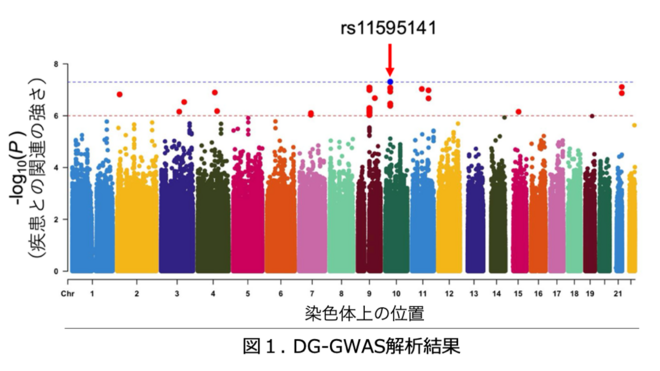
Argyrophilic grain (AG) is a common neurodegenerative accumulation of 4 repeat tau in dendritic spine. Dementia with grain (DG) is defined as AGs with a sole pathological basis for cognitive decline. As with other multifactorial diseases, DG could result from interactions of environmental and genetic factors. However, the genetic basis of DG is largely unknown. To clarify the genetic architecture of DG pathogenesis, we conducted a genome-wide association study (GWAS) with 214 DG cases versus 12,405 controls. We have identified a candidate locus associated with the risk of DG, the SVIL locus on chromosome 10, with genome-wide significance (rs11595141, P = 4.86 × 10⁻⁸) in the GWAS. Transcriptome-wide association analysis using summary statistics for DG-GWAS identified DAPK2 (PTWAS = 3.68 × 10⁻⁵) as a novel candidate causal gene for DG pathogenesis in the brain frontal cortex. The genetic association analysis for the APOE locus revealed that the APOE allele did not affect DG pathogenesis. We also identified new variants in the MAPT encoding tau protein that could potentially affect DG pathology. This is the first GWAS for DG, and our genetic findings provide biological and clinical insights into the pathogenesis of DG.