2026-01-09 カロリンスカ研究所(KI)
<関連情報>
- https://news.ki.se/new-study-explains-the-link-between-long-term-diabetes-and-vascular-damage
- https://diabetesjournals.org/diabetes/article-abstract/doi/10.2337/db25-0463/164232/Long-Duration-of-Type-2-Diabetes-Drives?redirectedFrom=fulltext
2型糖尿病の長期罹患は赤血球誘導性血管内皮機能障害を引き起こす:miRNA-210-3pとの関連 Long Duration of Type 2 Diabetes Drives Erythrocyte-Induced Vascular Endothelial Dysfunction: A Link to miRNA-210-3p
Eftychia Kontidou;Aida Collado;Rawan Humoud;Kesavan Manickam;John Tengbom;Tong Jiao;Michael Alvarsson;Jiangning Yang;Linda Mellbin;Ali Mahdi;John Pernow;Zhichao Zhou
Diabetes Published:January 09 2026
DOI:https://doi.org/10.2337/db25-0463
Graphical Abstract
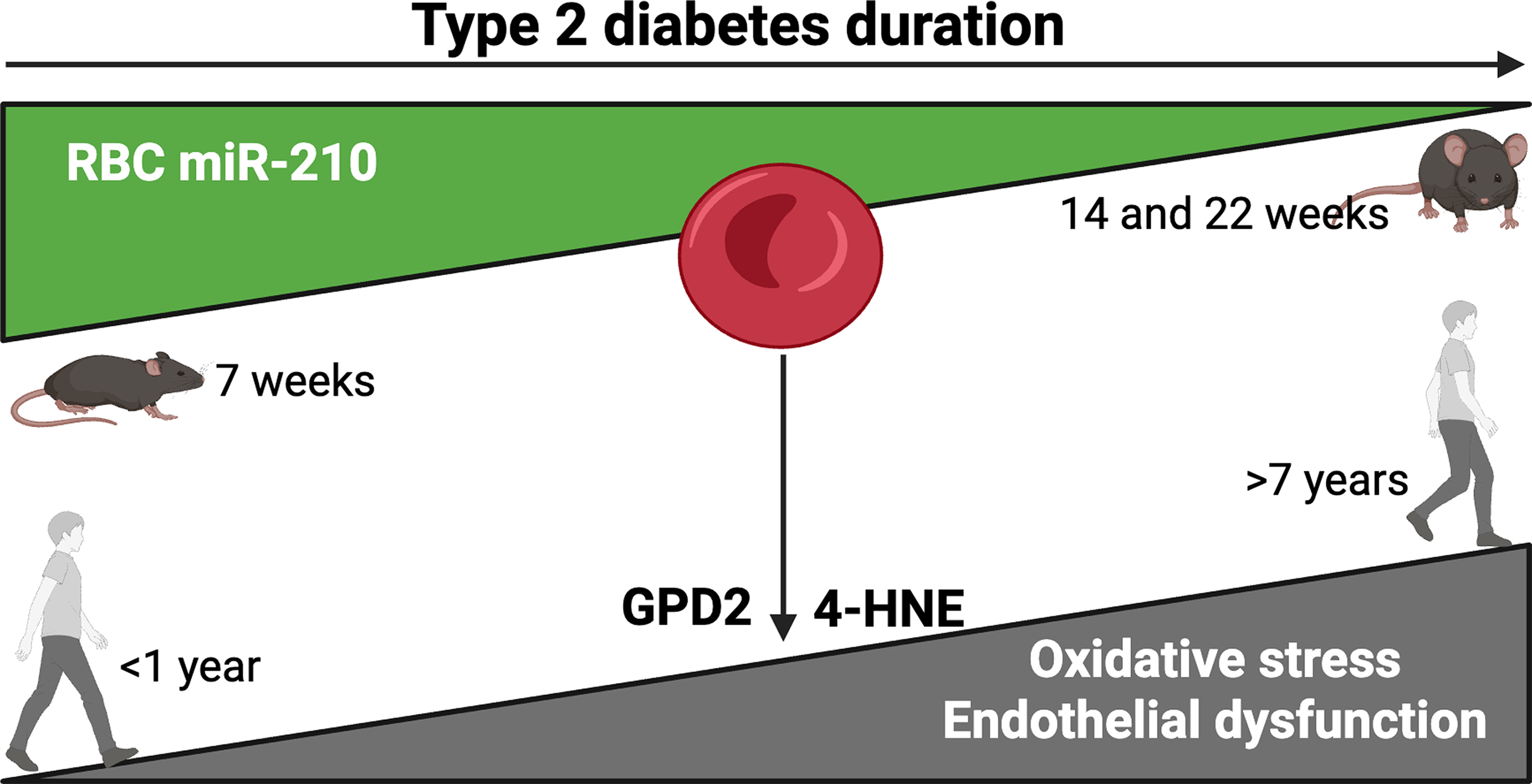
Type 2 diabetes increases cardiovascular risk, with endothelial dysfunction playing a key role. Prolonged disease duration exacerbates cardiovascular risk, but the underlying mechanisms remain unclear. We previously demonstrated that red blood cells (RBCs) from individuals with type 2 diabetes impair endothelial function via reduced miRNA (miR)-210-3p. We investigated whether disease duration influences RBC-induced endothelial dysfunction and its link to miR-210-3p. RBCs were isolated from diabetic db/db mice of various ages and from humans with newly diagnosed (<1 year) or long-lasting type 2 diabetes (>7 years). Endothelial-dependent relaxation (EDR), miR-210-3p levels, its target protein glycerol-3-phosphate dehydrogenase 2 (GPD2), and oxidative stress marker 4-hydroxynonenal (4-HNE) were assessed. RBCs from 14- and 22-week-old, but not 7-week-old, db/db mice impaired EDR. These RBCs showed similarly reduced miR-210-3p levels and increased vascular GPD2 and 4-HNE expression. RBCs from individuals with long-lasting type 2 diabetes, but not from the newly diagnosed group, impaired EDR. After ≥7 years, RBCs from initially newly diagnosed individuals impaired EDR, which was rescued by miR-210-3p mimic transfection. In contrast, RBCs from healthy subjects did not impair EDR after follow-up. These findings underscore the pivotal role of disease duration for RBC-mediated vascular dysfunction, linked to miR-210-3p downregulation. RBC miR-210-3p may serve as a biomarker for diabetes-related vascular disease.
Article Highlights
- Red blood cells (RBCs) from older (representing longer duration of diabetes) but not young diabetic mice induce endothelial dysfunction.
- Protective miRNA-210-3p levels in RBCs are reduced in older diabetic mice compared with young ones.
- RBCs from individuals with long-lasting (>7 years) but not newly diagnosed type 2 diabetes (<1 year) induce endothelial dysfunction.
- RBCs from individuals with newly diagnosed type 2 diabetes induce endothelial dysfunction at a >7-year follow up, which is rescued by miRNA-210-3p mimic.