2026-02-02 ミュンヘン大学(LMU)
<関連情報>
- https://www.lmu.de/en/newsroom/news-overview/news/protein-identified-as-cause-of-skin-damage-after-radiotherapy-f8cfc0ed.html
- https://www.nature.com/articles/s41392-025-02541-z
ケラチノサイト中のWnt関連DKK3は放射線誘発性過形成、皮膚炎、皮膚線維症を媒介する Wnt-associated DKK3 in keratinocytes mediates radiation-induced hyperplasia, dermatitis and skin fibrosis
Li Li,Ramon Lopez Perez,Khuram Shehzad,Richard Jennemann,Claudia Schmidt,Thomas Walle,Alexandra Tietz-Dahlfuß,Elisabeth Grimm,Joscha A. Kraske,Peter Häring,Uladzimir Barayeu,Tobias P. Dick,Luxi Ye,Stephan A. Braun,Michael Hertl,Thomas Worzfeld,Thorsten Wiech,Huihui Ji,Jing Su,Jonathan M. Schneeweiss,Muzi Liu,Katharina Kommoss,Matthias Heikenwälder,Bingwen Zou,… Peter E. Huber
Signal Transduction and Targeted Therapy Published:02 February 2026
DOI:https://doi.org/10.1038/s41392-025-02541-z
Abstract
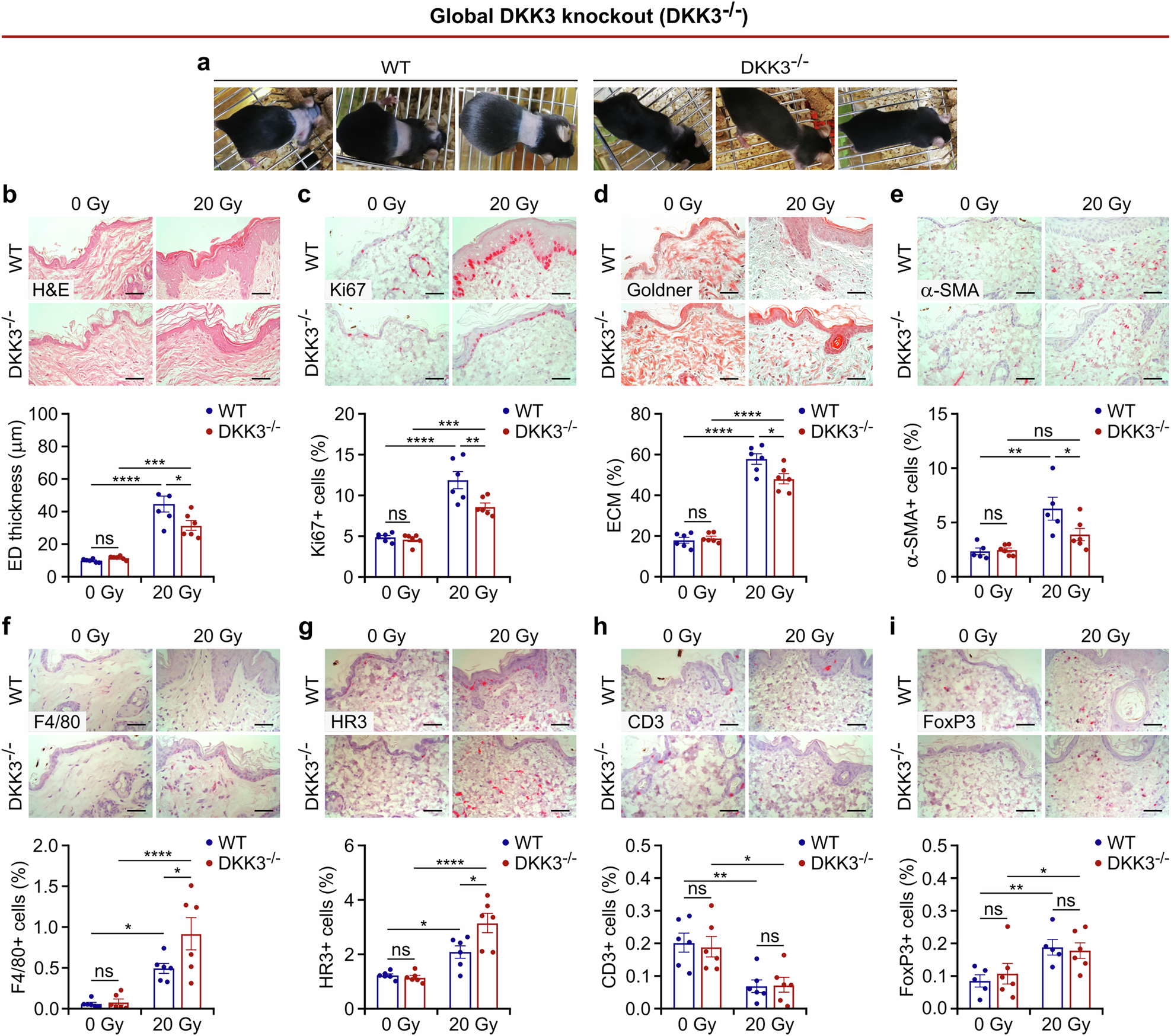
Radiotherapy remains a mainstay of cancer treatment. However, radiotherapy can also elicit acute and chronic adverse effects, including dermal inflammation and skin fibrosis. A comprehensive understanding of the underlying fibrotic processes remains elusive, and currently, no established treatment options exist. Canonical Wnt signaling has emerged as a significant player in fibrotic conditions. The Dickkopf (DKK) protein family comprises key modulators of Wnt signaling. To define the function of DKK3 in radiation-induced skin damage, we combined complementary in vivo and in vitro approaches, including a 3D human skin model, mice with cell-type-specific Dkk3 deletions, and irradiated human skin specimens. Our study revealed the pivotal role of DKK3 in regulating the response of the skin to radiation, with diminished DKK3 significantly mitigating radiation-induced skin damage. We found that radiation increases DKK3 expression in basal keratinocytes, leading to elevated ROS levels, TGF-β-mediated Wnt activation, epidermal hyperplasia, and subsequent skin fibrosis. Increased keratinocyte expression of DKK3 also drives macrophage polarization toward a CD163highCD206high profibrotic M2 phenotype, activating myofibroblasts and leading to fibrosis. Notably, DKK3 deficiency in keratinocytes markedly reduces radiation-induced dermal hyperplasia and fibrosis, identifying DKK3 as a key regulator of cutaneous radiation responses. These findings position DKK3 as a promising upstream modulator of TGF-β signaling for mitigating radiation-induced dermatitis and fibrosis, with potential relevance to other fibrotic diseases.