2026-02-02 ニューヨーク大学(NYU)
米国のNew York Universityの研究チームは、つる植物が宿主植物から栄養を奪う「寄生的」な性質を持つ仕組みを分子レベルで解明した。研究では、つる植物が接触した相手を感知し、成長方向や巻き付き行動を調整する過程で、宿主の資源を効率的に利用する戦略を備えていることを明らかにした。特定の遺伝子発現やシグナル応答が、寄生的な成長様式を支えており、これが農業における作物被害の一因となっている可能性が示された。本成果は、つる植物の進化理解を深めるとともに、作物保護や生態系管理への応用につながる知見を提供する。
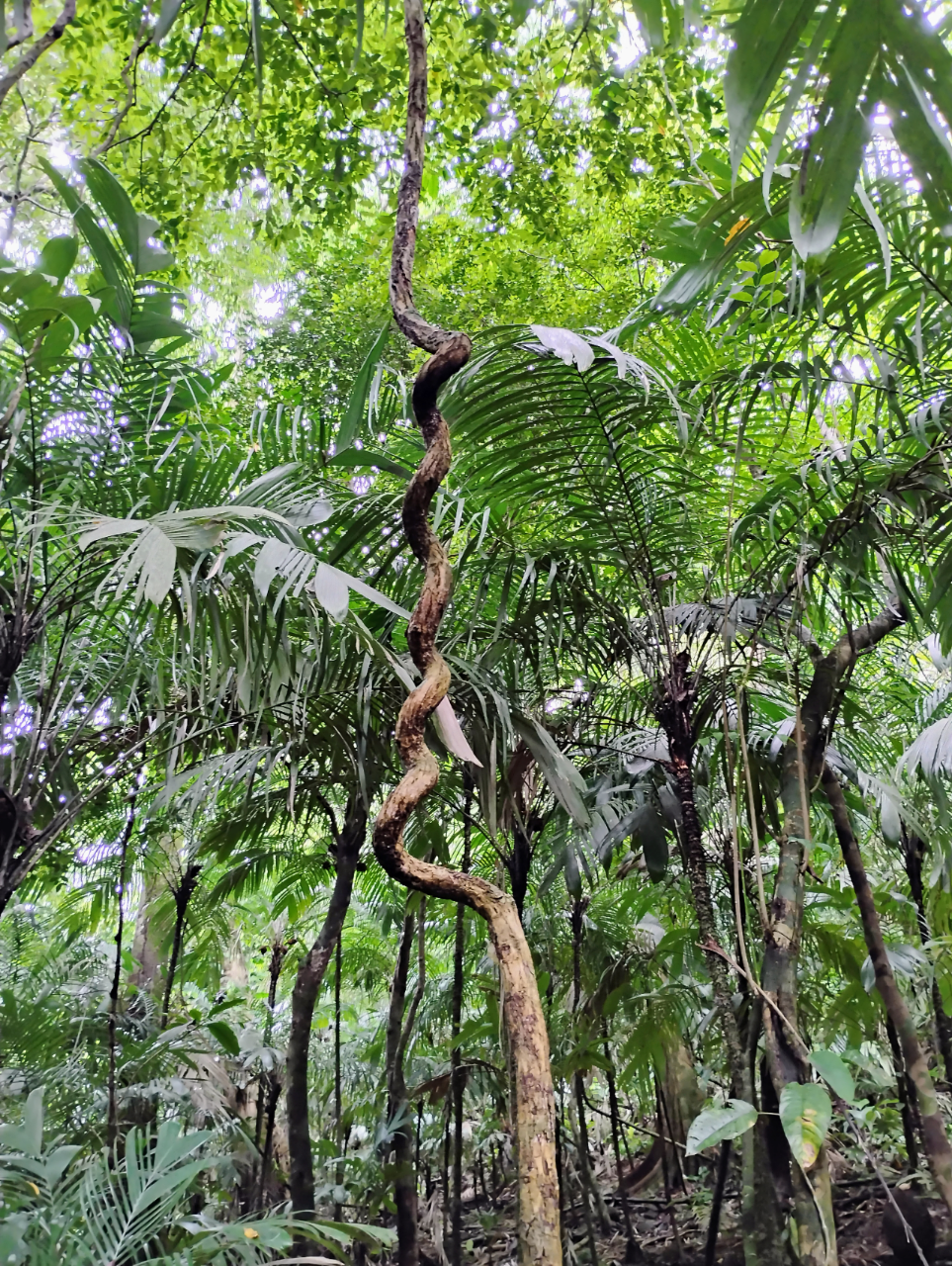
A climbing vine in Oaxaca, Mexico. Photo courtesy of Lena Hunt/New York University
<関連情報>
- https://www.nyu.edu/about/news-publications/news/2026/january/scientists-unravel-vines–parasitic-nature.html
- https://nph.onlinelibrary.wiley.com/doi/abs/10.1111/nph.70935
XTH遺伝子がインゲンマメの蔓の成長習性決定に影響を与えることがブラシノステロイド処理によって明らかになった XTH genes impact growth habit determination of twining common bean vine revealed by brassinosteroid treatment
Lena Hunt, Mariane S. Sousa-Baena, Angelique A. Acevedo, Leo Semana, Annabelle Wang, Rosemary A. E. Glos, Barbara A. Ambrose, Charles T. Anderson, Joyce G. Onyenedum
New Phytologist Published: 28 January 2026
DOI:https://doi.org/10.1111/nph.70935
Summary
- Brassinosteroids impact the development of G-fibers – specialized cells that generate tension in plants. To explore the functional and genetic relationships between G-fibers and twining stems of Phaseolus vulgaris, we applied an active brassinosteroid and a brassinosteroid inhibitor to perturb G-fiber development and probed these phenotypes through gene expression and anatomical analyses.
- Brassinosteroid treatment generated phenotypes that affected three key features of twining: elongation, circumnutation, and G-fiber development. We examined anatomical and biochemical changes in the G-fibers through cross-sections, macerations, and immunohistochemistry. RNA sequencing and differential gene expression analysis allowed us to identify unique gene expression patterns for each treatment.
- Brassinosteroid treatment led to significantly elongated internodes with disrupted circumnutation and long, thin-walled G-fibers. By contrast, inhibitor treatment produced short internodes with thick G-fibers. These phenotypes corresponded with significant differential expression of xyloglucan endotransglucosylase/hydrolase (XTH) genes, both at the onset of elongation and later, during G-layer deposition. Detection of xyloglucan in the G-layer, along with in situ hybridization, confirmed active xyloglucan remodeling after twining.
- Our results confirm the presence of xyloglucan in the G-layer of common bean, underscoring its importance in G-fiber function, and suggest a regulatory role for XTH genes in shaping the twining growth habit through modulation of cell wall properties.