2026-05-12 中国科学院(CAS)
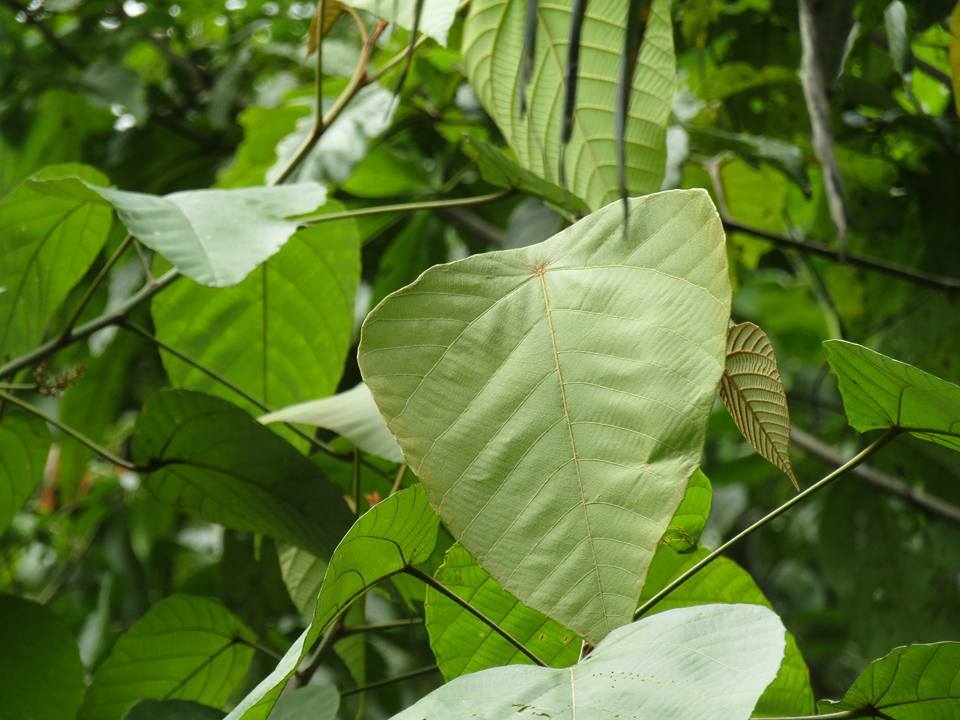
Macaranga indica (Image by TIAN Bo)
<関連情報>
- https://english.cas.cn/newsroom/research-news/202605/t20260512_1159150.shtml
- https://academic.oup.com/hr/advance-article/doi/10.1093/hr/uhag114/8572069
2種のマカランガ属植物 の染色体レベルのゲノムは、ネルボン酸蓄積の分子メカニズムに関する知見を提供する The chromosome-level genomes of two Macaranga species provide insights into the molecular mechanism of nervonic acid accumulation
Donghai Li,Qi Qiang,Zhengshan He,Fayi Chen,Baozheng Chen,Yamin Xu,Juan Guo,Junbo Yang,Wenbing Yu,Yaohuan Xu,…
Horticulture Research Published:02 April 2026
DOI:https://doi.org/10.1093/hr/uhag114
Abstract
Nervonic acid (NA) is a monounsaturated fatty acid (FA) with multiple therapeutic and hygienic benefits, and found accumulating in plant seeds. It is essential for developing innovative plant source of NA to elucidate the molecular regulation mechanisms underlying NA biosynthesis and accumulation. We presented high-quality chromosome-level de novo genome assemblies of two contrasting NA-producing plants: high-NA Macaranga indica and low-NA M. denticulata. we found that bothM. indica and M. denticulata retained considerable repetitive sequences, similar chromosome arrangements, analogous regulation models in capsule maturation. Correlated to faster accumulating NA, M. indica streamlined genes and regulators of FA biosynthesis, FA elongation and TAG biosynthesis through three directions: uniform regulators, less analogous and higher expression of genes. In contrast, M. denticulata bequeathed diverse environment response, and more analogous or redundant duplications. Despite their sympatric distribution, the two species showed staggered flowering. Therein, cold, ABA and phosphate starvation were major elicitors to M. indica, and core genes were identified as KCS, PDAT and DGAT. Further resequencing analysis of M. indica revealed geography-specific gene polymorphisms and migration pathways. Our results unveil the differences in NA biosynthesis and accumulation mechanisms between M. indica and M. denticulata. This understanding, combined with insights into cultivating strategies and regional genetic diversity, provides a basis for the domestication and breeding of Macaranga species toward efficient NA production.