2026-08-04 東京科学大学
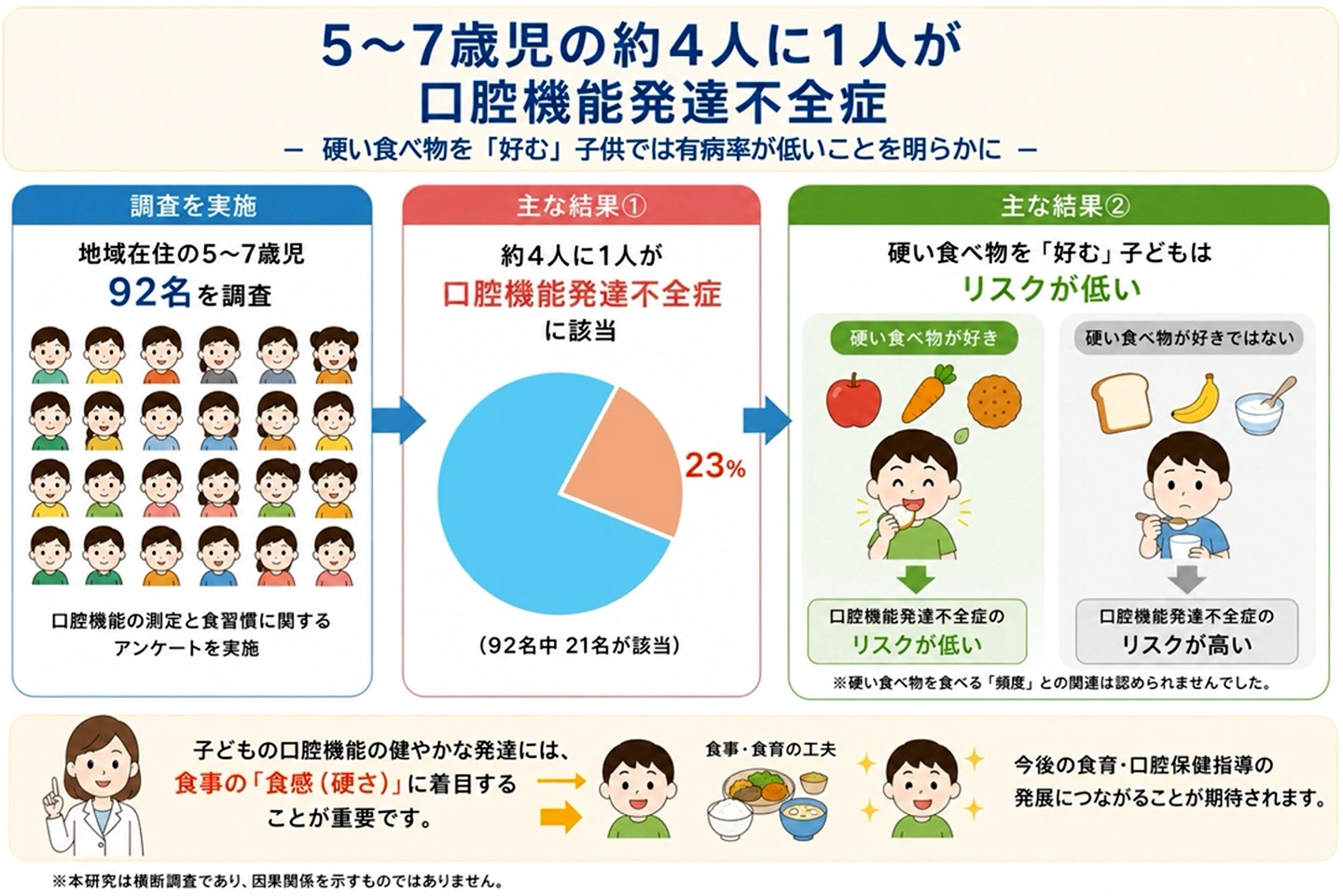
図1. 5~7歳児における口腔機能発達不全症と食習慣との関連
<関連情報>
5~7歳児における口腔機能の発達と食習慣の評価 Evaluation of Oral Function Development and Eating Habits in Children Aged 5–7 Years
Jun Kawamura, Susumu Kanno, Teppei Shintani, Misaki Matsui, Yuriko Komagamine, Hitomi Soeda, Anna Miyayasu, Maiko Iwaki, Shunsuke Minakuchi, Yohei Hama, Kazuto Okabayashi, Manabu Kanazawa
Journal of Oral Rehabilitation Published: 15 May 2026
DOI:https://doi.org/10.1111/joor.70213
ABSTRACT
Background
The number of children with poor oral function, known as developmental insufficiency of oral function (DIOF), has increased, negatively affecting children’s growth and development. Research on the overall prevalence of DIOF in children is limited.
Objective
We aimed to investigate the prevalence of DIOF in community-dwelling children aged 5–7 years and examine its relationship with eating habits that may affect oral function.
Methods
We analysed data from children who participated in the Survey on All-Generation Masticatory Strength and Eating Habits. Chi-square tests were used to examine the relationship between the incidence of DIOF and participant characteristics. Logistic regression was used to explore the relationship between eating habits and participant characteristics, namely oral function and DIOF incidence.
Results
Ninety-two children (aged 5.6 ± 0.1, 47 males) were included in the final analysis, 23% of whom had DIOF. Children who preferred hard foods were less likely to have DIOF (adjusted odds ratio = 0.636, 95% confidence interval 0.405–0.998, p = 0.049). The frequency of hard food intake had no influence on DIOF incidence.
Conclusion
Approximately one in four children who participated in the study had DIOF. A preference for hard food was associated with a reduced risk of DIOF, indicating the importance of dietary texture in oral function development. Given the cross-sectional design of this study, further research is needed to explore the development of oral function through oral and dietary education.