2026-08-04 東京大学
<関連情報>
- https://www.k.u-tokyo.ac.jp/information/category/press/0030385.html
- https://genome.cshlp.org/content/early/2026/07/01/gr281813125
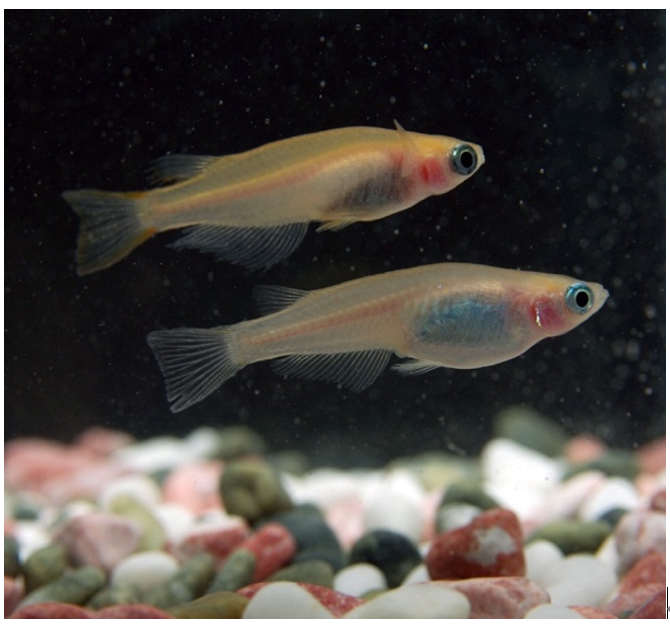
メダカゲノムの完全配列決定により、セントロメアサテライト、巨大可動性因子、および性染色体の構造が明らかになった Complete sequencing of medaka genomes reveals the architecture of centromeric satellites, giant mobile elements, and sex chromosomes
Yoshihiko Suzuki,Kazuki Ichikawa,Yusuke Inoue,Chie Owa,Haruka Kobayashi… Kiyoshi Naruse,Shigehiro Kuraku,Hiroyuki Takeda,Shinichi Morishita
Genome Research Published: July 1, 2026
DOI: https://doi.org/10.1101/gr.281813.125
Abstract
Medaka (Oryzias latipes) is a small freshwater teleost widely used as a vertebrate model organism. Existing medaka reference genomes, however, contain many gaps and unresolved repetitive regions, hindering precise genome annotation and comparative analyses. Here we present one complete and two near-complete genome assemblies for three inbred medaka strains derived from geographically distant populations. These assemblies provide a comprehensive view of highly repetitive sequences and chromosome-scale genome architecture in medaka. The fully resolved centromeres reveal an intriguing sequence organization characterized by short, distinct SF1+3 satellite arrays flanked by larger homogenized repeats. These short arrays are putatively hypomethylated and conserved across all acrocentric chromosomes, suggesting a functional role in centromere stability. The reconstructed 121 copies of the giant mobile element Teratorn retain complete genes of both a transposon and a herpesvirus, highlighting its unique persistence and impact on host genomes. Moreover, our assemblies reveal extensive structural divergence of medaka Y Chromosomes, yet identify a small (~24 kb) conserved region encompassing Dmy that may suffice for male determination. Collectively, these (near-)complete medaka genomes provide a powerful resource for exploring the biology of uncharacterized repetitive regions and the molecular basis of phenotypic diversity in vertebrates.