2026-10-02 東京科学大学
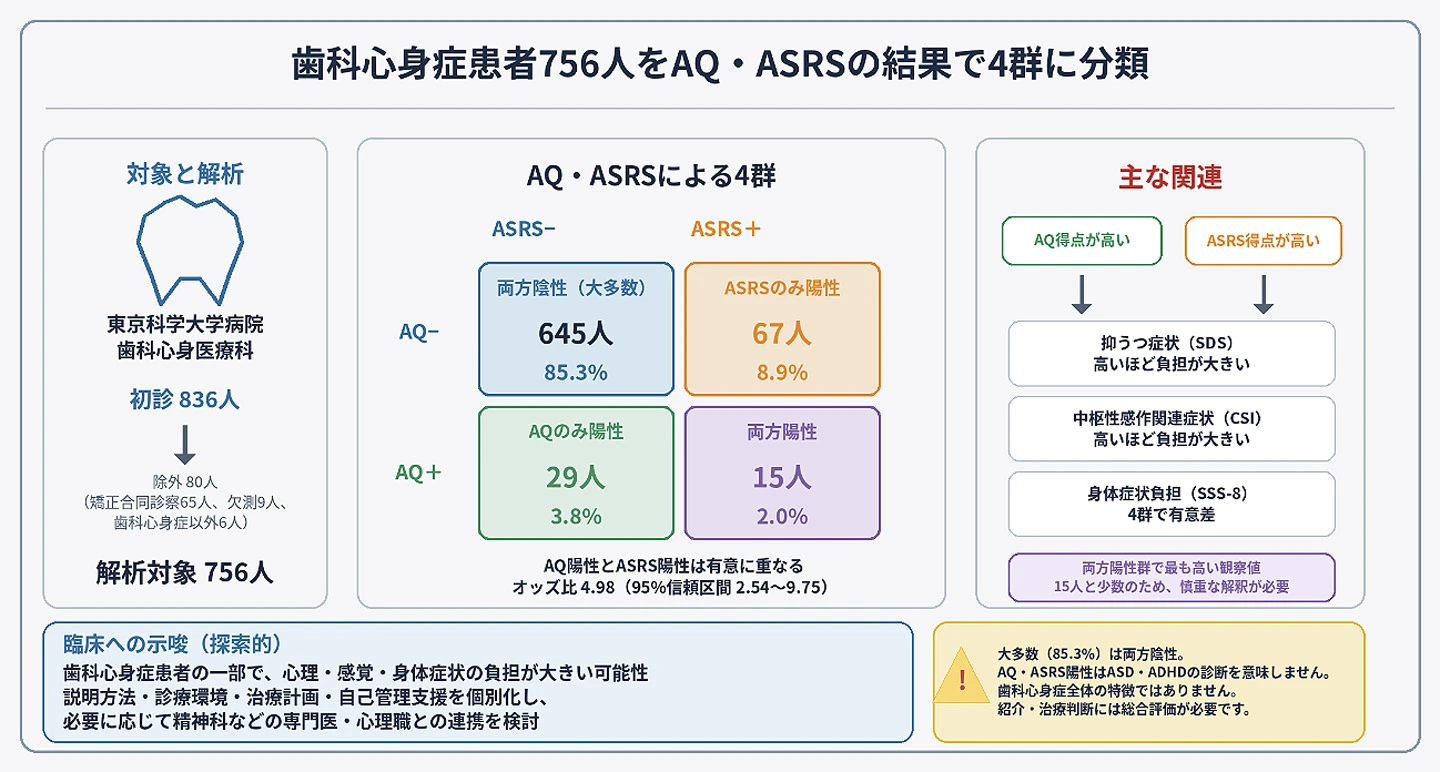
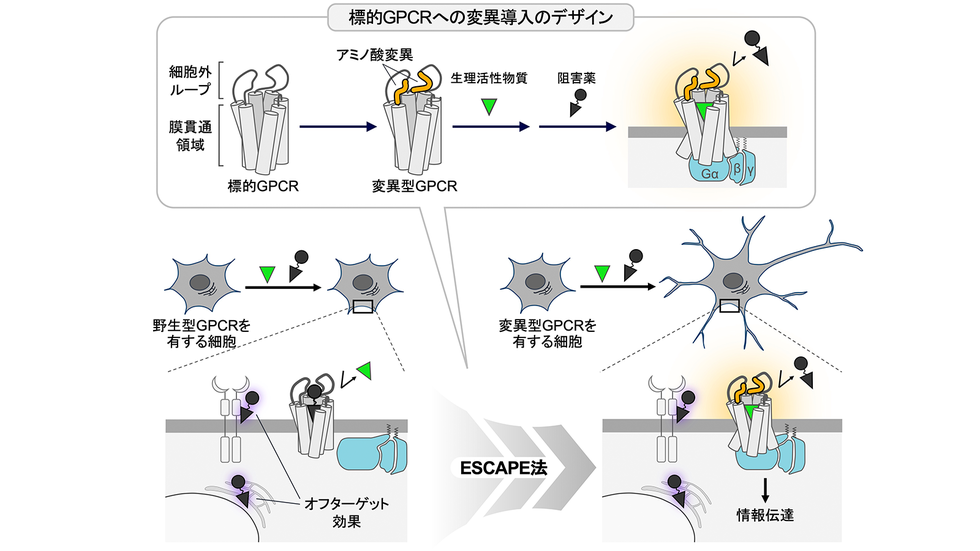
図1. 本研究の概略
<関連情報>
- https://www.isct.ac.jp/ja/news/22kctj05jiao
- https://www.sciencedirect.com/science/article/pii/S0020653926017491
医学的に説明のつかない口腔症状における神経発達特性のサブグループ:後向き観察研究 Neurodevelopmental Trait Subgroups in Medically Unexplained Oral Symptoms: A Retrospective Observational Study
Qinyi Chen, Takayuki Suga, Trang Thi Huyen Tu, Satoshi Kasahara, Akira Toyofuku
International Dental Journal Available online: 22 September 2026
DOI:https://doi.org/10.1016/j.identj.2026.111160
Abstract
Introduction and aims
Medically unexplained oral symptoms (MUOS) are heterogeneous conditions with prominent subjective complaints despite limited objective findings. We examined whether autism spectrum disorder (ASD)- and attention-deficit/hyperactivity disorder (ADHD)-related traits characterize exploratory MUOS subgroups.
Methods
In this retrospective exploratory study, 756 MUOS patients seen from April 2023 to March 2025 were classified using the Autism-Spectrum Quotient (AQ) and Adult ADHD Self-Report Scale (ASRS). Depressive symptoms, central sensitization, somatic symptom burden, and MUOS diagnoses were compared, and regression tested associations of AQ and 18-item ASRS total scores with Self-Rating Depression Scale (SDS) and Central Sensitization Inventory (CSI) scores.
Results
Of 756 patients, 645 (85.3%) were AQ−/ASRS−, 67 (8.9%) AQ−/ASRS+, 29 (3.8%) AQ+/ASRS−, and 15 (2.0%) AQ+/ASRS+. AQ and ASRS positivity overlapped significantly (odds ratio 4.98, 95% confidence interval 2.54-9.75; P < .001), and continuous scores were moderately correlated (rho = 0.39). SDS, CSI, and Somatic Symptom Scale-8 (SSS-8) scores differed across groups (all P < .001). The AQ+/ASRS+ subgroup had the highest observed values, but its estimates were imprecise because it included only 15 patients. Higher AQ and ASRS total scores were independently associated with higher SDS and CSI in pooled multiple-imputation models.
Conclusion
AQ/ASRS screen-positive traits were associated with greater depressive symptoms, central sensitization, and somatic symptom burden. These measured associations may have implications for management complexity, although management complexity itself was not assessed. AQ/ASRS screening may support exploratory phenotyping but cannot establish ASD or ADHD diagnoses or serve as a definitive clinical decision tool. Prospective validation is required before clinical implementation.
Clinical relevance
Brief AQ/ASRS screening may help characterize MUOS patients with higher psychosomatic burden and possible under-recognized neurodevelopmental traits. Any implications for management complexity or screening-informed referral and care are exploratory because these outcomes were not evaluated; positive screens should be interpreted as trait indicators rather than diagnoses.