2026-11-16 東北大学
<関連情報>
- https://www.tohoku.ac.jp/japanese/2026/11/press20261116-03-chrebp.html
- https://www.pnas.org/doi/10.1073/pnas.2537870123
ChREBPは糖尿病性腎臓病を促進し、その阻害は腎臓を保護する(ChREBP drives diabetic kidney disease, and its inhibition confers renal protection)
Thanh Phuong Nguyen, Susumu Suzuki, Koji Okamoto, Ryo Ito, Hiroto Mizuno, Sora Fujita, Takumi Kouketsu, Kotone Teshima, Shun Sawatsubashi, Tatsuya Takemoto, Hiroyuki Yamakoshi, Masaya Takahashi, Mayu Kuroda, Yusuke Sasano, Yuta Yoshizaki, Yotaro Matsumoto, Kosuke Ohsawa, Genki Kudo, Takatsugu Hirokawa, Shigeaki Kato, Tomohiro Konno, Takayuki Doi, Yoshiharu Iwabuchi, Akira Sugawara, Atsushi Yokoyama
Proceedings of the National Academy of Sciences of the United States of America (PNAS), Volume 123, Issue 46, Article e2537870123 (2026)
DOI:10.1073/pnas.2537870123

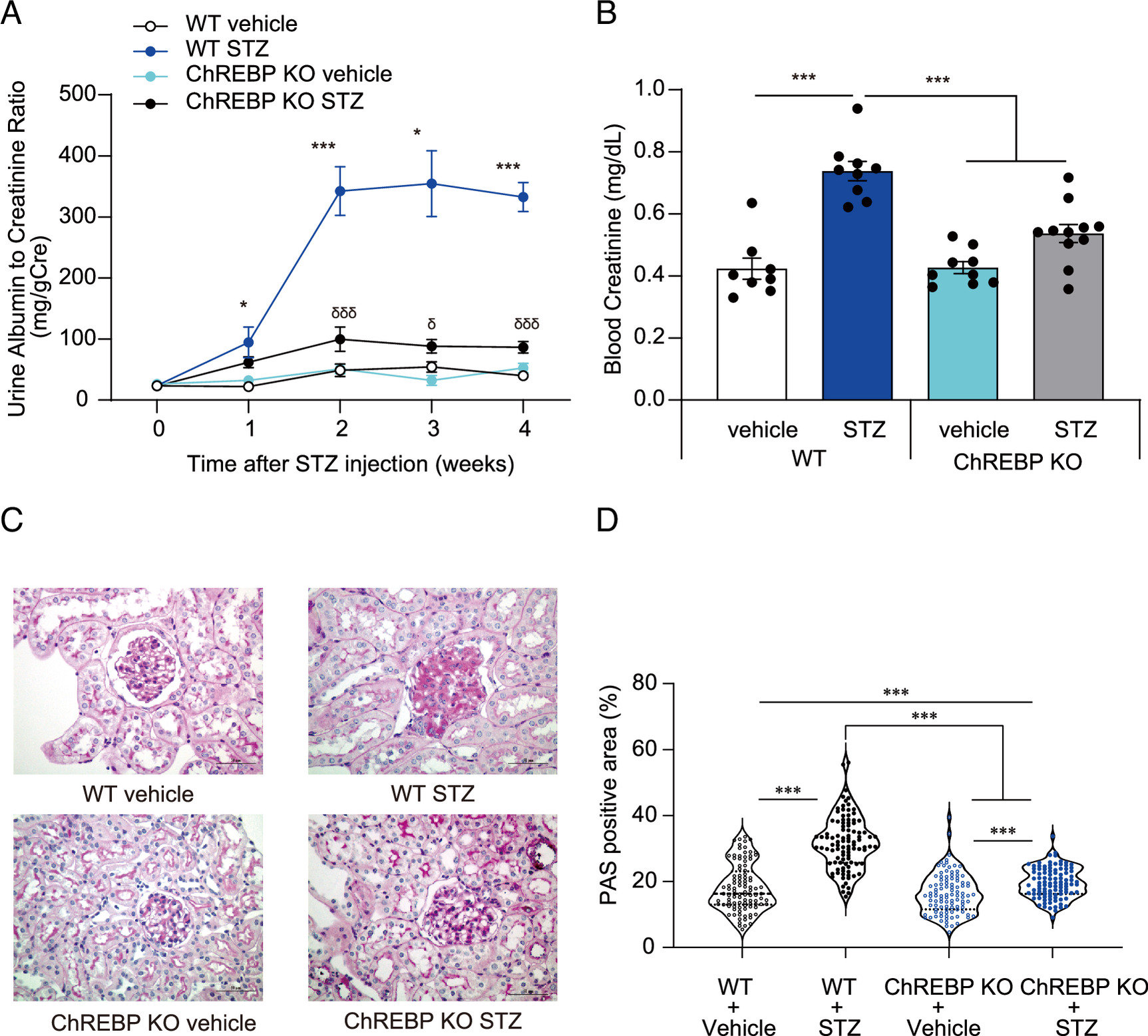
Fig. 1.Genetic deletion of ChREBP and renal phenotypes in STZ-induced diabetes. Source: Nguyen et al., PNAS 123(46) (2026). https://doi.org/10.1073/pnas.2537870123. CC BY 4.0.
糖尿病性腎臓病(DKD)の発症・進行に関与する新たな分子機構を明らかにするため、糖に応答する転写因子ChREBPに着目した研究である。糖尿病モデルマウスの腎臓を対象としたトランスクリプトーム解析から、ChREBP依存性の遺伝子発現経路が顕著に活性化していることを発見した。さらに、ChREBP遺伝子を欠損させた糖尿病マウスでは腎障害が軽減し、ChREBPが病態を促進する可能性が示された。次に、ChREBPの転写活性を指標として約5,861種類の化合物をスクリーニングし、その働きを抑制する低分子化合物D-532を同定した。D-532はヒトおよびげっ歯類由来の細胞で作用し、複数の糖尿病モデルマウスへの経口投与によって腎障害の進行を抑制した。また、活性酸素の過剰産生に関連する遺伝子群を含むChREBP下流の遺伝子発現も抑制した。ヒト由来培養腎細胞でも高糖濃度による酸化ストレスの軽減が確認された。本研究はChREBPを薬理学的に制御することで腎臓を保護できる可能性を示すが、ヒトでの有効性と安全性は今後の臨床研究で検証する必要がある。
This study investigated the role of the glucose-responsive transcription factor ChREBP in the development and progression of diabetic kidney disease (DKD). Transcriptomic screening of diabetic mouse kidneys revealed marked activation of a ChREBP-dependent transcriptional cascade. Genetic deletion of ChREBP ameliorated kidney damage in diabetic mice, suggesting that ChREBP contributes to disease progression. The researchers subsequently screened approximately 5,861 compounds using ChREBP transcriptional activity as an indicator and identified D-532 as a small-molecule inhibitor. D-532 was active in human and rodent cells and, when administered orally, suppressed DKD progression in multiple diabetic mouse models. It also reduced the expression of ChREBP downstream targets, including genes associated with excessive reactive oxygen species production. In human-derived cultured kidney cells, D-532 additionally suppressed oxidative stress induced by high glucose concentrations. These findings provide proof of concept that pharmacological inhibition of ChREBP may protect the kidneys from diabetic injury. However, its therapeutic efficacy and safety in humans remain to be established through further clinical research.