2026-11-12 バーミンガム大学
<関連情報>
- https://www.birmingham.ac.uk/news/2026/extreme-heat-creates-hurdle-for-athletes-getting-carbohydrates-into-muscles
- https://physoc.onlinelibrary.wiley.com/doi/10.1113/JP289304
暑熱順化は高温環境での運動時に生じる外因性グルコース酸化の低下を改善しない(Heat acclimation does not alleviate the reduction in exogenous glucose oxidation that occurs when exercising in hot conditions)
Tim Podlogar, Rachel E. Gifford, Joel Thomas, Rita Civil, Soumyajit Malik, Rebekah A. I. Lucas, Andrew J. Young, Stefan M. Pasiakos, Lee M. Margolis, Gareth A. Wallis
The Journal of Physiology(2026年)2026-11-11
DOI:10.1113/JP289304

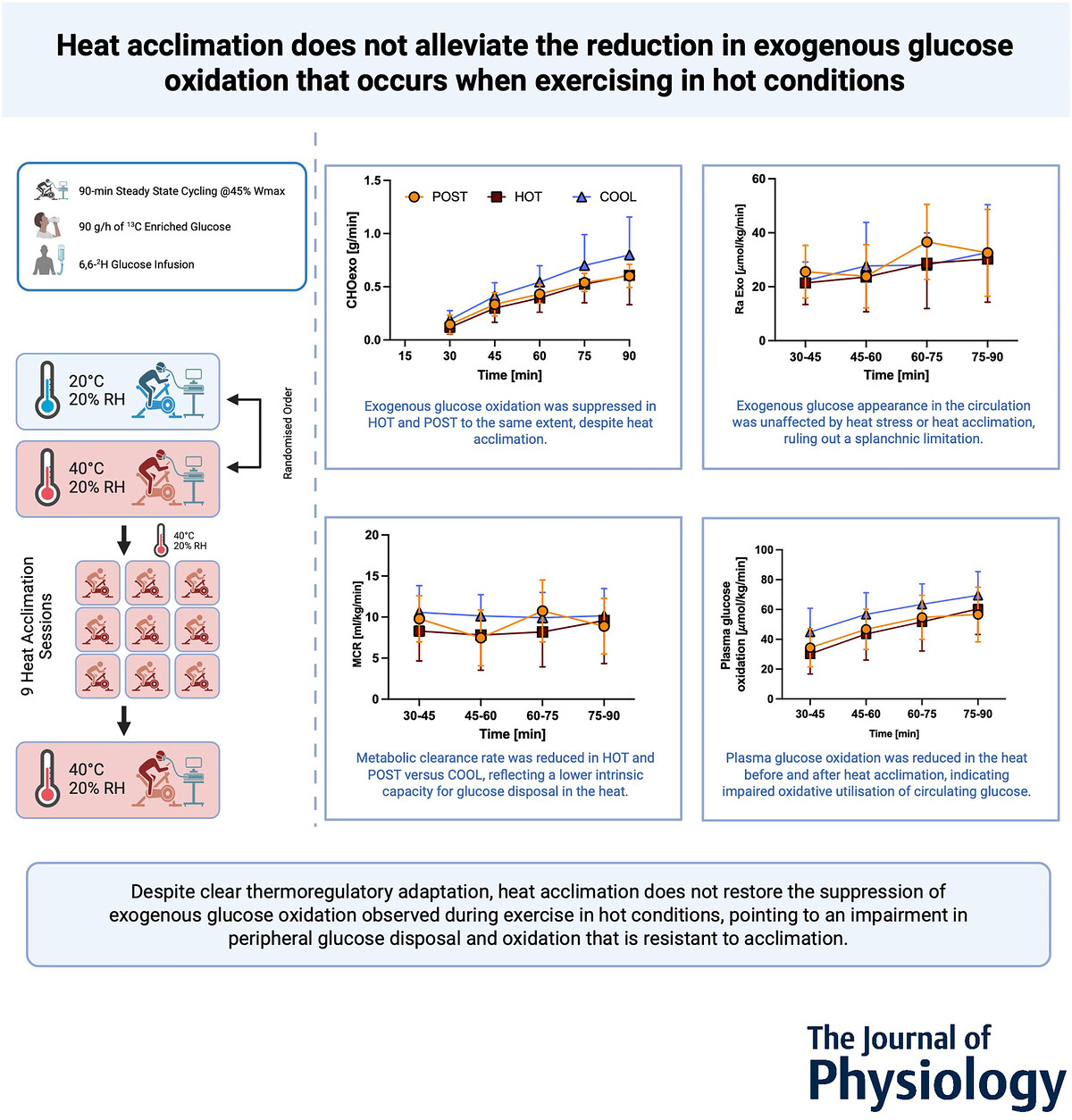
高温環境での持久性運動では、運動中に摂取したグルコースの酸化(エネルギーとしての利用)が低下する。本研究は、この低下が暑熱順化によって改善するか、その生理学的機序とともに検討した。持久系トレーニングを行う成人17名(男性10名、女性7名)が、グルコースを毎時90 g摂取しながら、20℃および40℃の環境で90分間の自転車運動を実施した。さらに、10日間の期間中に9日間の暑熱順化を行った後、40℃で再度運動した。その結果、高温条件では温暖条件に比べ、摂取したグルコースの酸化速度が約27%低下した。暑熱順化後には体温調節機能の適応が認められたものの、グルコース酸化の低下は解消されなかった。また、血中へのグルコース出現や消失の変化よりも、血中グルコースを取り込み利用する能力の低下が関与すると考えられた。本研究は、暑熱順化による体温調節の改善が、運動中の糖質利用の改善を必ずしも伴わないことを示している。
Exogenous glucose oxidation during endurance exercise is reduced in hot conditions. This study investigated whether heat acclimation could alleviate this reduction and examined the underlying physiological mechanisms. Seventeen endurance-trained adults (10 men and 7 women) completed 90-minute cycling trials while ingesting glucose at 90 g per hour under temperate (20°C) and hot (40°C) conditions. Following a 10-day period that included nine days of heat acclimation, participants repeated the exercise trial in the heat. Exogenous glucose oxidation was approximately 27% lower in the hot condition than in the temperate condition. Although heat acclimation produced clear thermoregulatory adaptations, it did not restore glucose oxidation during exercise in the heat. The findings suggest that reduced glucose disposal and utilization, rather than limitations in glucose appearance from the splanchnic circulation, contribute to the suppression of exogenous glucose oxidation. The study demonstrates that improvements in thermoregulation following heat acclimation do not necessarily translate into improved carbohydrate utilization during exercise in hot environments.