2026-04-03 ノースカロライナ州立大学(NC State)
米ノースカロライナ州立大学の研究チームは、乳児手術に適した新しいハイドロゲル材料を開発した。従来の縫合や医療用接着剤は未熟な組織に負担を与える場合があったが、このハイドロゲルは柔軟で生体適合性が高く、成長中の組織に追従しながら傷口を安定的に閉鎖できる点が特徴である。
また、適度な強度と伸縮性を兼ね備え、手術後の組織損傷や炎症リスクを低減することが期待される。動物実験では良好な治癒結果が確認され、安全性と有効性の両面で有望性が示された。今後は臨床応用に向けた検証が進められ、小児外科における低侵襲治療の新たな選択肢となる可能性がある。
<関連情報>
- https://news.ncsu.edu/2026/04/hydrogel-infant-surgery/
- https://www.science.org/doi/10.1126/sciadv.ady7698
- https://journals.lww.com/anesthesiology/fulltext/2016/05000/fibrin_network_changes_in_neonates_after.17.aspx
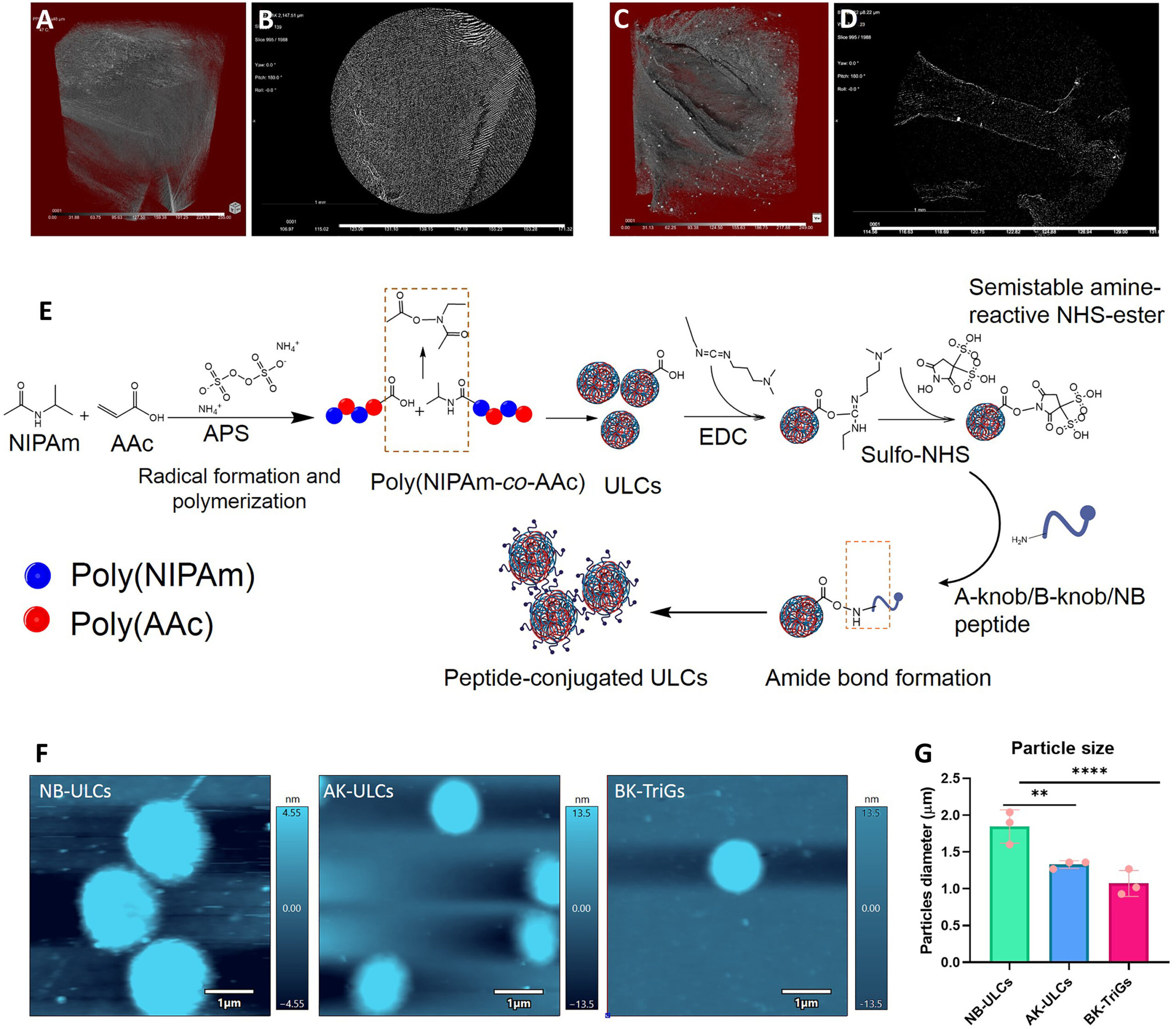
新生児の出血に対処するための止血性Bノブ作動型マイクロゲル(BK-TriG) Hemostatic B-knob–triggered microgels (BK-TriGs) to address bleeding in neonates
Nooshin Zandi, Kimberly Nellenbach, Connor Moore, Julia Storch, […] , and Ashley Brown
Science Advances Published:3 Apr 2026
DOI:https://doi.org/10.1126/sciadv.ady7698
Abstract
Hemostatic immaturity in neonates presents critical challenges, especially during surgery, where bleeding and thrombosis risks are elevated. Current treatments rely on transfusing adult blood products, which may cause complications resulting from structural and functional differences between neonatal and adult fibrinogen. To address this, we developed hemostatic B-knob–triggered microgels (BK-TriGs) that target and bridge fibrinogen hole b sites. Functionalized with a fibrin hole b–specific peptide, BK-TriGs enhance clot density and resistance to degradation. In vitro studies using neonatal platelet-poor plasma (PPP) showed that at an optimal concentration, BK-TriGs increased clot density by more than 100% and improved stability by reducing fibrinolysis. Under flow conditions, BK-TriGs promoted robust clot formation compared to plasma-only controls. In an in vivo fib-null (Fga−/−) mouse model transfused with neonatal fibrinogen, BK-TriGs reduced blood loss by 50 to 60% and enhanced fibrin deposition at wound sites. This targeted approach offers a safer, more effective hemostatic solution tailored to neonatal clotting needs.
心肺バイパス後の新生児におけるフィブリンネットワークの変化 Fibrin Network Changes in Neonates after Cardiopulmonary Bypass
Brown, Ashley C. Ph.D.; Hannan, Riley H. B.S.; Timmins, Lucas H. Ph.D.; Fernandez, Janet D. C.C.R.C.; Barker, Thomas H. Ph.D.; Guzzetta, Nina A. M.D., F.A.A.P
Anesthesiology Published:3 March 2026
DOI:10.1097/ALN.0000000000001058
Abstract
Background
Quantitative and qualitative differences in the hemostatic systems exist between neonates and adults, including the presence of “fetal” fibrinogen, a qualitatively dysfunctional form of fibrinogen that exists until 1 yr of age. The consequences of “fetal” fibrinogen on clot structure in neonates, particularly in the context of surgery-associated bleeding, have not been well characterized. Here, the authors examine the sequential changes in clotting components and resultant clot structure in a small sample of neonates undergoing cardiac surgery and cardiopulmonary bypass (CPB).
Methods
Blood samples were collected from neonates (n = 10) before surgery, immediately after CPB, and after the transfusion of cryoprecipitate (i.e., adult fibrinogen component). Clots were formed from patient samples or purified neonatal and adult fibrinogen. Clot structure was analyzed using confocal microscopy.
Results
Clots formed from plasma obtained after CPB and after transfusion were more porous than baseline clots. Analysis of clots formed from purified neonatal and adult fibrinogen demonstrated that at equivalent fibrinogen concentrations, neonatal clots lack three-dimensional structure, whereas adult clots were denser with significant three-dimensional structure. Clots formed from a combination of purified neonatal and adult fibrinogen were less homogenous than those formed from either purified adult or neonatal fibrinogen.
Conclusions
The results of this study confirm that significant differences exist in clot structure between neonates and adults and that neonatal and adult fibrinogen may not integrate well. These findings suggest that differential treatment strategies for neonates should be pursued to reduce the demonstrated morbidity of blood product transfusion.
Clots formed from blood samples collected from 10 neonates after cardiopulmonary bypass were more porous than clots formed from samples collected before surgery. Clots formed from purified fibrinogen from neonates alone or mixed with adult fibrinogen were less dense than adult clots, suggesting that transfusion of adult fibrinogen may be less effective in neonates than in adults.