
2025-06-30 マックス・プランク研究所
<関連情報>
- https://www.mpg.de/24986136/senescence-uncovered-worms-show-the-way
- https://www.nature.com/articles/s43587-025-00911-4
TFEB-TGFβ軸は、休止期、幹細胞の回復力を全身的に制御し、老化様状態から保護する A TFEB–TGFβ axis systemically regulates diapause, stem cell resilience and protects against a senescence-like state
Tim J. Nonninger,Jennifer Mak,Birgit Gerisch,Valentina Ramponi,Kazuto Kawamura,Roberto Ripa,Klara Schilling,Christian Latza,Jonathan Kölschbach,Manuel Serrano & Adam Antebi
Nature Aging Published:30 June 2025
DOI:https://doi.org/10.1038/s43587-025-00911-4
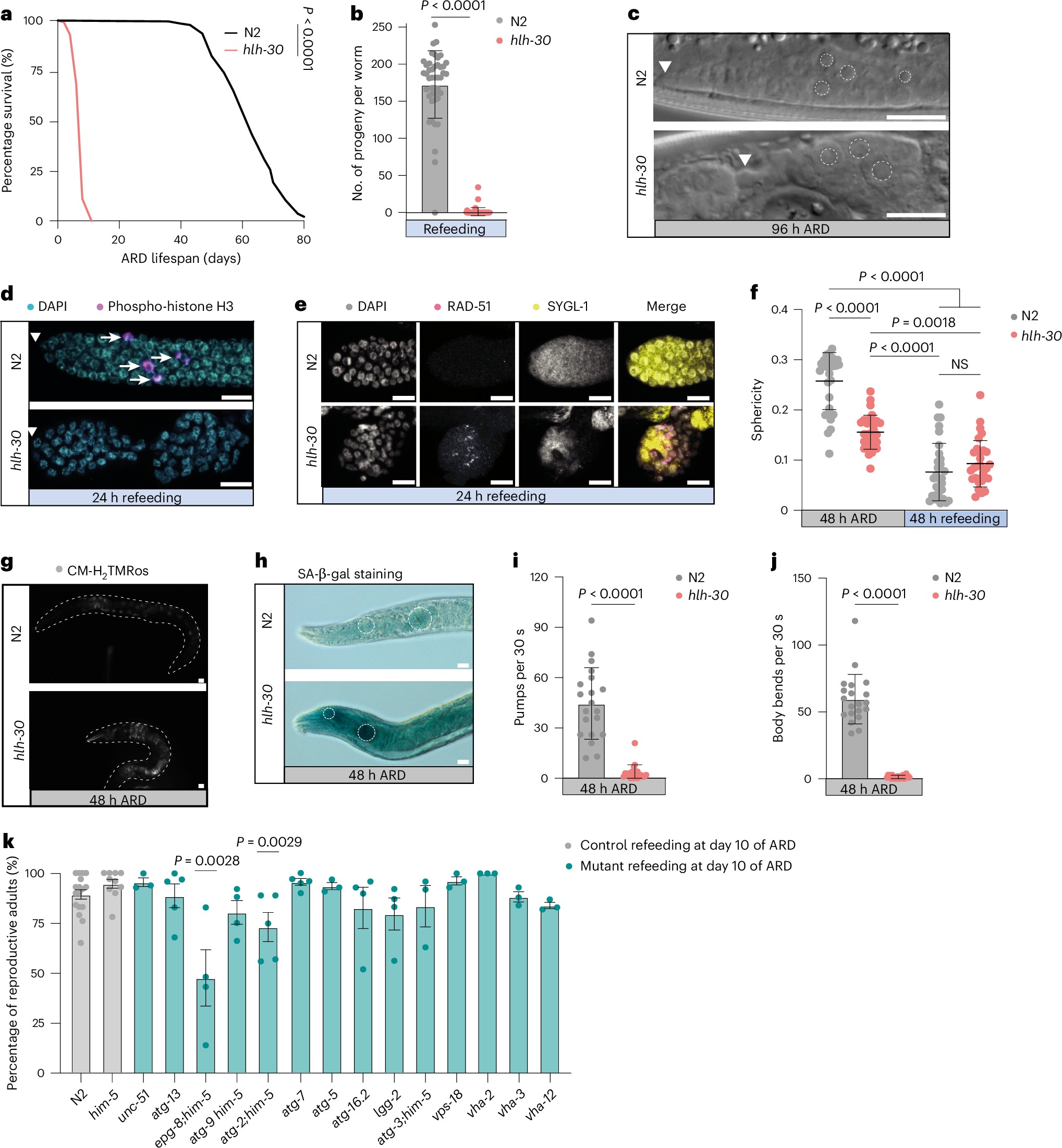
Abstract
Diapause is a long-lived state of resilience that allows organisms to outlast adversity. Caenorhabditis elegans can endure months in a fasting-induced adult reproductive diapause (ARD) and, upon refeeding, regenerate and reproduce. Here we find that mutants of ARD master regulator hlh-30/TFEB arrest in a senescence-like state during ARD and refeeding, in which germline stem cells are characterized by DNA damage, nucleolar expansion, cell cycle arrest and mitochondrial dysfunction, alongside dysregulated immune and growth metabolic signatures, elevated senescence-associated β-galactosidase and premature aging at the organismal level. Forward genetic screens reveal a TFEB–TGFβ signaling axis that systemically controls diapause, stem cell longevity and senescence, aligning nutrient supply to proper metabolism and growth signaling. Notably, TFEB’s vital role is conserved in mouse embryonic and human cancer diapause. Thus, ARD offers a powerful model to study stem cell longevity and senescence in vivo, directly relevant to mammals.

