2025-07-02 ジョンズ・ホプキンス大学(JHU)
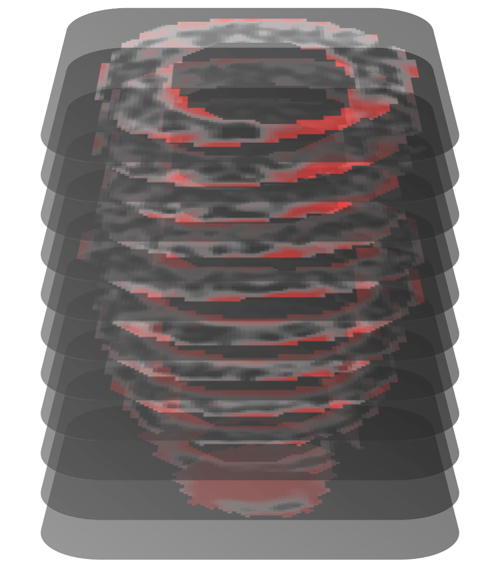
A contrast-enhanced cardiac MRI of a patient with hypertrophic cardiomyopathy deemed by MAARS to be at high risk for sudden death. Each image slice through the heart goes from dark (normal heart tissue) to bright (fibrotic, abnormal tissue). AI marks in red areas with the most fibrosis. Image credit: Johns Hopkins University
<関連情報>
- https://hub.jhu.edu/2025/07/02/ai-predicts-patients-likely-to-die-of-sudden-cardiac-arrest/
- https://www.nature.com/articles/s44161-025-00679-1
肥大型心筋症における不整脈死を予測するマルチモーダルAI Multimodal AI to forecast arrhythmic death in hypertrophic cardiomyopathy
Changxin Lai,Minglang Yin,Eugene G. Kholmovski,Dan M. Popescu,Dai-Yin Lu,Erica Scherer,Edem Binka,Stefan L. Zimmerman,Jonathan Chrispin,Allison G. Hays,Dermot M. Phelan,M. Roselle Abraham & Natalia A. Trayanova
Nature Cardiovascular Research Published:02 July 2025
DOI:https://doi.org/10.1038/s44161-025-00679-1
Abstract
Sudden cardiac death from ventricular arrhythmias is a leading cause of mortality worldwide. Arrhythmic death prognostication is challenging in patients with hypertrophic cardiomyopathy (HCM), a setting where current clinical guidelines show low performance and inconsistent accuracy. Here, we present a deep learning approach, MAARS (Multimodal Artificial intelligence for ventricular Arrhythmia Risk Stratification), to forecast lethal arrhythmia events in patients with HCM by analyzing multimodal medical data. MAARS’ transformer-based neural networks learn from electronic health records, echocardiogram and radiology reports, and contrast-enhanced cardiac magnetic resonance images, the latter being a unique feature of this model. MAARS achieves an area under the curve of 0.89 (95% confidence interval (CI) 0.79–0.94) and 0.81 (95% CI 0.69–0.93) in internal and external cohorts and outperforms current clinical guidelines by 0.27–0.35 (internal) and 0.22–0.30 (external). In contrast to clinical guidelines, it demonstrates fairness across demographic subgroups. We interpret MAARS’ predictions on multiple levels to promote artificial intelligence transparency and derive risk factors warranting further investigation.