2025-07-14 カナダ・ブリティッシュコロンビア大学(UBC)
<関連情報>
- https://news.ubc.ca/2025/07/kindness-counts-even-to-a-five-day-old-baby/
- https://www.nature.com/articles/s41467-025-61517-3
ヒトの新生児は自発的に向社会的相互作用に参加する Human newborns spontaneously attend to prosocial interactions
Alessandra Geraci,Luca Surian,Lucia Gabriella Tina & J. Kiley Hamlin
Nature Communications Published:08 July 2025
DOI:https://doi.org/10.1038/s41467-025-61517-3
Abstract
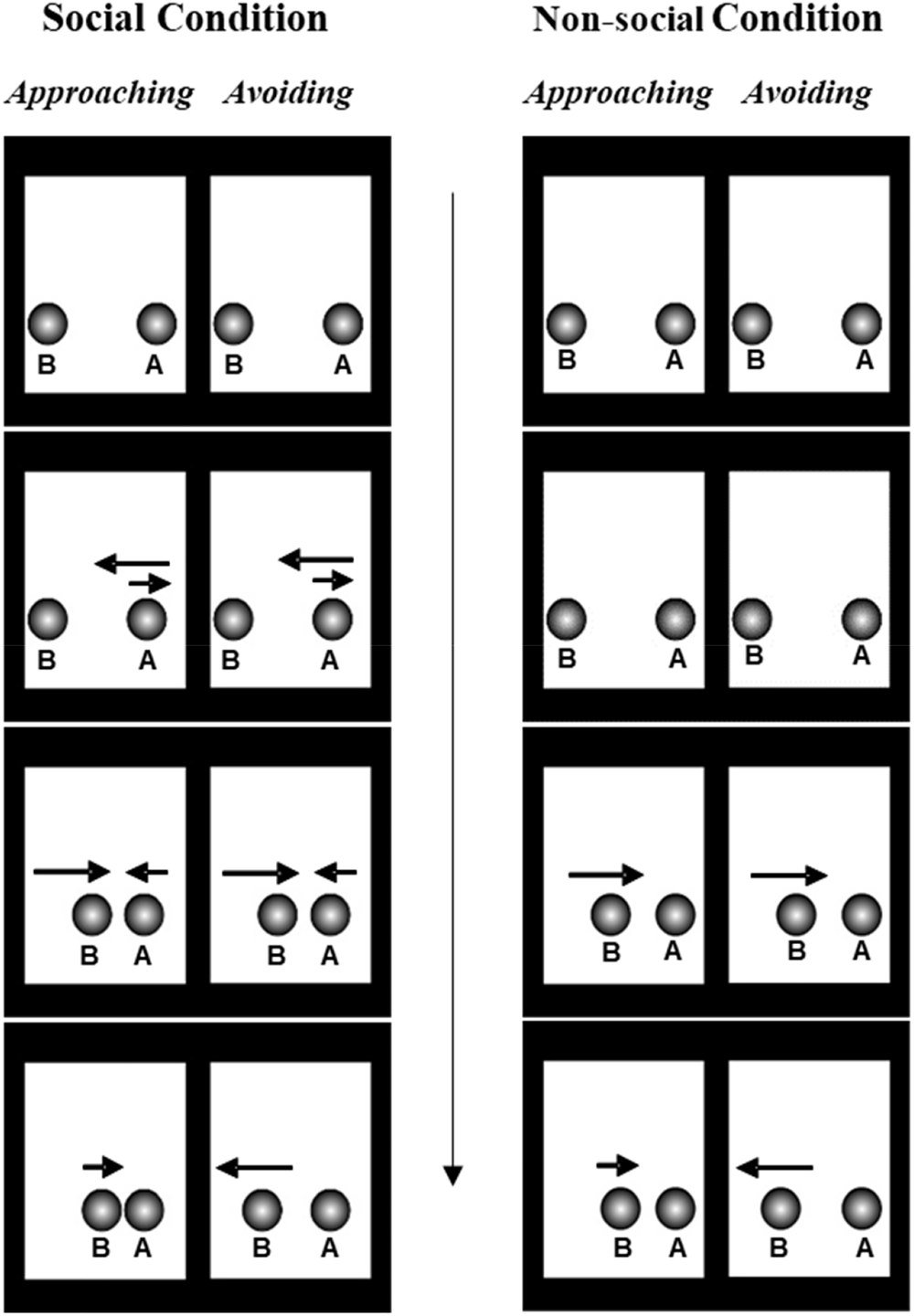
Humans establish and maintain complex cooperative interactions with unrelated individuals by exploiting various cognitive mechanisms, for instance empathic reactions and a preference for prosocial actions and individuals over antisocial ones. The key role played by these features across human sociomoral systems suggests that core processes underpinning them may be evolved adaptations. Initial evidence consistent with this view came from studies on preverbal infants, which found a preference for prosocial over antisocial individuals. In this study, 5-day-old neonates were shown pairs of looping video interactions in which a prosocial event (approach in Experiment 1, helping in Experiments 2 and 3) appeared on one side of the display and an antisocial event (avoidance in Experiment 1, hindering in Experiments 2 and 3) appeared on the other; newborns’ attention to each event type was measured. Across 3 experiments, newborns consistently looked longer at the prosocial than the antisocial events, but only during socially interactive versions of the stimuli. Together, these findings suggest that basic mechanisms to distinguish simple prosocial versus antisocial acts, and to prefer prosocial ones, emerge with very limited experience.