2025-07-16 東京大学
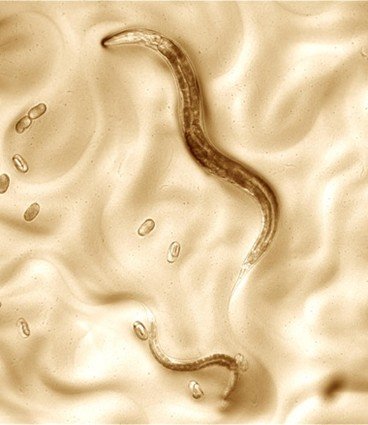
線虫(学名Caenorhabditis elegans)の3つの成長過程
画像提供 Marie-Anne Félix 博士, Ecole Normale Supérieure, Paris, France
<関連情報>
- https://www.k.u-tokyo.ac.jp/information/category/press/11678.html
- https://www.k.u-tokyo.ac.jp/information/upload/0a648ec697b96631fda5cfc612c685282554197d.pdf
- https://genome.cshlp.org/content/early/2025/07/04/gr.280274.124
線虫の新しい参照ゲノムCGC1 CGC1, a new reference genome for Caenorhabditis elegans
Kazuki Ichikawa,Massa J. Shoura,Karen L. Artiles,Dae-Eun Jeong,Chie Owa,Haruka Kobayashi,Yoshihiko Suzuki,Manami Kanamori,Yu Toyoshima,Yuichi Iino,Ann E. Rougvie,Lamia Wahba,Andrew Z. Fire,Erich M. Schwarz and Shinichi Morishita
Genome Research Published:July 15, 2025
DOI:10.1101/gr.280274.124
Abstract
The original 100.3 Mb reference genome for Caenorhabditis elegans, generated from the wild-type laboratory strain N2, has been crucial for analysis of C. elegans since 1998 and has been considered complete since 2005. Unexpectedly, this long-standing reference was shown to be incomplete in 2019 by a genome assembly from the N2-derived strain VC2010. Moreover, genetically divergent versions of N2 have arisen over decades of research and hindered reproducibility of C. elegans genetics and genomics. Here we provide a 106.4 Mb gap-free, telomere-to-telomere genome assembly of C. elegans, generated from CGC1, an isogenic derivative of the N2 strain. We use improved long-read sequencing and manual assembly of 43 recalcitrant genomic regions to overcome deficiencies of prior N2 and VC2010 assemblies and to assemble tandem repeat loci, including a 772 kb sequence for the 45S rRNA genes. Although many differences from earlier assemblies come from repeat regions, unique additions to the genome are also found. Of 19,972 protein-coding genes in the N2 assembly, 19,790 (99.1%) encode products that are unchanged in the CGC1 assembly. The CGC1 assembly also may encode 183 new protein-coding and 163 new ncRNA genes. CGC1 thus provides both a completely defined reference genome and corresponding isogenic wild-type strain for C. elegans, allowing unique opportunities for model and systems biology.