2025-07-22 ペンシルベニア州立大学(Penn State)
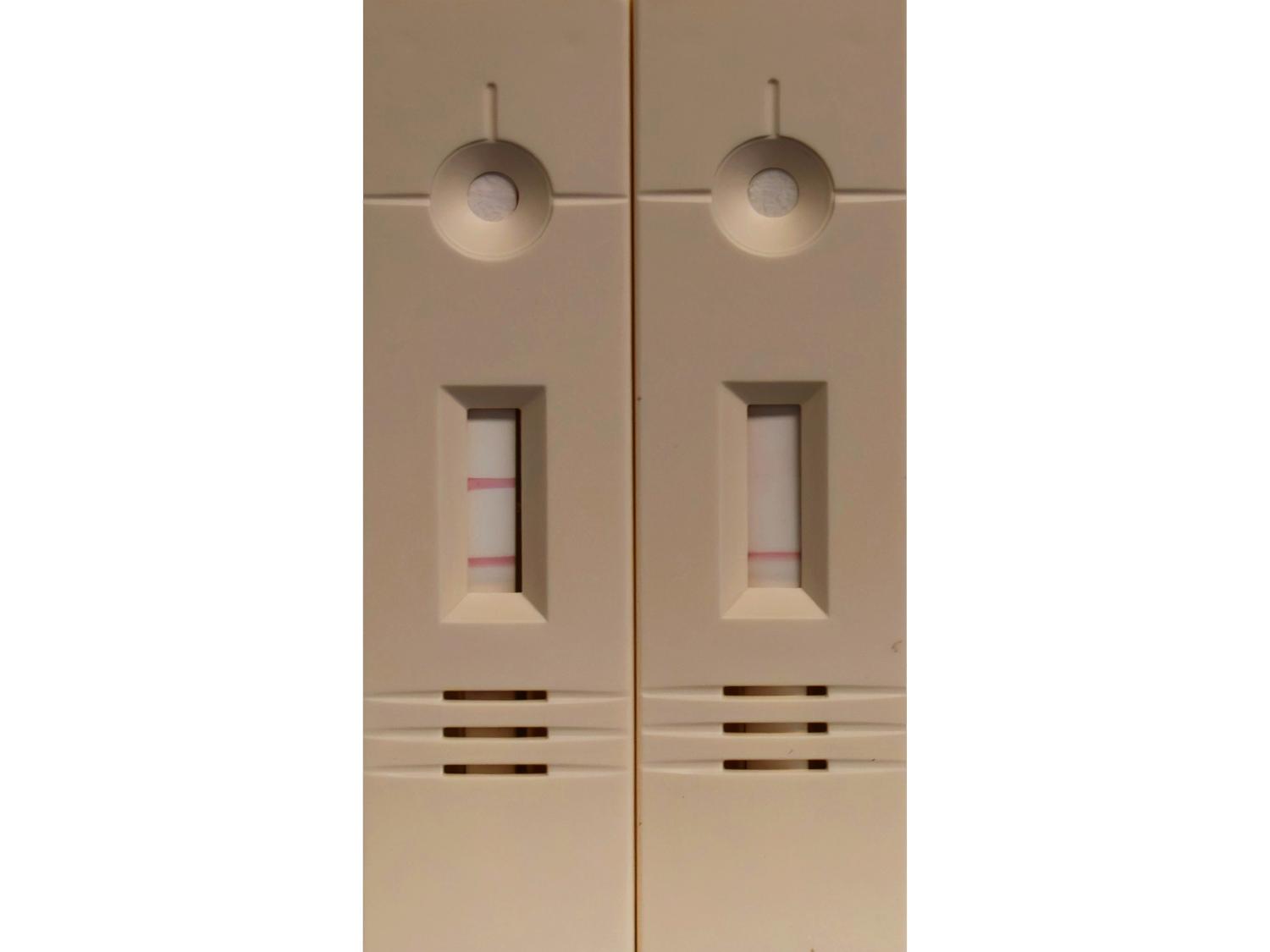
Researchers developed a proof-of-concept device capable of detecting a biomarker implicated in endometriosis with unprecedented sensitivity from menstrual blood. The device is similar to a pregnancy test, showing two lines if the biomarker is detected in the sample. Credit: Provided by Dipanjan Pan / Penn State. Creative Commons
<関連情報>
- https://www.psu.edu/news/research/story/next-gen-tech-can-detect-disease-biomarker-period-blood
- https://pubs.acs.org/doi/10.1021/acscentsci.5c00474
二次元ナノボロフェンへの光誘起固定化により抗体を空間的に配向させ、高感度な生物学的相互作用を実現する Photoinduced Immobilization on Two-Dimensional Nano Borophene Spatially Orients Capture Antibody for Highly Sensitive Biological Interactions
Satheesh Natarajan,Ketan Dighe,Teresa Aditya,Pranay Saha,David Skrodzki,Purva Gupta,Nivetha Gunaseelan,Shraddha Krishnakumar,and Dipanjan Pan
ACS Central Science Published July 17, 2025
DOI:https://doi.org/10.1021/acscentsci.5c00474
Abstract
Two-dimensional (2D) nanomaterials are of great interest due to their unique properties and broad biological applications. Among these, borophene, a single-atom-thick boron sheet with a honeycomb structure, exhibits exceptional structural, electronic, and mechanical characteristics, making it a promising candidate for sensing, electronics, and biosensing. In this study, we report on a liquid-phase exfoliation method to synthesize stable borophene nanosheets and introduce a photoinduced immobilization technique to functionalize their surfaces with antibodies. By exploiting borophene’s electron-deficient nature, we enable strong covalent bonding with electron-rich thiol groups in antibodies. UV irradiation cleaves antibody disulfide bonds, generating free thiols that form stable boron–sulfur bonds with borophene, resulting in spatially oriented antibodies that preserve antigen-binding activity. We demonstrate the application of these functionalized nanosheets in a lateral flow immunoassay (LFIA), a key tool in point-of-care diagnostics that is often limited by poor antibody orientation. The developed LFIA detects HMGB-1, a potential endometriosis biomarker, in menstrual effluent with results in 10 min and a limit of detection of 40 pg/mL. This performance surpasses that of conventional LFIAs, showing high sensitivity, specificity, and no cross-reactivity with common blood proteins. This study highlights a novel, reagent-free strategy for functionalizing borophene, enhancing its potential in biosensing applications.