2025-08-25 国立成育医療研究センター
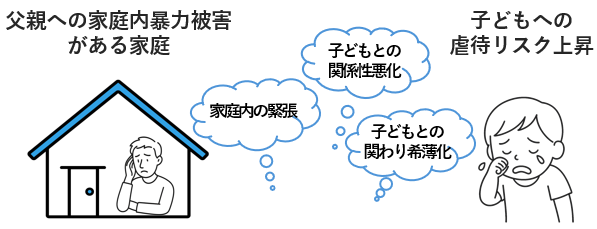
【図1】父親への家庭内暴力と子どもの虐待の概念図
※メカニズムは先行研究からの想定で、今回の研究で明らかになった知見ではありません。
<関連情報>
- https://www.ncchd.go.jp/press/2025/0825.html
- https://www.ncchd.go.jp/press/assets/0825.pdf
- https://www.nature.com/articles/s41390-025-04296-3
父方の周産期パートナー暴力の被害と児童虐待 Paternal perinatal intimate partner violence victimization and child abuse
Erika Obikane,Daisuke Nishi,Tsuguhiko Kato,Mako Nagayoshi,Manami Ochi,Kenji Takehara & Takahiro Tabuchi
Pediatric Research Published:DOI:https://doi.org/10.1038/s41390-025-04296-3
Abstract
Background
Perinatal intimate partner violence (IPV) poses significant health risks for victims and their children. While maternal IPV victimization has been extensively studied, research on paternal IPV victimization remains limited. This study examines the prevalence of paternal perinatal IPV victimization and its association with child abuse and paternal psychological distress.
Methods
We analyzed cross-sectional data from 1248 postnatal fathers whose partners had given birth within 1 year in August 2021. IPV victimization was assessed across physical, psychological, economic, and sexual abuse subtypes. Outcomes included child abuse (physical, psychological, neglect, or any abuse) and paternal psychological distress. Modified Poisson regression was used to compute risk ratios (RR).
Results
Among fathers surveyed, 13.6% reported IPV victimization. Paternal IPV was associated with increased risk of child abuse, including physical (RR 2.04; 95% CI, 1.33–3.14), psychological (RR 2.08; 95% CI, 1.52–2.84), neglect (RR 3.10; 95% CI, 1.70–5.66), and any abuse (RR 1.98; 95% CI, 1.50–2.61).
Conclusions
Paternal perinatal IPV victimization is a significant public health concern associated with an increased risk of child abuse and psychological distress. These findings highlight the importance of considering fathers in IPV-related research and suggest the need for further study on inclusive approaches to family violence prevention.
Impact
- Perinatal IPV victimization leads to adverse health outcomes for both victims and their children.
- Our study found that 14% of postnatal fathers experienced perinatal IPV victimization, highlighting its prevalence.
- Paternal perinatal IPV victimization is associated with an increased risk of child abuse within the household.
- Additionally, paternal IPV victimization is linked to higher levels of paternal psychological distress.
- These findings highlight the need for targeted support for affected fathers to protect child well-being.