
2025-09-09 インペリアル・カレッジ・ロンドン(ICL)
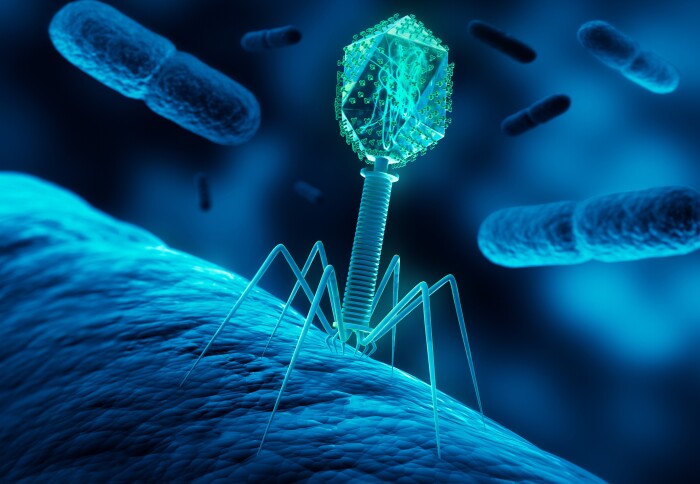
Researchers have discovered how ‘pirate phages’ hijack other viruses to break into bacteria, sharing new genetic material for dangerous traits.
<関連情報>
- https://www.imperial.ac.uk/news/268213/microbial-piracy-uncovers-fight-drug-resistant-infections/
- https://www.cell.com/cell/fulltext/S0092-8674(25)00974-2
キメラ感染粒子はファージ誘導性染色体島移動における種境界を拡大する Chimeric infective particles expand species boundaries in phage-inducible chromosomal island mobilization
Lingchen He ∙ Jonasz B. Patkowski ∙ Jinlong Wang ∙ … ∙ Alfred Fillol-Salom ∙ Tiago R.D. Costa ∙ José R. Penadés
Cell Published:September 9, 2025
DOI:https://doi.org/10.1016/j.cell.2025.08.019
Highlights
- cf-PICIs form tailless capsids, which are released into the environment
- These capsids can hijack different phage tails to form chimeric infectious particles
- Tail piracy allows cf-PICIs to cross-species barriers and spread broadly
- Structural analysis reveals unique capsid formation of cf-PICIs
Summary
Some mobile genetic elements spread among unrelated bacterial species through unknown mechanisms. Recently, we discovered that identical capsid-forming phage-inducible chromosomal islands (cf-PICIs), a new family of phage satellites, are present across multiple species and genera, raising questions about their widespread dissemination. Here, we have identified and characterized a new biological entity enabling this transfer. Unlike other satellites, cf-PICIs produce their own capsids and package their DNA, relying solely on phage tails for transfer. cf-PICIs release non-infective, tailless capsids containing their DNA into the environment. These subcellular entities then interact with phage tails from various species, forming chimeric particles that inject DNA into different bacterial species depending on the tail present. Additionally, we elucidated the structure of the tailless cf-PICIs and the mechanism behind their unique capsid formation. Our findings illuminate the mechanisms used by satellites to spread in nature, contributing to bacterial evolution and the emergence of new pathogens.

