2025-09-10 マウントサイナイ医療システム(MSHS)
<関連情報>
- https://www.mountsinai.org/about/newsroom/2025/lung-cancer-rewiresimmune-cells-in-the-bone-marrow-to-weaken-bodys-defenses
- https://www.nature.com/articles/s41586-025-09493-y
骨髄系前駆細胞の調節異常が腫瘍内免疫抑制性マクロファージを促進する Myeloid progenitor dysregulation fuels immunosuppressive macrophages in tumours
Samarth Hegde,Bruno Giotti,Brian Y. Soong,Laszlo Halasz,Jessica Le Berichel,Maximilian M. Schaefer,Benoit Kloeckner,Raphaël Mattiuz,Matthew D. Park,Assaf Magen,Adam Marks,Meriem Belabed,Pauline Hamon,Theodore Chin,Leanna Troncoso,Juliana J. Lee,Kaili Fan,Dughan Ahimovic,Michael J. Bale,Kai Nie,Grace Chung,Darwin D’souza,Krista Angeliadis,Seunghee Kim-Schulze,… Miriam Merad
Nature Published:10 September 2025
DOI:https://doi.org/10.1038/s41586-025-09493-y
Abstract
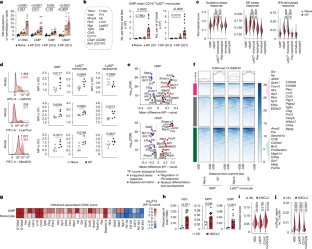
Monocyte-derived macrophages (mo-macs) often drive immunosuppression in the tumour microenvironment (TME)1 and tumour-enhanced myelopoiesis in the bone marrow fuels these populations2. Here we performed paired transcriptome and chromatin accessibility analysis over the continuum of myeloid progenitors, circulating monocytes and tumour-infiltrating mo-macs in mice and in patients with lung cancer to identify myeloid progenitor programs that fuel pro-tumorigenic mo-macs. We show that lung tumours prime accessibility for Nfe2l2 (NRF2) in bone marrow myeloid progenitors as a cytoprotective response to oxidative stress, enhancing myelopoiesis while dampening interferon response and promoting immunosuppression. NRF2 activity is amplified during monocyte differentiation into mo-macs in the TME to regulate stress and drive immunosuppressive phenotype. NRF2 genetic deletion and pharmacological inhibition significantly reduced the survival and immunosuppression of mo-macs in the TME, restoring natural killer and T cell anti-tumour immunity and enhancing checkpoint blockade efficacy. Our findings identify a targetable epigenetic node of myeloid progenitor dysregulation that sustains immunoregulatory mo-macs in the lung TME and highlight the potential of early interventions to reprogram macrophage fate for improved immunotherapy outcomes.