
2025-09-17 ノースウェスタン大学
Web要約 の発言:
<関連情報>
- https://news.northwestern.edu/stories/2025/09/three-sensor-overeating-detection-could-reshape-obesity-treatment
- https://www.nature.com/articles/s41746-025-01698-9
食事行動と状況に関するデジタル縦断データから明らかになる過食パターン Unveiling overeating patterns within digital longitudinal data on eating behaviors and contexts
Farzad Shahabi,Boyang Wei,Christopher Romano,Rowan McCloskey,Annie W. Lin,Mahdi Pedram,Jacob M. Schauer,Tammy Stump & Nabil Alshurafa
npj Digital Medicine Published:17 September 2025
DOI:https://doi.org/10.1038/s41746-025-01698-9
Abstract
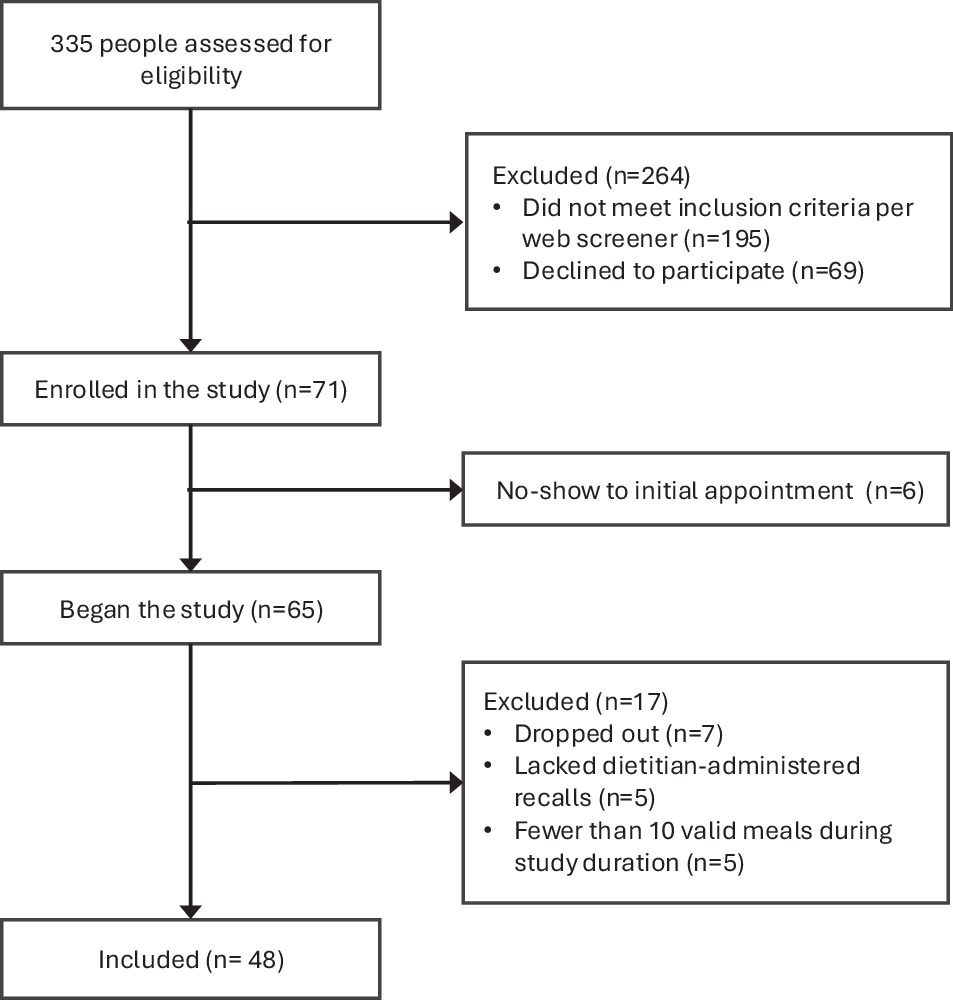
Overeating contributes to obesity and poses a significant public health threat. The SenseWhy study (2018–2022) monitored 65 individuals with obesity in free-living settings, collecting 2302 meal-level observations (48 per participant), using an activity-oriented wearable camera, a mobile app, and dietitian-administered 24-hour dietary recalls. Micromovements (e.g., bites, chews) were manually labeled from 6343 hours of footage spanning 657 days. Psychological and contextual information was gathered before and after meals through Ecological Momentary Assessments (EMAs). We predicted overeating episodes based on EMA-derived features and passive sensing data (mean AUROC = 0.86; mean AUPRC = 0.84). Using semi-supervised learning on EMA-derived features alone, we identified five distinct overeating phenotypes: “Take-out Feasting,” “Evening Restaurant Reveling,” “Evening Craving,” “Uncontrolled Pleasure Eating,” and “Stress-driven Evening Nibbling.” These results highlight the complex interplay between behavioral, psychological, and contextual factors associated with overeating, providing a foundation for personalized interventions.
