2025-09-26 スウォンジー大学
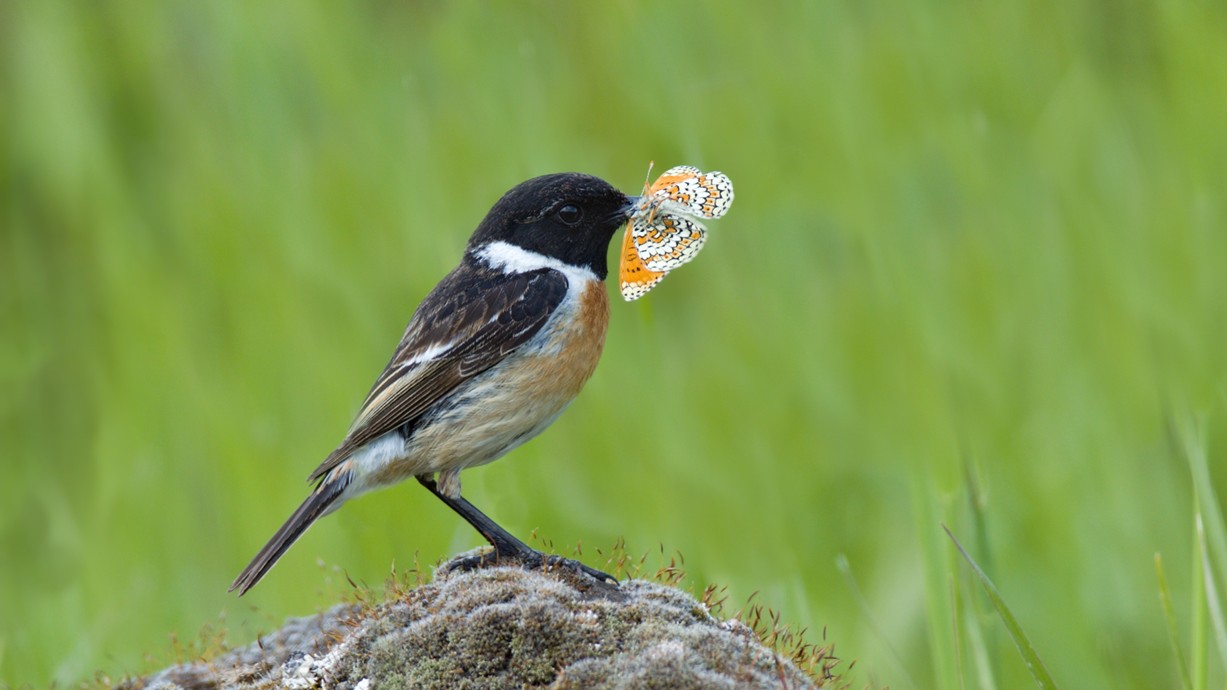
Credit: Stansislav Harvancik.
<関連情報>
- https://www.swansea.ac.uk/press-office/news-events/news/2025/09/global-study-finds-what-influences-animals-antipredator-colour-strategies.php
- https://www.science.org/doi/10.1126/science.adr7368
昆虫の抗捕食者色彩における地球規模の選択 Global selection on insect antipredator coloration
Iliana Medina, Alice Exnerová, Klára Daňková, Olivier Penacchio, […] , and William L. Allen
Science Published:25 Sep 2025
DOI:https://doi.org/10.1126/science.adr7368
Editor’s summary
Many animal species have evolved camouflage or aposematic (warning) coloration, color patterns that protect them from predation. Medina et al. designed a distributed experiment with artificial Lepidopteran prey to assess how characteristics of the ecosystem influenced the effectiveness of these strategies. They found that camouflage was more beneficial when it was rarely used by prey and in low-light environments, whereas warning coloration was less beneficial in high-predation environments, where competition between predators may motivate them to sample aposematic insects. This comparative analysis helps to explain the distribution and evolution of antipredator coloration. —Bianca Lopez
Abstract
Natural selection has repeatedly led to the evolution of two alternative antipredator color strategies—camouflage to avoid detection and aposematism to advertise unprofitability—but we lack understanding of how ecological context favors one strategy over the other. We conducted a globally replicated predation experiment at 21 sites on six continents to test how predator community, prey community, and visual environment influenced the predation risk of 15,018 artificial paper “moth” prey with cryptic or warning coloration. Results indicated that aposematic strategies fare better in environments with low predation intensity, whereas camouflage strategies are advantaged when other camouflaged prey species are rare and when light levels are low. This study demonstrates how multiple mechanisms shape antipredator strategies, helping to explain the evolution and global distribution of camouflaged and aposematic animals.