2025-10-01 国立遺伝学研究所
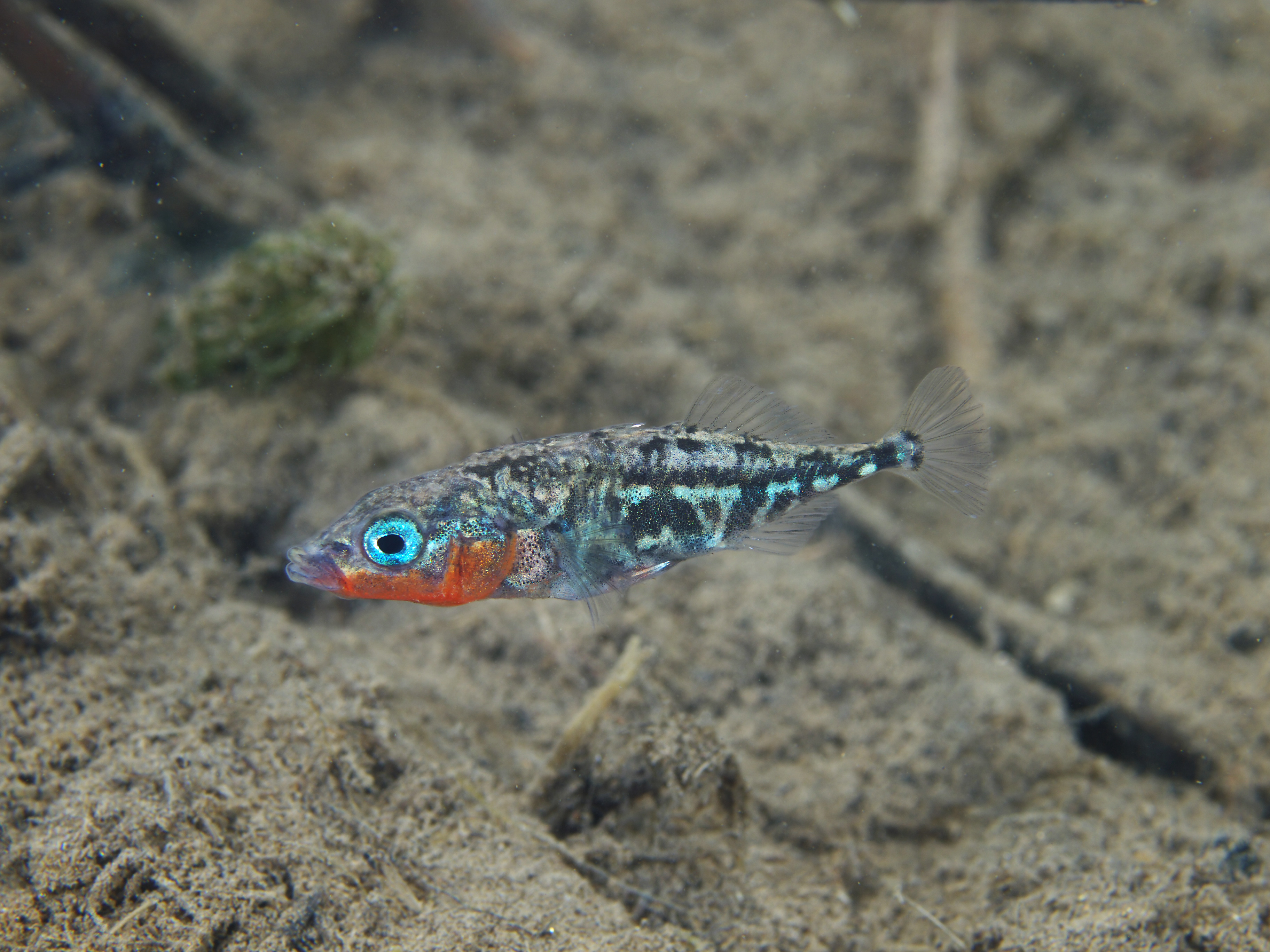
図:ハリヨ(トゲウオ科イトヨ属の淡水集団で岐阜県と滋賀県に現存しており、かつては三重県にも生息していた)は、甲状腺刺激ホルモン受容体(TSHR)の遺伝子に、ヒト疾患の原因となる突然変異に極めて類似の突然変異をもっていました。
写真は秦康之氏より提供
<関連情報>
- https://www.nig.ac.jp/nig/ja/2025/10/research-highlights_ja/rh20251001.html
- https://bmcecolevol.biomedcentral.com/articles/10.1186/s12862-025-02440-5
天然トゲウオ集団における甲状腺刺激ホルモン受容体の機能的変異は、ヒトの疾患原因変異と同一の部位で認められる Functional mutations in the thyroid-stimulating hormone receptor in natural stickleback populations at sites identical to human disease-causing mutations
Jun Kitano,Mana Sato,Hiyu Kanbe,Genta Okude,Asano Ishikawa,Yukinori Kazeto & Takashi Makino
BMC Ecology and Evolution Published:30 September 2025
DOI:https://doi.org/10.1186/s12862-025-02440-5
Abstract
Background
Thyroid hormones regulate multiple physiological functions, including metabolism, reproduction, and metamorphosis. Although there are variations in thyroid hormone signaling between populations and species, the causative mutations underlying these variations have rarely been identified. Here, we investigated whether information regarding the causative genes and mutations responsible for human thyroid diseases could assist with the identification of functional mutations in natural stickleback populations, which vary in thyroid hormone signaling between marine and stream-resident ecotypes. We first determined whether Japanese stickleback populations carry mutations at orthologous sites to those carrying non-synonymous mutations causing thyroid diseases in humans and then evaluated their effects using a heterologous mammalian cell line.
Results
We found that several stickleback populations carry non-synonymous mutations in the thyroid-stimulating hormone receptor 2 (Tshr2) gene. Using a heterologous cell culture system and recombinant stickleback thyroid-stimulating hormone (TSH) 1 and TSH2, we first showed that TSHR2 responds to TSH2, but not TSH1. We also found that amino acid changes in TSHR2 at orthologous sites to those at which loss-of-function mutations have been reported in humans similarly reduce TSHR2 function in the stickleback. In contrast, an amino acid change at the site of a gain-of-function mutation in humans increased receptor function. Furthermore, we also found that TSHR1 and TSHR2 are expressed in the throat area and the brain, respectively, suggesting subfunctionalization.
Conclusion
Natural stickleback populations carry functional mutations in a gene involved in thyroid hormone signaling at orthologous sites to those that are responsible for disease in humans. These results suggest that human disease-causing mutations can be informative in the search for functional mutations in natural animal populations.