2025-10-02 カリフォルニア大学サンタバーバラ校(UCSB)
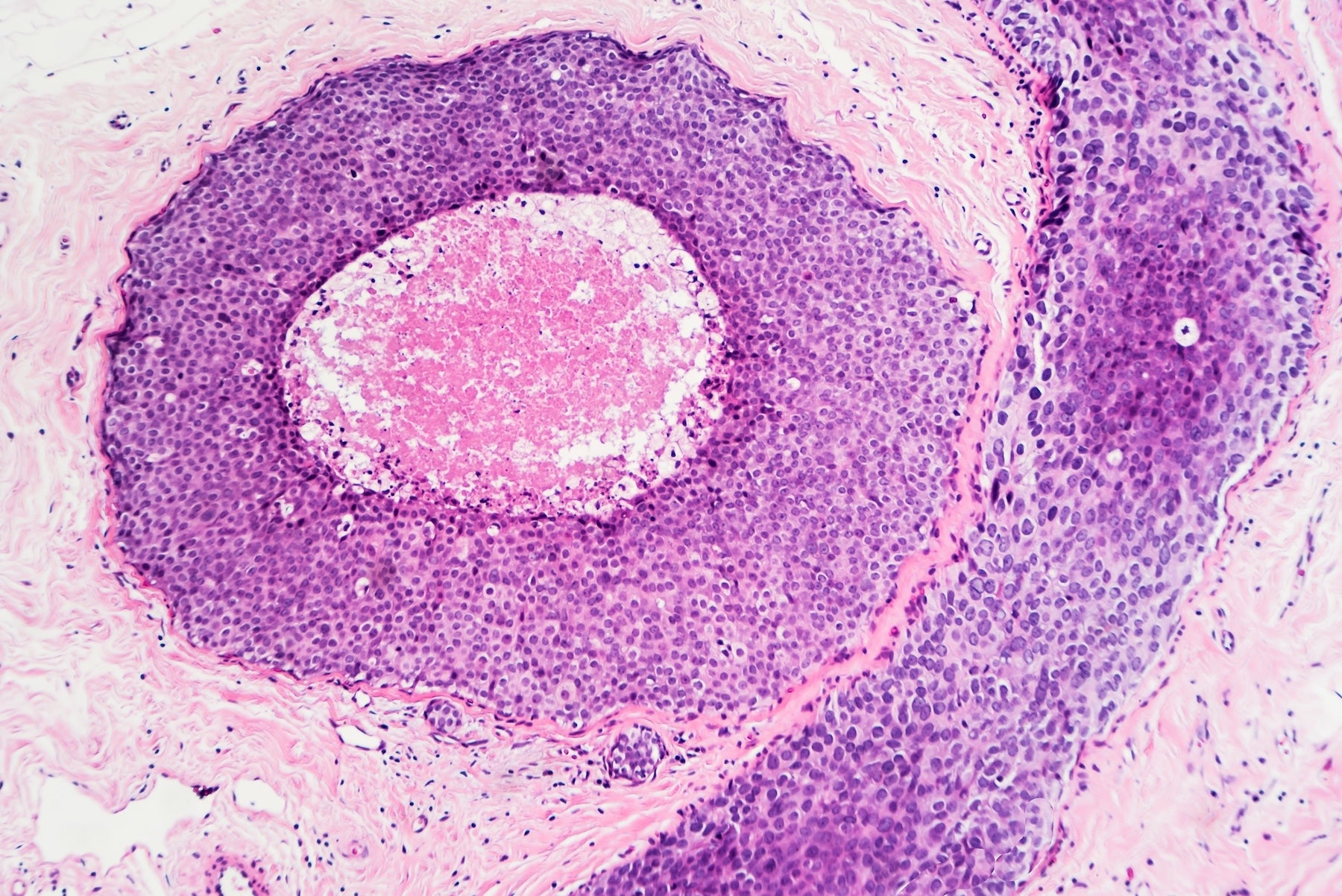
Photo CreditiStock / rightdx
Radiographic image of breast cancer tumor cells in the mammary ducts.
<関連情報>
- https://news.ucsb.edu/2025/022100/novel-membrane-gel-ucsb-offers-new-tool-breast-cancer-research
- https://www.science.org/doi/10.1126/sciadv.adx2110
乳腺上皮の形態形成と浸潤を研究するための基底膜模倣ハイドロゲルの作製 Engineered basement membrane mimetic hydrogels to study mammary epithelial morphogenesis and invasion
Jane A. Baude, Megan D. Li, Sabrina M. Jackson, Abhishek Sharma, Daniella I. Walter, and Ryan S. Stowers
Science Advances Published:26 Sep 2025
DOI:https://doi.org/10.1126/sciadv.adx2110
Abstract
Reconstituted basement membrane products, like Matrigel, suffer from variability and xenogenic contaminants, hindering three-dimensional cell culture models. To overcome these challenges, we developed engineered basement membranes (eBMs) using peptide-conjugated alginate hydrogels with independently tunable mechanics. Ile-Lys-Val-Ala-Val (IKVAV)–modified eBMs, with fast stress relaxation and low stiffness, supported normal mammary acinus formation. Both increased stiffness and slow relaxation were required to induce invasion in IKVAV-modified eBMs, differing from the invasive phenotype observed in Arg-Gly-Asp (RGD)–modified eBMs regardless of the mechanical properties. Mechanistic studies revealed the balance of β1 and β4 integrin signaling, hemidesmosome formation, and laminin production were influenced by eBM properties. Inhibiting focal adhesion kinase or hemidesmosome signaling disrupted acinus formation in IKVAV-modified eBMs. This defined, xenogenic-free eBM system offers a modular platform for tissue engineering and disease modeling.