2025-10-08 北海道大学
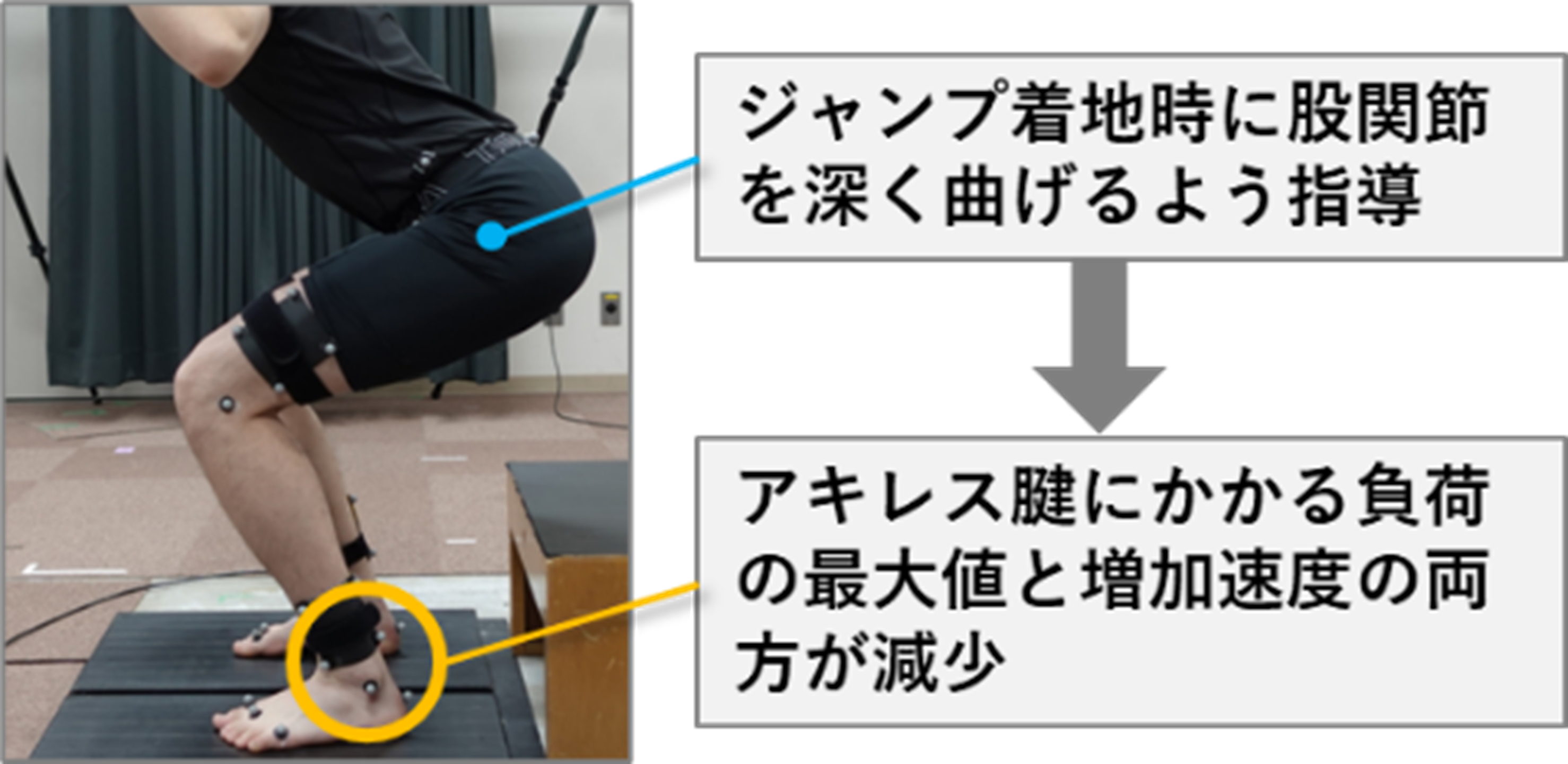
台から前方にジャンプして両脚で着地する際、股関節を深く曲げるよう指導すると、アキレス腱負荷の最大値と増加速度が減少する。
<関連情報>
- https://www.hokudai.ac.jp/news/2025/10/post-2078.html
- https://www.hokudai.ac.jp/news/pdf/251008_pr.pdf
- https://esskajournals.onlinelibrary.wiley.com/doi/10.1002/ksa.70006
着地時の指導によるアキレス腱負荷の変化:股関節屈曲の重要性 Effects of landing instructions on Achilles tendon load: Emphasising hip flexion as the optimal strategy
Yuta Koshino, Mina Samukawa, Tomoya Ishida, Harukazu Tohyama
Knee Surgery, Sports Traumatology, Arthroscopy Published: 29 August 2025
DOI:https://doi.org/10.1002/ksa.70006
Abstract
Purpose
Managing Achilles tendon (AT) load during dynamic activities is essential for preventing and rehabilitating Achilles tendinopathy. While various exercises have been studied, the impact of verbal instructions on landing mechanics remains unclear. This study aimed to identify instructional methods that effectively reduce AT load during drop vertical jumps (DVJs).
Methods
Twenty-three healthy participants performed DVJs under five instructional conditions: (1) natural: no instruction; (2) posterior-centre of pressure (COP): shifting the COP posteriorly; (3) hip-flexion: increasing hip flexion; (4) knee-flexion: increasing knee flexion; and (5) quiet-landing: minimising landing sound. A three-dimensional motion analysis system recorded peak AT force, loading rate, joint angles, ground reaction force (GRF) and COP position. Data were analysed using the Friedman test, the Wilcoxon signed-rank test with Holm’s correction and effect size (ES).
Results
Peak AT force was significantly lower in hip-flexion and posterior-COP compared to natural (p < 0.001, ES = -0.87 and -0.82, respectively). Hip-flexion also showed lower AT force than the knee-flexion and quiet-landing (p < 0.01). Loading rates were lower in hip-flexion (ES = -0.73) and quiet-landing (ES = -0.64) than in natural (p < 0.01) but were higher in posterior-COP than hip-flexion (p = 0.042). Hip-flexion, knee-flexion and quiet-landing increased hip flexion (p < 0.001), while knee-flexion and quiet-landing increased knee flexion (p < 0.001) compared to natural. Posterior-COP resulted in decreased hip, knee and ankle flexion, increased vertical GRF and a more posterior COP position compared to the other conditions (p < 0.05). Vertical GRF was lower in hip-flexion, knee-flexion and quiet-landing than in natural (p < 0.005).
Conclusions
Increasing hip flexion is the most effective strategy for reducing AT force during landing, and may aid in the prevention and rehabilitation of Achilles tendinopathy. Although a posterior COP shift lowers AT force, it increases AT loading rate and GRF, potentially elevating injury risk.
Level of Evidence
Level III.