2025-10-20 マックス・プランク研究所

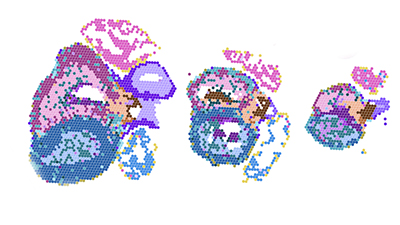
Female canaries do not sing, yet their brains maintain the ability to sing throughout their lives. The study shows that inactive neuronal circuits can be activated when needed.© MPI for Biological Intelligence/ Stefan Leitner
<関連情報>
- https://www.mpg.de/25568925/1017-orni-it-s-never-too-late-to-start-singing-154562-x
- https://www.pnas.org/doi/10.1073/pnas.2426847122
テストステロン投与下で歌うメスのカナリアにおける不変のHVCサイズ:成長ではなく神経分化による機能の解放 Invariant HVC size in female canaries singing under testosterone: Unlocking function through neural differentiation, not growth
Shouwen Ma, Carolina Frankl-Vilches, and Manfred Gahr
Proceedings of the National Academy of Sciences Published:October 20, 2025
DOI:https://doi.org/10.1073/pnas.2426847122
Significance
In many songbird species, singing can be induced in otherwise nonsinging females or is expressed only during certain life stages. These transient behaviors have been attributed to testosterone-driven growth and regression of song control brain regions. We show that in adult female canaries, the size of these regions remains constant; instead, testosterone alters the phenotype and activity of their component neurons. Thus, the adult brain retains the capacity to respond to testosterone, allowing behaviors such as song to reemerge even after years of silence.
Abstract
Testosterone administration to nonsinging adult female canaries induces song, making this a model for behavioral plasticity and its underlying neural mechanisms in vertebrates. The song control nucleus HVC is traditionally believed to undergo a substantial size change when transitioning from a nonfunctional to a functional (song-producing) state. Using 2-photon in vivo imaging, we tracked the spatial distribution and anatomical properties of HVC neurons over several weeks of testosterone-induced song development. Surprisingly, despite ultrastructural changes of HVC neurons, testosterone did neither alter neuronal spacing nor HVC size. Instead, spatial transcriptomics revealed that testosterone modulates gene networks throughout HVC, aligning transcriptomic profiles between its peripheral and central HVC regions in singing birds, thereby mimicking the histological appearance of an enlarging HVC. Our results demonstrate that changes in HVC size in adults reflect phenotypic changes in neurons within a stable framework. Importantly, the nonfunctional state is not associated with a reduced brain area volume, preserving HVC’s capacity for functional differentiation throughout life.