2025-12-02 カリフォルニア大学サンディエゴ校(UCSD)
<関連情報>
- https://today.ucsd.edu/story/cracking-the-code-of-parkinsons-how-supercomputers-are-pointing-to-new-treatments
- https://www.nature.com/articles/s41531-025-01070-4
パーキンソン病一次運動野のシミュレーションから強化されたベータ波のパワーが出現 Enhanced beta power emerges from simulated parkinsonian primary motor cortex
Donald W. Doherty,Liqiang Chen,Yoland Smith,Thomas Wichmann,Hong-Yuan Chu & William W. Lytton
npj Parkinson’s Disease Published:05 August 2025
DOI:https://doi.org/10.1038/s41531-025-01070-4
Abstract
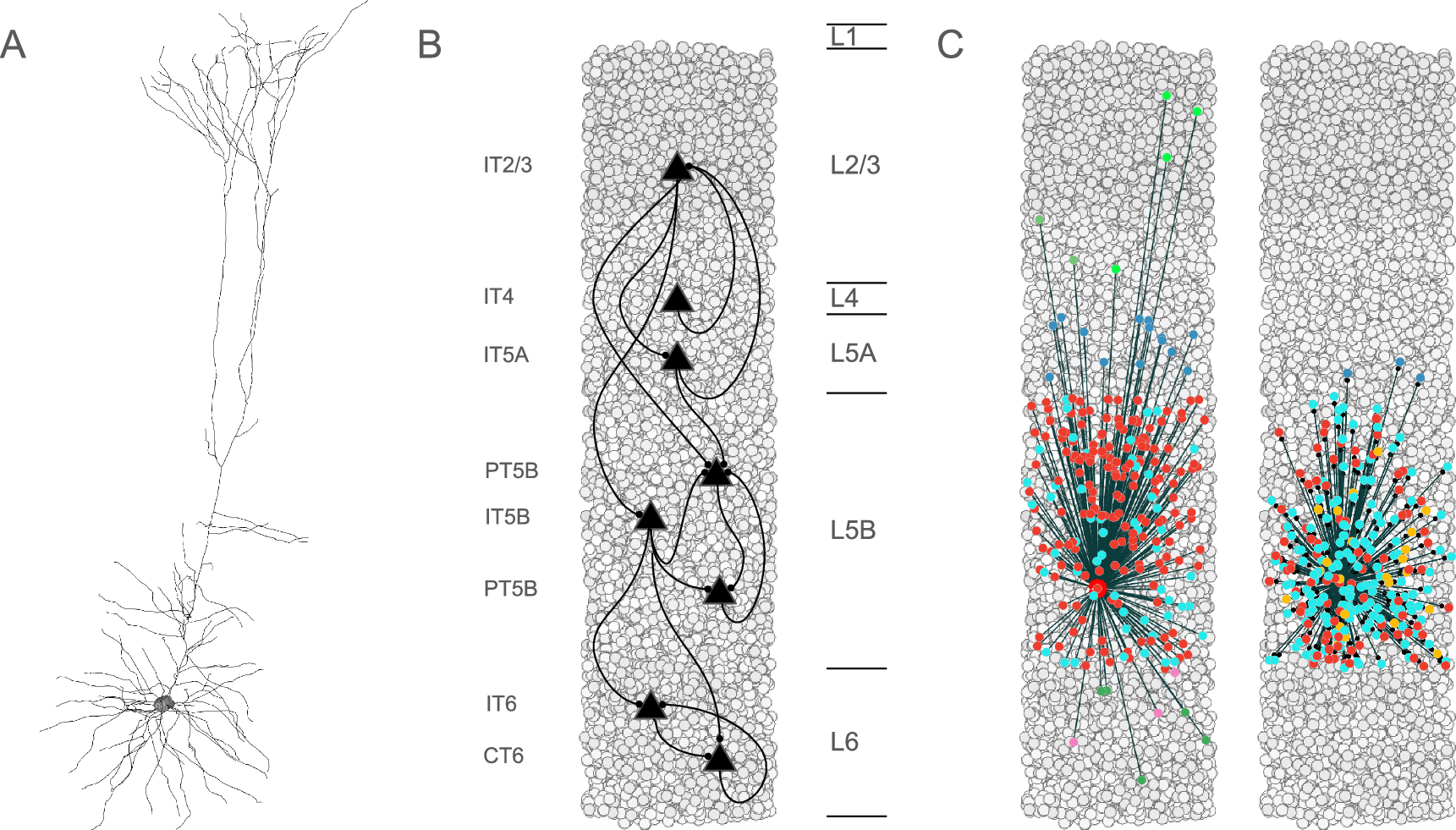
Primary motor cortex (M1) layer 5B pyramidal tract (PT5B) neurons develop intrinsic pathology in rodent and primate Parkinson’s disease (PD) models. We used computer simulation to predict how decreased PT5B neuron excitability, identified with current injection in vitro, would change activity patterns of the M1 network. Using NEURON/NetPyNE, we implemented computer simulations of PT5B neurons based on control and 6-OHDA-treated mouse slice data. Parkinsonian PT5B neurons, in an otherwise unmodified simulated M1 network, produced major changes in LFP oscillatory power: an order of magnitude increase in beta band power around 15 Hz in the rest state. This demonstrated that relatively small changes in PT5B neuron excitability would alter oscillatory patterns of activity throughout the M1 circuit, increasing beta band power, a signature of PD pathophysiology. Dysfunction in PT5B neurons, the final-common-pathway to brainstem and spinal cord, provides a new target to treat PD motor symptoms.