2025-12-15 ゲーテ大学
<関連情報>
- https://aktuelles.uni-frankfurt.de/english/tropical-disease-oroya-fever-elucidation-of-disease-mechanism-opens-possibility-for-novel-therapy/
- https://www.nature.com/articles/s41467-025-66781-x
ポリンAとα/β-加水分解酵素は、バルトネラ・バチルスによる溶血に必要かつ十分である Porin A and α/β-hydrolase are necessary and sufficient for hemolysis induced by Bartonella bacilliformis
Alexander A. Dichter,Florian Winklmeier,Diana Munteh,Wibke Ballhorn,Sabrina A. Becker,Beate Averhoff,Halvard Bonig,Adrian Goldman,Meritxell García-Quintanilla,Luis Solis Cayo,Pablo Tsukayama & Volkhard A. J. Kempf
Nature Communications Published:28 November 2025
DOI:https://doi.org/10.1038/s41467-025-66781-x
Abstract
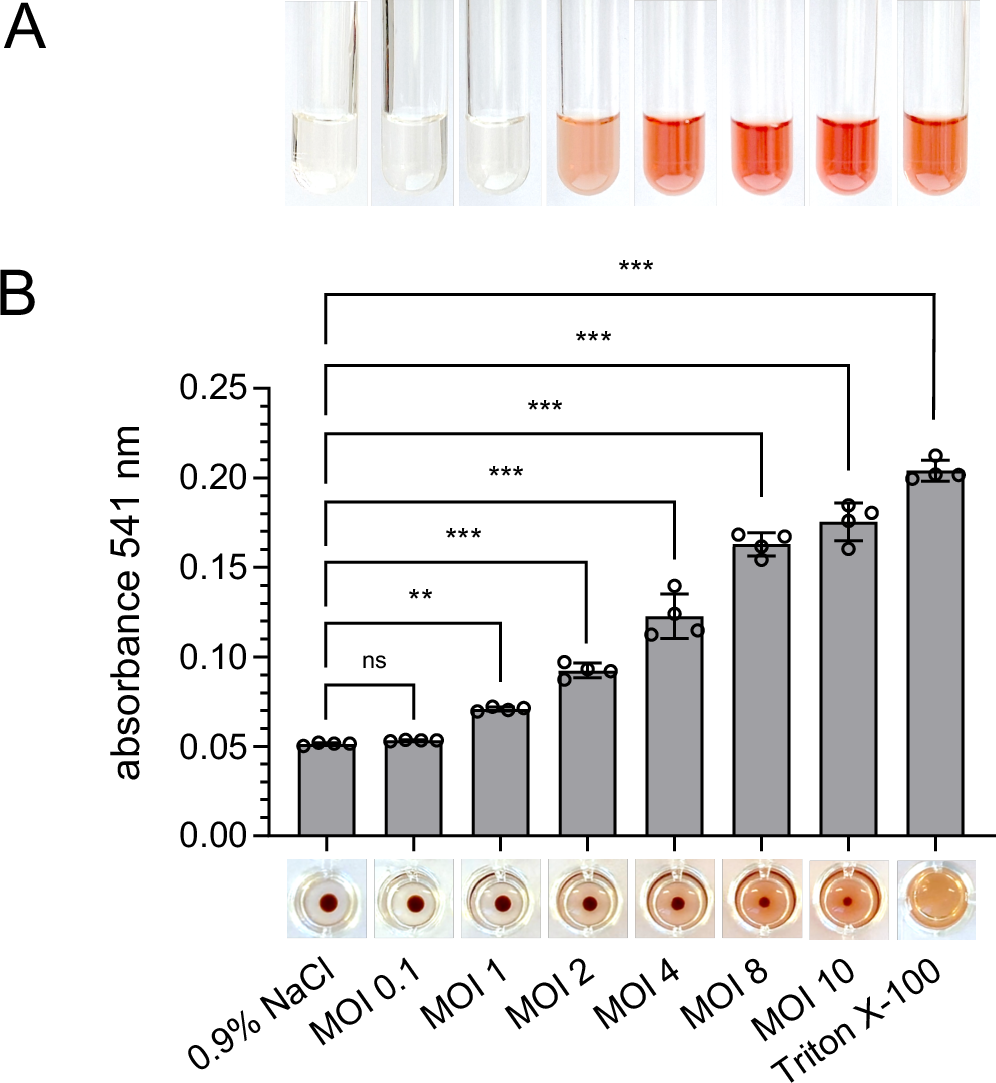
Carrion’s disease is endemic to the South American Andes and is characterized by fatal hemolytic anemia. This neglected tropical disease is caused by Bartonella bacilliformis, a fastidious and slow-growing pathogen difficult in genetic manipulation. In this study, we determine that porin A and α/β-hydrolase are both necessary and sufficient for hemolysis induced by B. bacilliformis. These genes are identified through a screen of a Tn5 transposon mutant library. Using markerless deletion mutagenesis, porin A and α/β-hydrolase deletion mutants are generated and functionally analyzed by hemolysis assays. In silico analyses predict conserved biological functions and three-dimensional structures of the identified proteins, with the α/β-hydrolase showing structural similarity to known lipases. Site-directed mutagenesis of the α/β-hydrolase active site demonstrates that the catalytic triad (Ser205, Asp267, His310) is essential for its hemolytic function. Screening of a phospholipase inhibitor library comprising 27 bioactive compounds identifies compound 48/80 as a potent inhibitor of hemolysis, with activity in the micromolar range. Unraveling the molecular mechanisms underlying Carrion’s disease may facilitate the future development of anti-virulence therapies, a promising strategy particularly in the context of increasing antibiotic resistance of B. bacilliformis.