2026-01-22 成育医療研究センター
<関連情報>
- https://www.ncchd.go.jp/press/2026/0122.html
- https://www.ncchd.go.jp/press/2026/0122_1.pdf
- https://journals.lww.com/menopausejournal/fulltext/9900/associations_between_female_caregivers_.591.aspx
女性介護者の更年期症状と思春期の精神的健康との関連:全国日本コホート調査からの知見 Associations between female caregivers’ climacteric symptoms and adolescent mental health: findings from a National Japanese Cohort
Morisaki, Naho MD, MPH, PhD; Itoi, Shiori MD; Piedvache, Aurelie MSc; Ishitsuka, Kazue MD, MPH, PhD; Shimoda, Mariko MA; Yoshida-Komiya, Hiromi MD, PhD
Menopause Published:January 20, 2026
DOI:10.1097/GME.0000000000002722
Abstract
Objective:
To evaluate the associations between caregivers’ climacteric symptoms and adolescent mental health.
Methods:
This cross-sectional study analyzed data from the 2023 wave of the Japan Adolescent and Youth (JAY) cohort, a nationally representative survey of caregiver–adolescent dyads. The sample included 1,541 dyads. Caregivers’ symptoms were assessed using the Simplified Menopausal Index (SMI), comprising vasomotor, psychological, and somatic domains. Adolescent mental health was measured using the Strengths and Difficulties Questionnaire (SDQ), UCLA Loneliness Scale (UCLA-LS3), short version of the Spence Children’s Anxiety Scale (Short-CAS), Patient Health Questionnaire-9 for Adolescents (PHQ-A), and Young’s Diagnostic Questionnaire (YDQ) for internet addiction. Multivariable regression analyses assessed associations between SMI scores and adolescent outcomes, adjusting for caregiver age, adolescent age, adolescent sex, and household income.
Results:
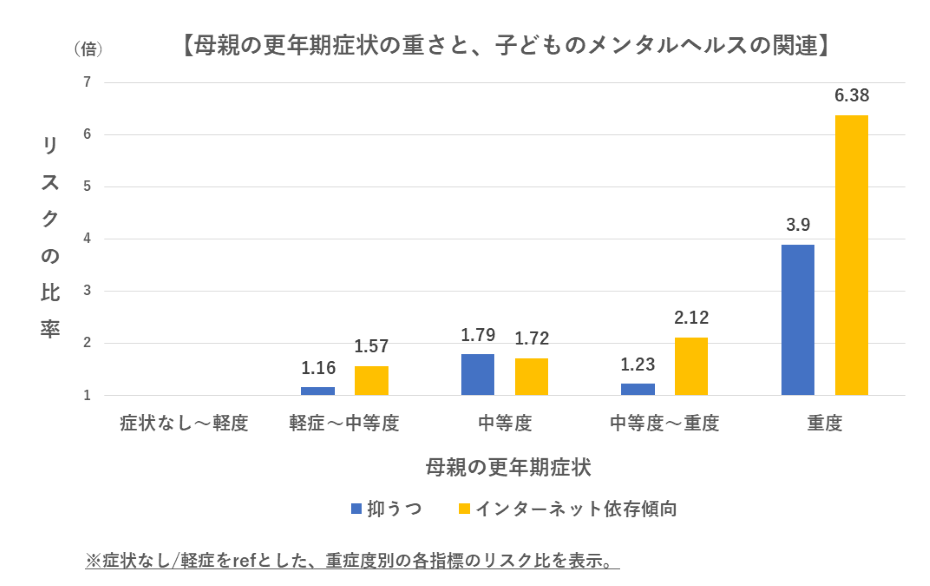
Among caregivers, 26.4% reported moderate to severe climacteric symptoms (SMI score ≥51), and 4.6% were currently under treatment for menopause. Among caregivers not undergoing treatment, higher SMI scores were significantly associated with greater caregiver-reported difficulties with their adolescents, and increased adolescent reports of loneliness, anxiety, depression, and problematic internet use. Among the three domains of symptoms (vasomotor, psychological, and somatic), psychological climacteric symptoms showed the strongest associations with adolescent health outcomes.
Conclusion:
Caregivers’ climacteric symptoms are associated with poorer adolescent mental health. Given low care-seeking rates, greater awareness and support for midlife health may benefit both caregivers and children, promoting broader family well-being.