2026-01-29 名古屋大学
<関連情報>
- https://www.nagoya-u.ac.jp/researchinfo/result/2026/01/—.html
- https://www.nagoya-u.ac.jp/researchinfo/result/upload_images/20260129_med_jp.pdf
LIMCH1に富む細胞外小胞は早発性妊娠中毒症の血管透過性を促進する LIMCH1-enriched extracellular vesicles promote vascular permeability in early-onset preeclampsia
Seiko Matsuo, Akira Yokoi, Takafumi Ushida, Kosuke Yoshida, […] , and Tomomi Kotani
Science Advances Published:28 Jan 2026
DOI:https://doi.org/10.1126/sciadv.aeb8806
Abstract
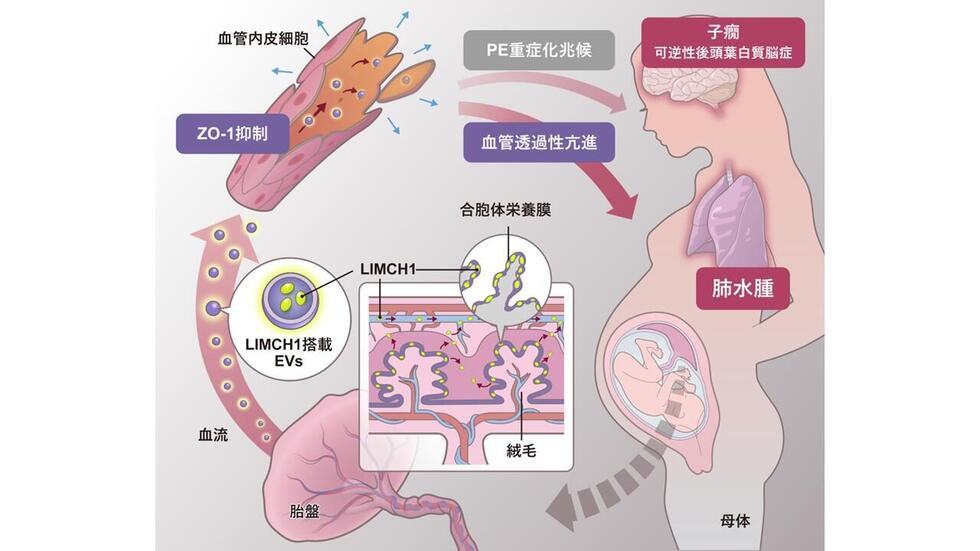
Preeclampsia (PE) is a major pregnancy complication characterized by hypertension and multiple end-organ dysfunctions; however, its detailed pathogenesis remains unclear. Extracellular vesicles (EVs) play diverse and critical roles in intercellular communication, and we have demonstrated interaction between EVs and vascular endothelial cells. Through serum proteomic analysis, we identified LIM and calponin homology domain–containing protein 1 (LIMCH1) as a PE-associated EV protein that is highly expressed in PE placentas, particularly in syncytiotrophoblasts, which release EVs into the maternal circulation. LIMCH1-enriched EVs (LIMCH1-EVs) increased endothelial permeability in vitro. Transcriptome analysis revealed that LIMCH1-EVs disrupted endothelial cell-cell junction assembly by suppressing the expression of the tight junction protein ZO-1. Furthermore, administration of LIMCH1-EVs promoted pulmonary vascular permeability in vivo. These findings suggest a role of LIMCH1-EVs in EV-associated vascular endothelial dysfunction, a central pathology of PE. In addition, this study provides insights into mechanisms that may contribute to PE-associated pulmonary edema, which have not yet been clarified.