2026-01-30 京都大学
<関連情報>
- https://www.kyoto-u.ac.jp/ja/research-news/2026-01-30
- https://www.kyoto-u.ac.jp/sites/default/files/2026-01/web_2601_Yabe-f9cc7bb10f4981e518322b06158ed1f7.pdf
- https://dom-pubs.pericles-prod.literatumonline.com/doi/10.1111/dom.70494
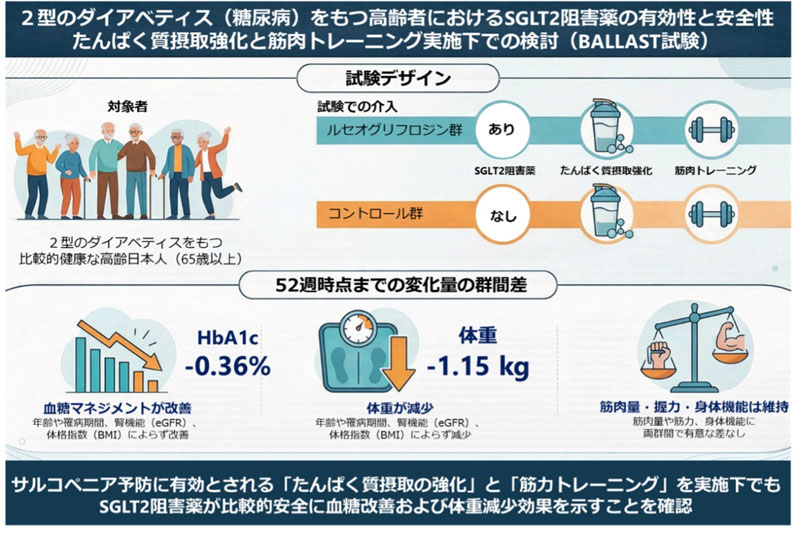
BALLAST試験:ロイシン強化アミノ酸サプリメントと運動プログラムを受けている2型糖尿病の日本人高齢者におけるルセオグリフロジンの有効性と安全性を検討する多施設共同、非盲検、無作為化対照、52週間の臨床試験 BALLAST study: A multicentre, open-label, randomized-controlled, 52-week clinical trial of the efficacy and safety of luseogliflozin in older Japanese adults with type 2 diabetes receiving leucine-enriched amino acid supplementation and physical exercise programme
Yoshihiro Takahashi MD, Makoto Hayashi MD, Takehiro Kato MD, Yukio Horikawa MD, Shin Tsunekawa MD, Hitoshi Kuwata MD, Yutaka Seino MD, Ryota Ogata MSc …
Diabetes, Obesity and Metabolism Published: 21 January 2026
DOI:https://doi.org/10.1111/dom.70494
1 BACKGROUND
Older adults are a rapidly growing segment of the diabetes population, with unique challenges including greater comorbidities and high risk of sarcopenia. Sodium–glucose co-transporter-2 inhibitors (SGLT2is) offer effective glycaemic control with weight loss and low hypoglycaemia risk, making them attractive for older adults with type 2 diabetes (T2D). However, concerns have been raised that SGLT2is may accelerate muscle loss and exacerbate sarcopenia.1, 2 In older T2D adults, sarcopenia is prevalent and associated with poor outcomes. Nutritional and exercise interventions — especially leucine-enriched amino acid supplementation (LEAAS), combined with resistance exercise — can help preserve muscle mass and function.3, 4 Current diabetes care guidelines in Japan emphasize strategies to prevent frailty and muscle loss in older adults with diabetes.5 Accordingly, we conducted the BALLAST study to evaluate the 52-week efficacy and safety of the SGLT2i luseogliflozin in older T2D adults, with all participants receiving LEAAS and an exercise program.