2026-02-05 インペリアル・カレッジ・ロンドン(ICL)
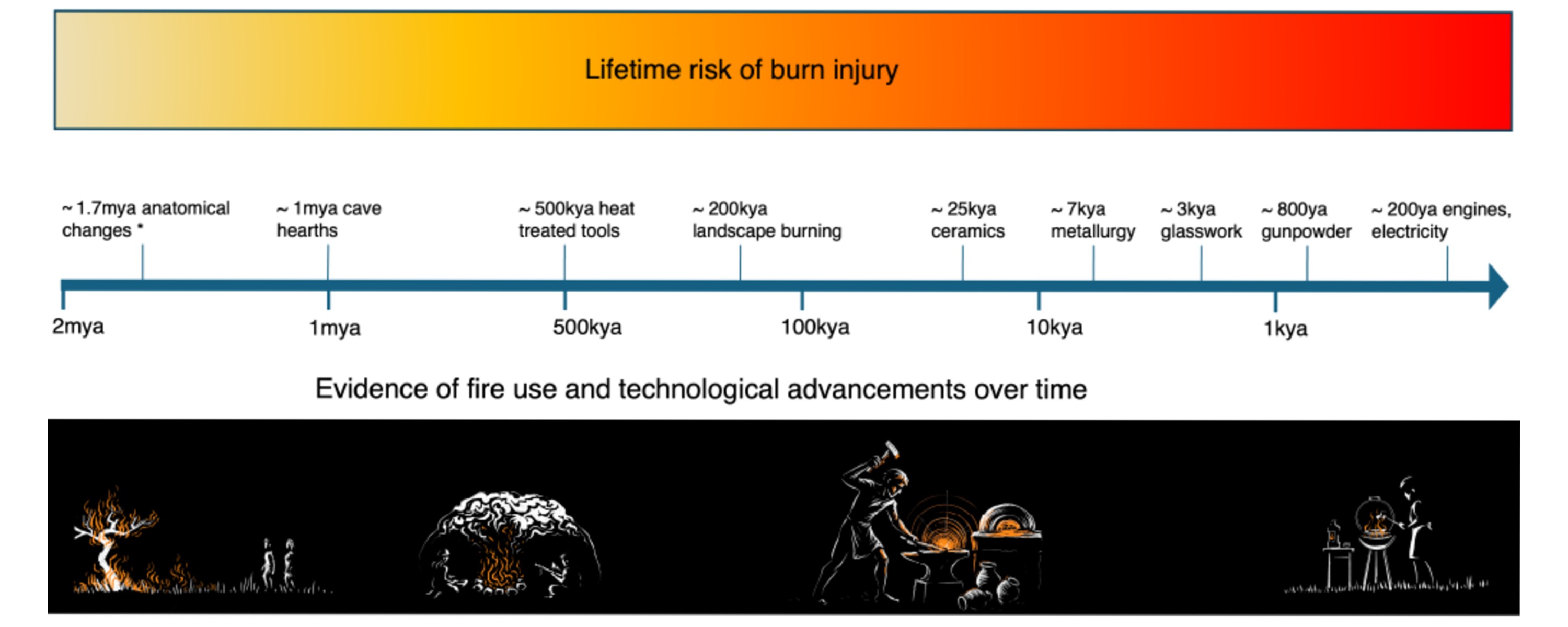
The control of fire has powered human success for more than one million years
<関連情報>
- https://www.imperial.ac.uk/news/articles/medicine/department-of-surgery-and-cancer-news-articles/2026/exposure-to-burn-injuries-played-key-role-in-shaping-human-evolution-study-suggests/
- https://onlinelibrary.wiley.com/doi/10.1002/bies.70109
火傷の選択:火傷が人類の進化をどう形作ったか Burn Selection: How Fire Injury Shaped Human Evolution
Joshua Cuddihy, Yuemin Li, Isobel Fisher, Zoltan Takats, Dominic Friston, Declan Collins, Marcela Vizcaychipi, Matteo Fumagalli, Istvan Nagy, Armand Leroi
BioEssays Published: 04 February 2026
DOI:https://doi.org/10.1002/bies.70109
ABSTRACT
The mastery of fire transformed human evolution through advantages spanning diet, behavior, physiology, and ecology. While these benefits are well established, here we highlight a previously overlooked cost — and selective pressure — unique to humans: high-temperature burn injury. Unlike other species, humans and their hominin ancestors have faced increased lifetime risk of burns, which we argue has driven genetic adaptation. Drawing on comparative genomic evidence across primates, we suggest that genes associated with burn injury response — relating to wound healing and inflammation — show signs of accelerated evolution in humans. We propose that recurrent exposure to burns acted as a selective force in our lineage, helping to explain both beneficial adaptations and paradoxical maladaptive responses to severe injury. By framing burns as an evolutionary pressure, the Burn Selection Hypothesis invites a re-evaluation of how fire shaped human biology and offers new perspectives for understanding both the evolutionary past and modern burn care.