2026-03-23 北海道大学
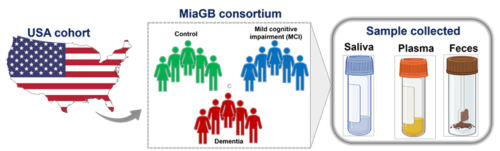
図1.対照群及び軽度認知障害群における複数サンプルの包括的脂質プロファイリング
<関連情報>
- https://www.hokudai.ac.jp/news/2026/03/mci-bomme-gowda-siddabasave-gowda.html
- https://www.hokudai.ac.jp/news/pdf/260323_pr3.pdf
- https://www.nature.com/articles/s41398-026-03893-y
脂質オミクスシグネチャーによる軽度認知障害関連バイオマーカーの同定 Lipidomic signatures reveal biomarkers of mild cognitive impairment
Jayashankar Jayaprakash,Siddabasave Gowda B. Gowda,Divyavani Gowda,MiaGB Consortium,Shalini Jain,Hariom Yadav & Shu-Ping Hui
Translational Psychiatry Published:16 February 2026
DOI:https://doi.org/10.1038/s41398-026-03893-y
Abstract
Mild cognitive impairment (MCI) is an early stage in the progression toward dementia. Lipids are central to neurodegeneration, yet the biomarker potential of lipidomics from saliva, plasma, and feces remains underexplored. As part of the Microbiome in Aging Gut and Brain (MiaGB) consortium, saliva, plasma, and fecal samples were collected from older adults with MCI and healthy controls. Samples were analyzed by high-performance liquid chromatography coupled with high-resolution mass spectrometry (LC/MS), to profile lipidomic alterations and identify candidate biomarkers. Lipidomic profiling annotated over 200 molecular species spanning five major lipid classes. Compared with controls, MCI patients exhibited increased oxidized triacylglycerols (oxTGs) in saliva, reduced cholesteryl linoleate (CE 18:2) in plasma, and decreased fatty acid esters of hydroxy fatty acids (FAHFAs) in feces. Receiver operating characteristic (ROC) analysis identified α-linolenic acid (FA 18:3), docosapentaenoic acid (FA 22:5), and CE 18:2 as discriminatory metabolites with notable diagnostic performance. Moreover, elevated fecal triacylglycerols containing medium-chain fatty acids (TG-MCFAs) were observed in MCI, suggesting impaired lipid absorption or altered metabolism. This multi-sample lipidomics strategy highlights TG-MCFAs as fecal biomarkers for MCI detection, supporting further mechanistic and longitudinal validation.