2025-06-23 ミシガン大学
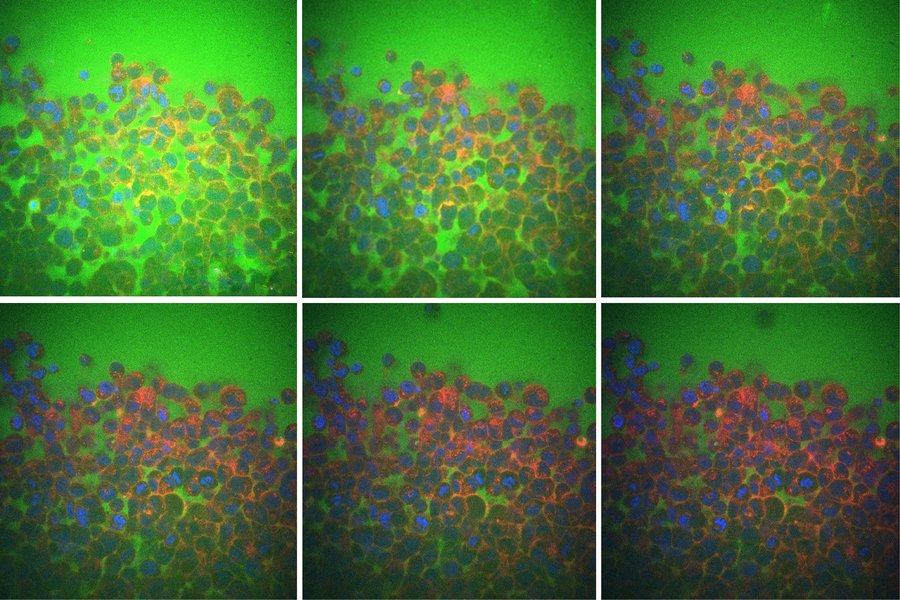
 In a new study from the University of Michigan, researchers have coupled experiments with models of neuronal circuits, like the one shown here, to investigate the role of the non-REM to REM sleep cycle’s impact on memory. Image credit: Satchell, M. et al. PLOS Comput. Biol. 2025. DOI:10.1371/journal.pcbi.1013097, CC 4.0 License
<関連情報>
- https://news.umich.edu/a-universal-sleep-pattern-could-help-strengthen-separate-memories/
- https://journals.plos.org/ploscompbiol/article?id=10.1371/journal.pcbi.1013097
神経ネットワークのコリン作動性調節は、記憶の定着におけるNREM状態とREM状態の連続的かつ相補的な役割を支持する Cholinergic modulation of neural networks supports sequential and complementary roles for NREM and REM states in memory consolidation
Michael Satchell,Edith Butel-Fry,Zahraa Noureddine,Alexis Simmons,Nicolette N. Ognjanovski,Sara J. Aton ,Michal R. Zochowski
PLOS Computational Biology Published: June 17, 2025
DOI:https://doi.org/10.1371/journal.pcbi.1013097
Abstract
Across vertebrate species, sleep consists of repeating cycles of NREM followed by REM. However, their respective functions, and their stereotypic cycling pattern are not well understood. Using a simplified biophysical network model, we investigate the potential role of cholinergic modulation, acting via the muscarinic receptors, on network dynamics and memory consolidation. We show that low and high cholinergic levels associated with NREM and REM sleep, respectively, may play critical, sequential roles in memory consolidation. The network dynamics that facilitate these roles arise through alteration of neural excitability and changes to network-wide excitatory/inhibitory balance. At low acetylcholine (ACh) levels, reduced activation of inhibitory neurons leads to network-wide disinhibition and bursts of synchronized activity led by engram neurons, driving recruitment of additional excitatory neurons into the engram. In contrast, at high ACh levels, increased network inhibition suppresses firing in all but the most strongly recruited excitatory neurons, pruning the expanded engram population. Together, these results provide a testable hypothesis regarding the role of sleep state-specific cholinergic modulation in the process of memory consolidation.
Author summary
Across animal species sleep stereotypically is composed of non-REM (non-rapid eye movement, NREM) and REM (rapid eye movement) phases, with NREM preceding REM. It remains not clear what differential functions those two phases play in sleep dependent memory consolidation – a process leading to better recollection of recently experienced events. Using a simplified computational model combined with analysis of in vivo recordings from mouse hippocampus, we show that changes in acetylcholine levels during NREM and REM sleep may drive these different roles in memory consolidation. Specifically, we show that low levels of acetylcholine during NREM disinhibit activity of otherwise quiescent subpopulations of excitatory neurons permitting the expansion of memory traces. In contrast, high levels of acetylcholine during REM create more competitive environment for neuronal activity leading to inhibition of less driven cells and preventing an overlap in memory representations when more than one memory traces are involved. We next further demonstrate advantages of the physiological structure of sleep in aiding this process.