2025-07-28 スイス連邦工科大学ローザンヌ校(EPFL)
 © 2025 EPFL
<関連情報>
- https://actu.epfl.ch/news/studying-collective-bee-behavior-thanks-to-robotic/
- https://ieeexplore.ieee.org/abstract/document/10843927
バイオハイブリッドシステムの感覚機能の拡張:ハニカム充填の予測 Extending Sensory Capabilities of a Biohybrid System: Prediction of Honeycomb Fill
Cyril Monette; Rob Mills; Francesco Mondada
2024 12th International Conference on Control, Mechatronics and Automation Date Added to IEEE Xplore: 20 January 2025
DOI:https://doi.org/10.1109/ICCMA63715.2024.10843927
Abstract
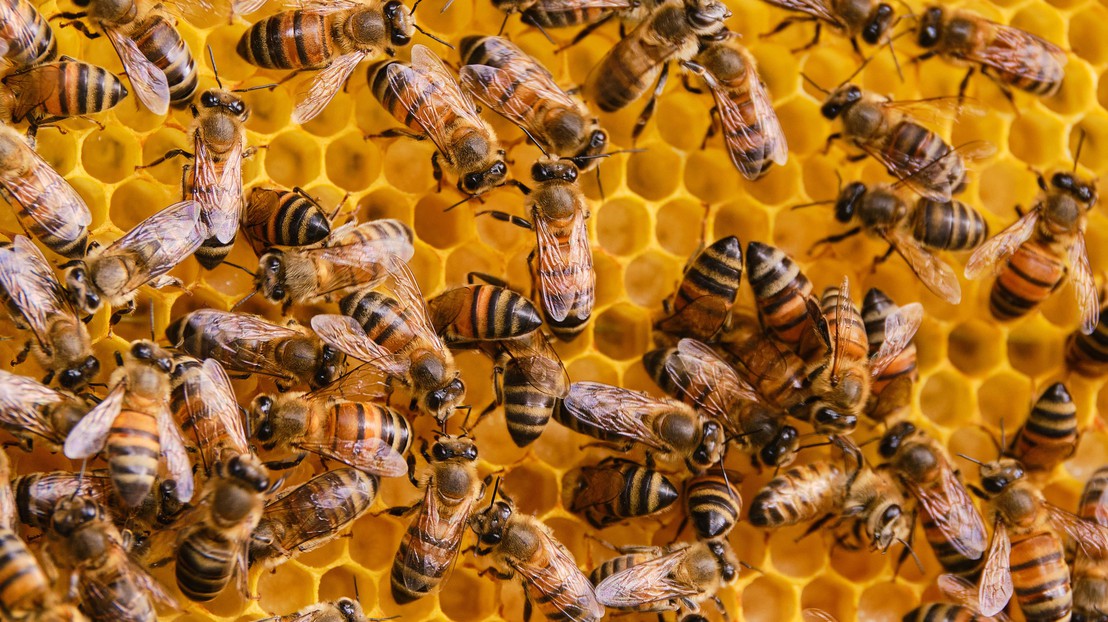
Interactive robotics is increasingly used to investigate animal behaviour, including communication, mating and collective dynamics. An essential component for such systems is sensing the animals and the relevant aspects of the habitat to enable coherent closed-loop interactions with the animals. For honeybee-robot biohybrid systems, one such dimension is the material that the bees have filled their honeycombs with, which can be coarsely measured by weight or more finely by image processing. However, in general beehives are challenging environments for image acquisition and local weighing due to hives’ compactness and propolis coverings, respectively. Here, we investigate the feasibility of measuring the honeycomb filling material at a sub-honeycomb scale. Specifically, we stimulate regions of honeycomb locally by injecting short thermal variations to measure the response in heating and cooling. Filling material and quantity are experimentally varied, and several machine learning techniques are compared for model extraction. We find that the filling material and its pair-wise interaction with filling density significantly influence the quantitative measures of temperature rise and fall times. A regression model of local honey volume based on the latter metrics yields a RMSE of 2.7ml, which corresponds to 1.5% of the total volume that can normally be stored locally. Importantly, this method provides a new channel of information about the state of a beehive and exemplifies how a combination of actuators and sensors can empower bio-hybrid systems in studying animals. The information yielded may indeed be applicable for investigating behaviour, robotic control, or potentially estimating the health status of a colony and providing early warning signals.