2025-09-26 カロリンスカ研究所(KI)
<関連情報>
- https://news.ki.se/tumour-cells-exploit-damaged-tissue-in-the-pancreas
- https://www.nature.com/articles/s41467-025-63864-7
損傷に関連した小葉微小ニッチは膵臓癌における古典的な腫瘍細胞表現型と関連している An injury-associated lobular microniche is associated with the classical tumor cell phenotype in pancreatic cancer
Sara Söderqvist,Annika Viljamaa,Natalie Geyer,Anna-Lena Keller,Kseniya Ruksha,Carina Strell,Neda Hekmati,Alexandra Niculae,Jennie Engstrand,Ernesto Sparrelid,Caroline Salmén,Tânia D. F. Costa,Miao Zhao,Staffan Strömblad,Argyro Zacharouli,Poya Ghorbani,Sara Harrizi,Yousra Hamidi,Olga Khorosjutina,Stefina Milanova,Bernhard Schmierer,Béla Bozóky,Carlos Fernández Moro & Marco Gerling
Nature Communications Published:26 September 2025
DOI:https://doi.org/10.1038/s41467-025-63864-7
Abstract
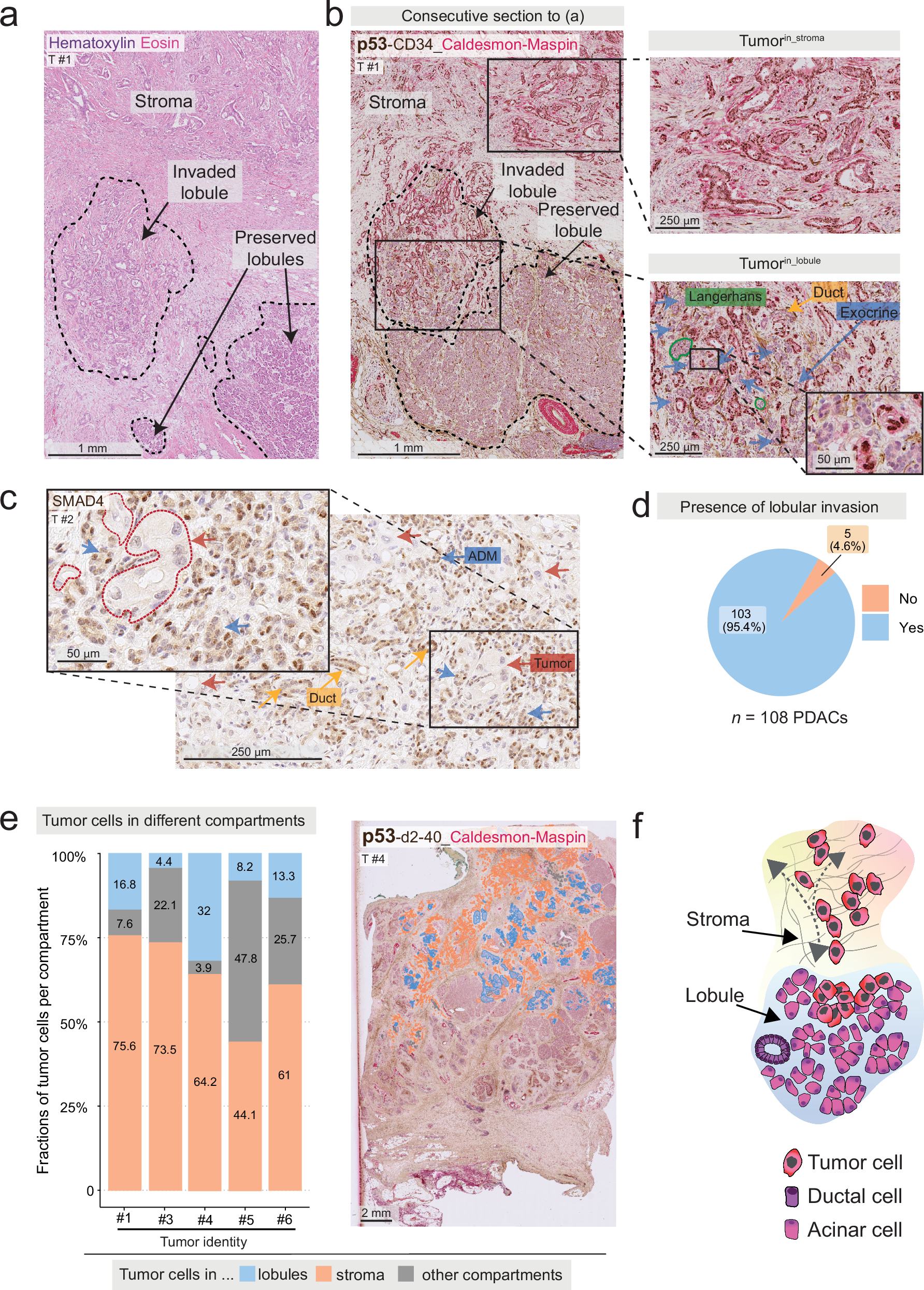
Pancreatic cancer is an aggressive disease with a dense fibrotic stroma and is often accompanied by chronic inflammation. Peritumoral inflammation is typically viewed as a reaction to nearby tumor growth. Here, we report that the inflamed pancreatic lobules are frequently invaded by tumor cells, forming a distinct, non-fibrotic tumor niche. Using a semi-supervised machine learning approach for annotations of clinical samples and multiplex protein profiling, we show that tumor cells at the invasion front are closely associated with acinar cells undergoing damage-induced changes, and with activated fibroblasts expressing markers of injury. The invaded lobules are linked to classical tumor phenotypes, in contrast to fibrotic areas where tumor cells display a more basal profile, highlighting microenvironment-dependent tumor subtype differences. In female mice, lobular invasion similarly aligns with the classical tumor phenotype. Together, our data reveal that pancreatic tumors colonize injured lobules, creating a unique niche that shapes tumor characteristics and contributes to disease biology.