2025-10-15 スイス連邦工科大学ローザンヌ校(EPFL)
<関連情報>
- https://actu.epfl.ch/news/getting-the-dose-right-in-reprogramming-cells/
- https://www.nature.com/articles/s41588-025-02343-7
scTF-seqを用いた転写因子投与量の細胞リプログラミング異質性への影響の解析 Dissecting the impact of transcription factor dose on cell reprogramming heterogeneity using scTF-seq
Wangjie Liu,Wouter Saelens,Pernille Rainer,Marjan Biočanin,Vincent Gardeux,Antoni Jakub Gralak,Guido van Mierlo,Angelika Gebhart,Julie Russeil,Tingdang Liu,Wanze Chen & Bart Deplancke
Nature Genetics Published:03 October 2025
DOI:https://doi.org/10.1038/s41588-025-02343-7
Abstract
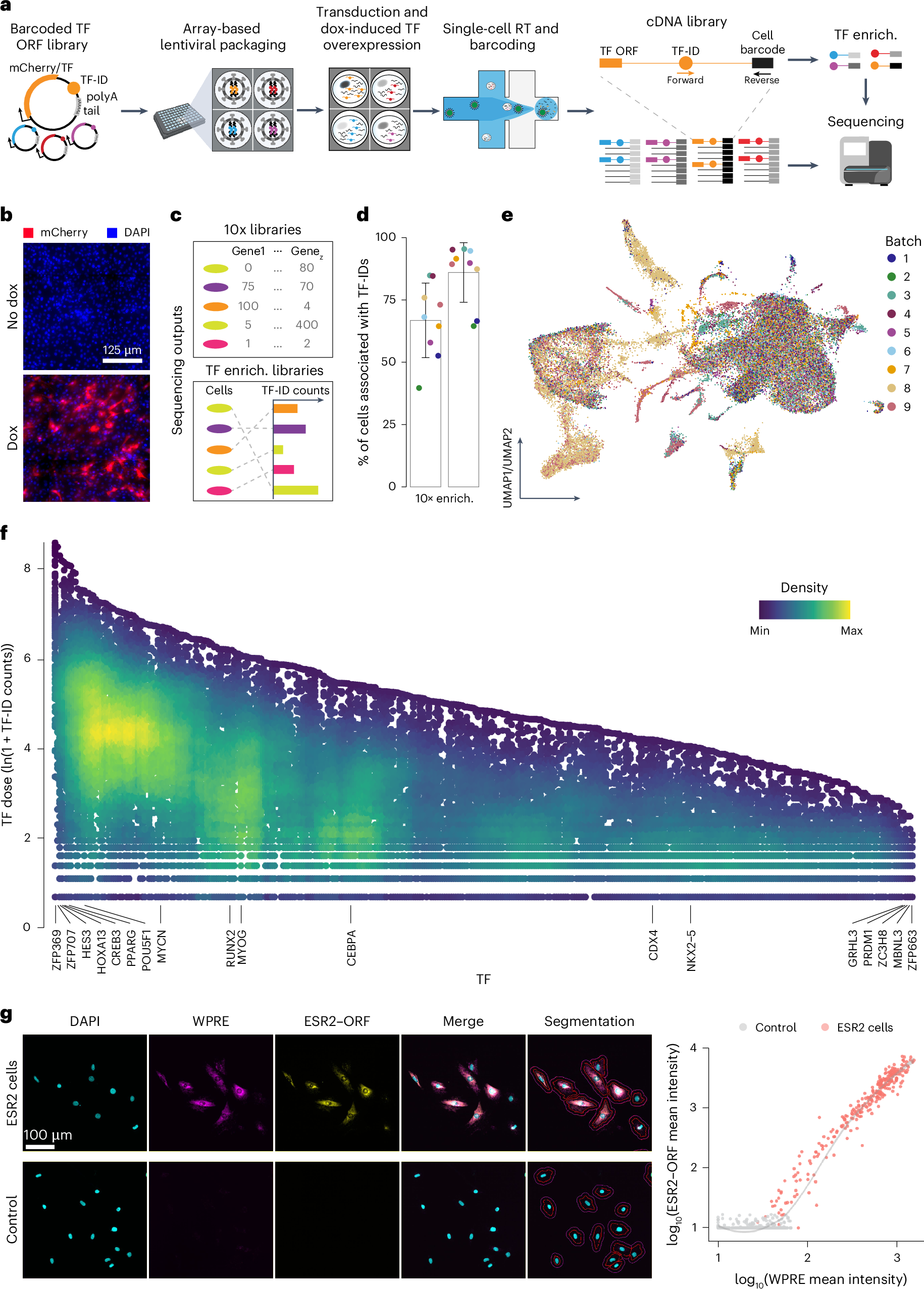
Reprogramming often yields heterogeneous cell fates, yet the underlying mechanisms remain poorly understood. To address this, we developed single-cell transcription factor sequencing (scTF-seq), a single-cell technique that induces barcoded, doxycycline-inducible TF overexpression and quantifies TF dose-dependent transcriptomic changes. Applied to mouse embryonic multipotent stromal cells, scTF-seq generated a gain-of-function atlas for 384 mouse TFs, identifying key regulators of lineage specification, cell cycle control and their interplay. Leveraging single-cell resolution, we uncovered how TF dose shapes reprogramming heterogeneity, revealing both dose-dependent and stochastic cell state transitions. We classified TFs into low-capacity and high-capacity groups, with the latter further subdivided by dose sensitivity. Combinatorial scTF-seq demonstrated that TF interactions can shift from synergistic to antagonistic depending on the relative dose. Altogether, scTF-seq enables the dissection of TF function, dose and cell fate control, providing a high-resolution framework to understand and predict reprogramming outcomes, advancing gene regulation research and the design of cell engineering strategies.