2025-11-13 ミュンヘン大学(LMU)
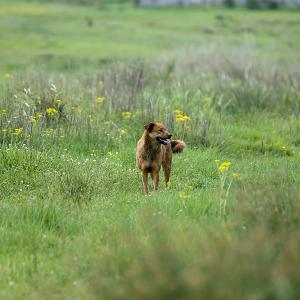
A comparison of ancient dog and human genomes reveals a striking concordance between genetic shifts in both species across time. | © IMAGO/NurPhoto/xSubaasxShresthax
<関連情報>
- https://www.lmu.de/en/newsroom/news-overview/news/paleogenomics-humans-and-dogs-spread-across-eurasia-together.html
- https://www.science.org/doi/10.1126/science.adu2836
東ユーラシアにおけるイヌとヒトの完新世における共分散のゲノム的証拠 Genomic evidence for the Holocene codispersal of dogs and humans across Eastern Eurasia
Shao-Jie Zhang, Lachie Scarsbrook, Haoran Li, Alberto Carmagnini, […] , and Guo-Dong Wang
Science Published:13 Nov 2025
DOI:https://doi.org/10.1126/science.adu2836
Editor’s summary
Dogs have been a part of human cultures for at least 10,000 years, but we still have much to learn about where these connections emerged and how they were shaped over time. Zhang et al. looked at 73 ancient dog genomes from late Pleistocene-to-early Holocene Eurasia and found clear ancestry evidence that dogs and human populations moved together across time and space, suggesting that dogs were an integral part of human culture at the time. They also found that in some cases, especially where particular working or physical traits were valuable, such as in the Arctic, dogs were likely traded among populations. —Sacha Vignieri
Abstract
As the first domestic species, dogs likely dispersed with different cultural groups during the Late Pleistocene and Holocene. To test this hypothesis, we analyzed 73 ancient dog genomes, including 17 newly sequenced individuals sampled from East Asia to the West Eurasian Steppe spanning nearly 10,000 years. Our results indicate correlations between the ancestry of dogs and specific ancient human populations from eastern Europe to Eastern Siberia, including Ancient Paleo-Siberians, Eastern hunter-gatherers, East Asians, and Steppe pastoralists. We also identify multiple shifts in the ancestry of dogs that coincide with specific dispersals of hunter-gatherers, farmers, and pastoralists. Combined, our results reveal the long-term and integral role that dogs played in a multitude of human societies.